

The Old Man and the Water
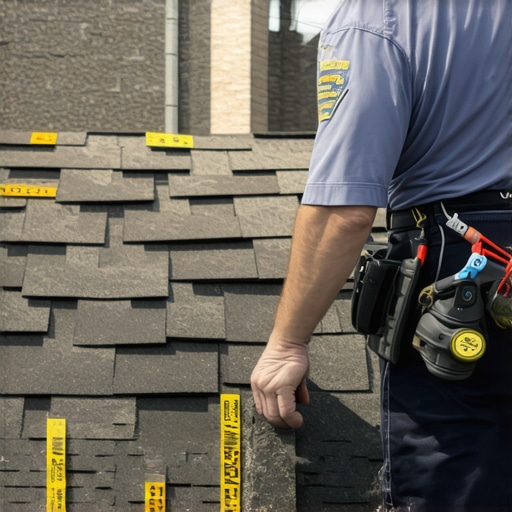
My old foreman used to say, ‘Water is patient. It will wait for you to make a mistake.’ He said it while we were staring at a failed valley on a steep-slope Victorian in the middle of a November sleet storm. That lesson stayed with me for twenty-five years. Today, as I walk across roof decks that feel more like trampolines than structural components, I see the industry making the same mistakes, but this time, the fault lies with the materials themselves. The 2026 shingle market has seen a surge in ‘Value Engineered’ products that prioritize shipping weight and profit margins over the physics of shed-and-flow. Local roofers are beginning to realize that installing these substandard brands is a liability. When a shingle fails, the manufacturer might send you a check for the materials, but the roofing company eats the labor, the overhead, and the hit to their reputation. That is why we are seeing a silent ban across the trades. [image_placeholder]
The Physics of Failure: Why 2026 Hybrids are Buckling
To understand why these brands are being blacklisted, you have to understand Capillary Action. Water doesn’t just fall off a roof; it clings. It moves sideways. In the colder climates of the North, we deal with the freeze-thaw cycle which is the ultimate forensic test for any shingle. Many of the new 2026 brands have moved toward a higher ratio of limestone filler and a lower ratio of actual bitumen (asphalt). This makes the shingle brittle. When the sun hits a roof in January, the shingles expand. When the sun goes down and the temperature drops 40 degrees in three hours, they contract. If the shingle lacks the elasticity of high-grade polymer, it develops micro-fissures. Water enters these fissures during the day, freezes at night, and expands, literally ‘jacking’ the granules off the mat. This leads to accelerated granule shedding, leaving the fiberglass core exposed to UV radiation. Once the sun hits that fiberglass, the roof’s lifespan is measured in months, not decades. This is one of the primary 3 roofing materials local roofers refuse to install in 2026 because they simply cannot survive a single season of thermal shock.
The ‘Shiner’ Epidemic and Thermal Bridging
It’s not just the shingles; it’s how they interact with the fasteners. A ‘shiner’ is a nail that missed the rafter or the structural member, sticking its cold steel head into the humid attic space. In 2026, we’ve seen brands with narrower ‘nail zones.’ When a crew is moving fast, trying to hit 80 squares a day, they miss. That steel nail becomes a thermal bridge. In the winter, that nail head stays at 20 degrees while the attic air is 50 degrees. Condensation forms. It freezes into an ice ball. When the attic warms up, that ice ball melts, dripping directly onto your insulation or, worse, your plywood. Over time, this leads to rot that you can’t see from the ground. It is exactly why your roof decking might be rotting even without a visible leak. If the shingle brand you choose doesn’t have a reinforced nail zone, you are essentially gambling with the structural integrity of your home.
“A roof is only as good as its flashing.” – Old Roofer’s Adage
The Warranty Trap: Marketing vs. Reality
Don’t let the word ‘Lifetime’ fool you. In the roofing world, ‘Lifetime’ is often a legal term that means ‘until we decide this product is obsolete.’ Many of the brands currently being banned by local contractors offer aggressive warranties on paper, but the fine print is a nightmare. They are ‘Pro-Rated’ from day one. If your roof fails in year five, they might only cover 20% of the material cost and zero labor. Professional roofing companies are tired of explaining to homeowners why a manufacturer is only offering them $400 for a $15,000 failure. This leads to friction during the estimation process. You should always watch for 5 red flags in 2026 local roofer quotes you can’t ignore, especially if a contractor is pushing a brand that other local guys won’t touch. They might be getting a kickback from a distributor trying to dump bad inventory.
Vapor Drive and the Suffocating Attic
Another reason these 2026 brands are failing is their lack of breathability. In the North, we deal with Vapor Drive. Moisture from your shower, your cooking, and your breath rises into the attic. If your roof system is not properly vented, that moisture gets trapped against the underside of the roof deck. Some of the newer ‘high-performance’ underlayments are so effective at stopping water that they also stop air. This creates a greenhouse effect. I have seen plywood that looked like it was pulled from a shipwreck—completely delaminated and black with mold—simply because the roof couldn’t breathe. If your contractor isn’t talking about ridge vents and intake air, they aren’t roofing; they’re just slapping shingles. You need to understand the 3 hidden costs local roofers often miss in 2026 quotes, which often include the necessary ventilation upgrades to keep these newer materials from ‘cooking’ from the inside out.
“The building envelope must be viewed as a single, holistic system, or it will inevitably fail.” – Architecture Axiom
How to Spot a Failing Brand Before the Install
When you are looking at samples, don’t just look at the color. Feel the weight. A shingle that feels like a piece of cardboard is usually exactly that. Look at the edges. Are the granules already falling off in the bundle? That’s called ‘factory shedding’ and it’s a sign of a poor adhesive bond. If you want a roof that actually lasts, you might need to look at roofing materials like polymer shingles. They are more expensive upfront, but they don’t have the brittle limestone fillers that are causing the 2026 ‘blacklisted’ brands to fail. In the long run, the ‘cheap’ roof is the one that costs you the most. Water is patient, and if you give it a cheap shingle and a missed nail, it will find its way into your living room. Protecting your home means looking past the marketing and listening to the guys who actually have to stand behind their work when the snow starts to pile up.