
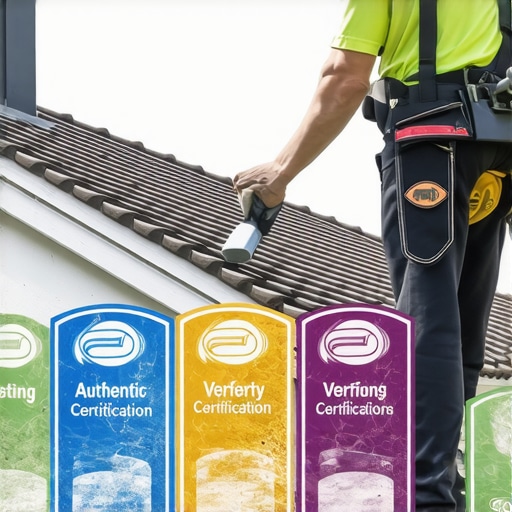
Walk onto a roof in the high desert of Arizona or the sun-baked suburbs of Texas in mid-July, and you’ll feel it through your boots—the 160-degree heat radiating off the shingles like a furnace. For twenty-five years, I’ve been the guy climbing up there to figure out why a three-year-old roof is already curling like a cheap cigar. Lately, I’m seeing a new plague: the 2026 Eco-Certification scam. These roofing companies roll into your driveway with glossy brochures promising ‘Next-Gen Green Technology’ that supposedly lowers your carbon footprint while cutting your cooling bill in half. Most of it is absolute smoke and mirrors, designed to justify a 30% markup. My old foreman used to say, ‘The sun is a slow-motion fire. It doesn’t want to burn your house down today; it wants to eat it one molecule at a time.’ If you buy into a fake certification, you’re just feeding the fire.
The Anatomy of the 2026 Eco-Certification Hustle
In the Southwest, the enemy isn’t water; it’s UV radiation and thermal shock. When the sun hits an asphalt shingle, it excites the hydrocarbon chains in the bitumen. Over time, those chains break, the oils volatilize, and you’re left with a brittle mat that cracks when the temperature drops forty degrees at night. This is where the ‘Eco’ marketing kicks in. Many local roofers are now touting ‘Bio-Based Polymer Mats’ or ‘Recycled Content Ratings’ that haven’t been vetted by any legitimate lab. They use logos that look like government seals but are actually just clip art from a marketing firm. If you see a logo for ‘GreenRoof 2026’ or ‘EcoShield Global,’ ask for the certification number. If they stutter, you’re looking at a trunk slammer with a fancy printer. Many roofing companies are quoting 20% higher for 2026 projects based on these fake credentials, claiming the materials are ‘scarce’ or ‘high-performance’ when they’re the same old 30-year architectural shingles with a green-tinted granule.
“A roof is only as good as its flashing.” – Old Roofer’s Adage
The Physics of Failure: Why Fake ‘Green’ Roofs Cook Your Attic
Let’s talk about Mechanism Zooming. A real eco-certified roof, like a high-SRI (Solar Reflectance Index) TPO or a properly engineered ‘cool’ asphalt shingle, works by reflecting short-wave infrared radiation. The fake ones? They often rely on a cheap topical coating that washes off after two monsoons. When that coating fails, the thermal expansion goes into overdrive. I’ve seen ‘Eco-Polymer’ shingles in Phoenix where the expansion was so violent it pulled the nails right through the deck—we call those ‘shiners’ when the nail head is exposed and rusting. This creates a thermal bridge where heat moves via conduction through the fastener directly into your rafters. You aren’t just paying for a fake sticker; you’re paying for a roof that actively destroys your attic’s R-value. If you’re wondering why top-rated roofing companies are failing inspections in 2026, it’s often because they’re substituting these unverified materials to save a buck on the back end while charging you a premium.
The Warranty Trap: The ‘Lifetime’ Illusion
If a local roofer offers you a ‘Lifetime Eco-Performance Warranty,’ laugh. In the roofing world, ‘Lifetime’ usually means the lifetime of the company, which, for many fly-by-night operations, is about three years—just long enough for the first round of lawsuits to hit. These fake certifications often come with their own ‘proprietary’ warranties that are riddled with exclusions for ‘natural weathering’ or ‘UV degradation.’ In the desert, UV degradation is the only thing that happens! It’s like a car warranty that doesn’t cover the engine. You need to look for manufacturer-backed certifications from companies like GAF, CertainTeed, or Owens Corning. If the certification is issued by the roofing company themselves, it’s worth as much as a used piece of felt paper. You should also check for 5 red flags in 2026 local roofer quotes before signing anything. If they won’t list the specific SRI rating of the material, they’re hiding something.
“The building envelope must be viewed as a system, not a collection of parts.” – NRCA Manual
The Reality of Reflective Tech
True eco-friendly roofing in high-heat zones focuses on emissivity. It’s not just about reflecting the sun; it’s about how fast the material can shed the heat it does absorb. Fake ‘Eco’ shingles often have high reflectance but low emissivity, meaning they hold onto the heat long after the sun goes down, cooking your plywood deck like a pizza stone. This leads to shingle blistering, where the trapped moisture in the shingle boils and creates small craters. I once tore off a roof in Vegas where the owner paid double for a ‘Solar-Reflective’ shingle that was actually just standard black asphalt with a thin silver dust. The ‘dust’ had oxidized within six months, and the attic temperatures were hitting 150 degrees. If you want real savings, look into why white roofs save 15% energy. It’s not flashy, it’s not a ‘2026 Certified’ gimmick—it’s basic physics. White materials reflect more energy than dark ones. Period.
How to Vet Your Local Roofers
When the salesperson sits at your kitchen table, stop looking at their iPad and start asking for the physical samples. Rub your thumb across the granules. If they shed like dandruff, the binder is cheap. Ask for the UL (Underwriters Laboratories) certification number for the specific eco-claim. If they say it’s ‘pending’ or ‘proprietary,’ show them the door. A real professional will talk about ventilation, ‘square’ counts, and how they’re going to handle the ‘cricket’ behind your chimney to prevent water pooling, not just a fancy eco-sticker. Don’t be afraid to be the ‘difficult’ customer. In this industry, the difficult customers are the ones who don’t have to call me in five years to do a forensic tear-off of a failed system. A roof is a twenty-year investment, not a fashion statement. Protect your wallet from the 2026 eco-hype and stick to the science.