
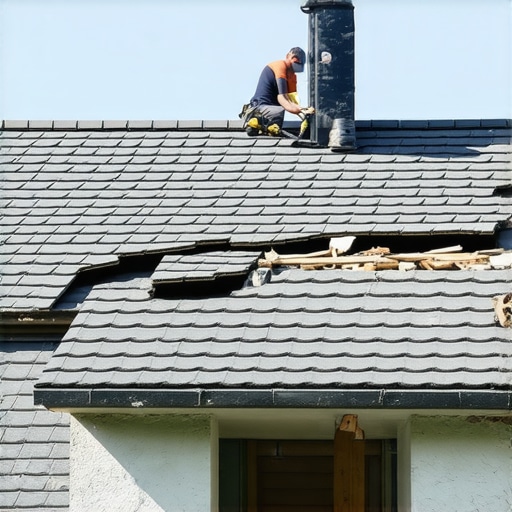
The Trampoline Effect: A Forensic Look at Modern Roofing Failures
Walking on that roof felt like walking on a sponge. I knew exactly what I’d find underneath, even before I pulled my pry bar from my tool belt. The shingles were brand new—barely three months old—installed by a company with five stars on every platform and a marketing budget that could buy a small island. But as my boots sank into the granules, I heard that sickening, wet crunch of structural betrayal. Underneath those pristine architectural shingles, the decking had the consistency of wet cardboard. This is the reality I am seeing more often in 2026: high-end roofing companies are failing inspections because they’ve forgotten the basic physics of a building envelope in favor of speed and aesthetics.
The industry is in a weird spot right now. We have better materials than ever, yet the failure rate on initial inspections for local roofers has skyrocketed. Why? Because a roof isn’t just a lid; it’s a breathing, moving system that has to fight gravity, wind, and the relentless curiosity of water. When you hire a crew that views a roof as a 100-square race track, they miss the details that matter most. They miss the shiners—nails that missed the rafter and now act as tiny conduits for frost and condensation. They miss the crickets—those small diversions behind chimneys that prevent water from pooling into a stagnant lake against your bricks. If you ignore the flashing, you’ll eventually deal with rotted roof decking, which costs double to fix later.
The Physics of Failure: Why ‘New’ Doesn’t Mean ‘Safe’
In the North, where I’ve spent the last quarter-century, the enemy isn’t just the snow; it’s the heat coming from inside your house. In 2026, many top-rated roofing companies are failing inspections because they don’t understand thermal bridging. They slap on a high-end shingle but fail to address the attic bypass. When warm air leaks from your bathroom fan into the attic, it hits the cold underside of your roof deck. That moisture doesn’t just vanish; it crystallizes into frost. When the sun hits the roof the next morning, that frost melts, dripping directly onto your insulation. Over time, this leads to buckling attic insulation and a structural rot that no warranty will cover.
“A roof is only as good as its flashing.” – Old Roofer’s Adage
We need to talk about capillary action. Water has this annoying habit of moving uphill if the gap is tight enough. If a roofer doesn’t leave the proper 1/8-inch gap between the shingles and the sidewall flashing, water gets sucked up behind the siding. It’s a slow-motion disaster. By the time you see the stain on your dining room ceiling, the wall studs have already started to grow mushrooms. Many roofing companies are now cutting corners on these ‘invisible’ areas to keep their margins high. You can see the patterns in 4 sneaky ways local roofers cut corners, which often involves reusing old drip edge or skipping the starter strip.
The Shiner Epidemic and Mechanical Zooming
Let’s zoom in on a single nail. A ‘shiner’ is a nail that missed the lumber. In a typical square (100 square feet), there might be 300 to 400 nails. If just 5% of those are shiners in a cold climate, you have 20 points of entry for moisture. During the winter, these nails get colder than the surrounding wood. Moist air in the attic condenses on the cold metal nail head, forming a bead of water. That bead drips. It drips on the same spot every day for four months. By spring, you have a mystery leak that ‘only happens when it’s not raining.’ This is exactly why modern roofing guides recommend TPO or specific synthetic underlayments for certain slopes—they provide a better seal around the fastener, but even the best material can’t fix a lazy hammer swing.
“The roof is the most important part of the building’s exterior. It is the first line of defense against the elements.” – National Roofing Contractors Association (NRCA)
Inspectors in 2026 are getting tougher on ridge vent sealing. I’ve seen ‘top-rated’ crews install a ridge vent and then nail it so hard they crack the plastic, or worse, they don’t cut the slot in the decking wide enough, rendering the vent useless. If the attic can’t breathe, the shingles bake from the inside out. This leads to shingle blistering, which most manufacturers will claim is an ‘installation error’ rather than a product defect, leaving you holding the bag for a $20,000 replacement.
The Warranty Trap: Marketing vs. Reality
When a roofer offers a ‘Lifetime Warranty,’ you need to ask whose lifetime they are talking about. Most of these warranties are pro-rated and only cover manufacturing defects, not the hydrostatic pressure caused by an ice dam that formed because the roofer skipped the Ice & Water Shield at the eaves. They use the cheapest felt paper instead of a breathable underlayment, trapping moisture against the wood. You need to know how to check local reputation beyond just the star rating—look for the photos of their flashing work, not their clean trucks.
If you suspect your recent installation is one of the failures, look for signs of poor roof flashing around the chimneys and valleys. If the metal looks like it was chewed by a dog or is held together by a gallon of ‘roof tar’ (caulk), you’ve got a problem. Caulk is a temporary sealant; it is not a structural component. A real roofer uses a brake to bend metal so it sheds water naturally, without relying on a tube of goop. Don’t be afraid to negotiate with local roofers to ensure they are using stainless nails if you’re near the coast or high-wind zones to avoid galvanic corrosion.
Conclusion: Don’t Pay for a Failure
The cost of roofing has jumped significantly, with many quoting 20% higher for 2026 projects due to labor and material costs. If you are paying a premium, you deserve a roof that passes the forensic test. Don’t just look at the shingles from the ground. Get in the attic with a flashlight during the first heavy rain. Look for the damp spots on the rafters. Look for the shingle lifting at the edges that indicates poor nailing patterns. A roof is a massive investment; make sure yours isn’t just a pretty cover for an expensive mistake.