
You see the drip on the dining room table and your first instinct is to look straight up at the shingles. You think it is a puncture, a backed-out nail, or maybe a bad bit of flashing. But as a forensic roofer who has spent three decades crawling through cramped, 140-degree attics, I can tell you that the culprit is often fifteen feet away from that drip. It is hiding in your eaves. Most homeowners treat soffits like architectural mascara—just something to make the underside of the roof look pretty. In reality, your soffit system is the lungs of your house. When those lungs fail, the roof starts to suffocate from the inside out.
Walking on a roof last November, the perimeter felt like walking on a sponge. I did not even need to pull a shingle to know what was happening. Every step had that sickening, rhythmic crunch of delaminated plywood. I knew exactly what I would find underneath: a soffit system that had been choked off by sloppy insulation contractors, leading to a localized climate disaster in the attic. This is not just about a leak; it is about the physics of air movement and the slow, silent rot of your home’s skeletal structure.
“Ventilation is a system, not a product. If the intake is blocked, the exhaust is useless.” – Old Roofer’s Axiom
The Physics of the ‘Cold Roof’ Failure
In cold climates like ours, we aim for a ‘cold roof’ strategy. This means the temperature in your attic should ideally match the temperature outside. The soffit is the entry point for cool, dry air. As that air enters, it travels up the underside of the roof deck and exits through the ridge vent. This movement relies on the Bernoulli principle—the faster air moves over the ridge, the more it pulls air from the soffits. When the soffit fails, this cycle breaks. Instead of a stream of fresh air, you get stagnant, moisture-laden air trapped against the cold plywood. This is where capillary action begins to destroy your investment. Water vapor condenses into liquid, which then gets pulled into the microscopic gaps between the layers of your roof deck.
Sign 1: The ‘Biological Bloom’ and Peeling Fascia Paint
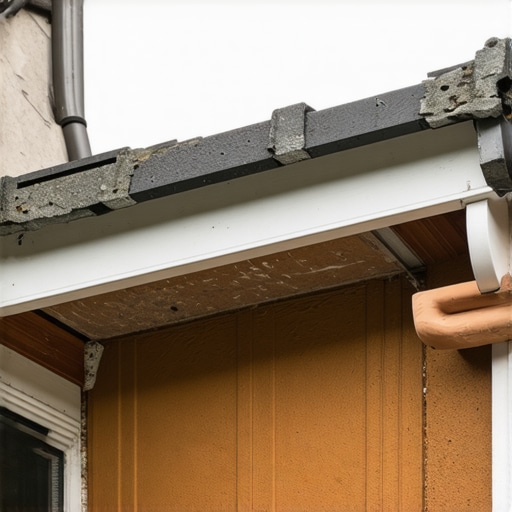
The first sign of a failing soffit is often visible from the driveway, but most people mistake it for old age. If you see paint peeling specifically on the fascia boards—the vertical trim your gutters are attached to—you are looking at a moisture exit strategy. When the soffit cannot breathe, moisture migrates toward the wood. It saturates the grain until the bond between the paint and the wood is shattered. You might also notice a ‘biological bloom’—black streaks of algae or even white, fuzzy fungal growth on the underside of the soffit panels. This is a red flag that the humidity levels in your eaves are consistently above 70%, the magic number for mold to start its feast. If you notice this, you might also have buckling attic insulation due to the same moisture buildup.
Sign 2: The Ice Dam ‘Gutter-Grip’
If you find yourself knocking four-foot icicles off your gutters every January, your soffits have likely failed. Ice dams are not a ‘shingle’ problem; they are a ventilation failure. When warm air is trapped in the attic because the soffits are blocked, it warms the roof deck and melts the bottom layer of snow. That water runs down the roof until it reaches the eaves, which are still cold. It freezes, creating a dam. The real danger here is hydrostatic pressure. The water pools behind the ice, finds the seams in your shingles, and is forced upward under the shingles through capillary action. This is why forensic roofers always check for poor ridge vent sealing alongside soffit checks; if one is out, the other is likely struggling too.
Sign 3: Rusted ‘Shiners’ and Structural Softness
A ‘shiner’ is a trade term for a nail that missed the rafter and is sticking out into the attic space. In a healthy roof, these stay dry. In a house with a failing soffit, these nails become magnets for condensation. They will look rusted or even have droplets of water hanging from them on a cold day. Eventually, that moisture travels back up the nail shank and rots the wood around it. If you notice your roofline looks a bit wavy or ‘swale-like’ when looking at it from the street, the deck is likely losing its structural integrity. You might need to look into what to do if rafters sag before the next heavy snow load causes a catastrophic failure.
“Attic ventilation must be provided with a minimum net free ventilating area of 1 to 150 of the area of the space ventilated.” – International Residential Code (IRC) R806.2
The Surgery: Fixing the Intake
You cannot fix a failing soffit with a bead of caulk. If the problem is blocked airflow, you need ‘surgery.’ This usually involves pulling back the insulation from the eaves and installing baffles—plastic or foam channels that ensure a clear path for air. We often see ‘trunk slammers’ just cut a hole in the soffit and slap a vent over it without checking if the wood underneath is actually cut. That is a decorative fix, not a functional one. You need a contractor who understands the ‘Net Free Area’ of a vent. If you have been ignoring your attic’s health, you may already be dealing with water entry at attic joint seals. Don’t wait until the plywood turns to mulch. A roof is a shield, but without a working soffit system, it is just a lid on a slow cooker. Get a pro to measure your intake, clear your baffles, and let your house breathe again before you’re paying for a full deck replacement.