
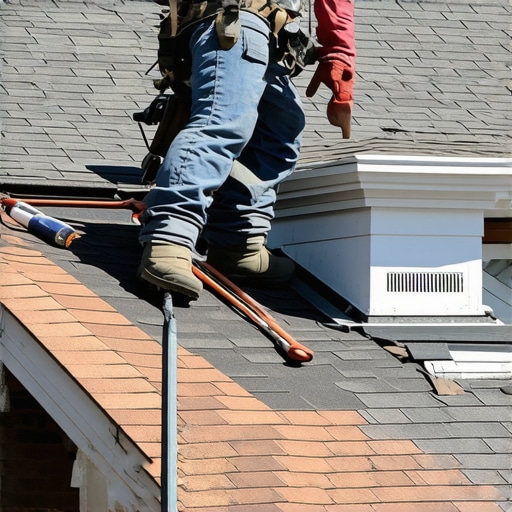
That steady drip-drip-drip landing on your hardwood floors during a January thaw isn’t always a hole in your shingles. Most homeowners—and frankly, too many greenhorn local roofers—climb up there looking for a puncture, but they’re looking at the wrong culprit. I’ve spent twenty-five years crawling into 140-degree attics and freezing crawlspaces, and I can tell you: the most dangerous leak is the one that starts as steam. When you have a ridge vent installed but your old gable vents are still wide open, you aren’t venting your house; you’re short-circuiting the physics of your roof deck. This imbalance turns your attic into a moisture trap that rots your plywood from the inside out.
My old foreman, a man we called ‘Grizzly’ Pete who could smell a shiner from the driveway, used to tell me: ‘Water is patient. It will wait for you to make a mistake.’ Leaving a gable vent open after a ridge vent installation is exactly that mistake. It’s an invitation for pressure differentials to play games with your home’s structural integrity. I’ve seen roofing companies install the most expensive shingles on the market, only to have the decking turn into something resembling wet cardboard five years later because the ventilation was fighting itself.
“Ventilation must be balanced. Inake air must come from the lowest part of the roof (soffits) to properly exhaust through the highest point (ridge).” – NRCA Manual excerpt
In cold climates like Boston or Minneapolis, the enemy is the dew point. When warm, moist air from your shower or kitchen bypasses your insulation, it hits the cold underside of your roof. If your ridge vent is drawing air from the gable vent just six feet away instead of the soffit vents down at the eaves, the bottom 70% of your attic stays stagnant. This results in massive frost buildup on the nails. When that frost melts, it looks like a roof leak, but it’s actually a ventilation failure. To fix this, you have to seal those gables, and you have to do it right. You can’t just slap some duct tape on it and call it a day.
1. The ‘Surgical’ Plywood Block
The most permanent way to fix a short-circuiting attic is to treat it like a structural repair. You need to head into the attic with a sheet of 7/16-inch OSB or CDX plywood. You aren’t just covering the hole; you’re creating an air-tight thermal break. Cut the plywood to be two inches larger than the vent opening on all sides. Before you screw it into the studs, run a heavy bead of high-grade sealant around the perimeter. This prevents capillary action from drawing moisture between the vent louvers and your new patch. I’ve seen roofing jobs fail because a contractor just tucked a piece of cardboard over the vent; that cardboard eventually dampens, sags, and starts growing a colony of black mold. Using structural wood ensures the pressure from high winds doesn’t pop the seal.
2. High-Performance Membrane Sealing
If you’re dealing with a complex gable shape or tight clearances where you can’t swing a hammer, a secondary water resistance (SWR) membrane is your best friend. This is essentially the same stuff we use for stopping water entry at attic joint seals. You want a peel-and-stick ice and water shield. Clean the interior framing members meticulously—dust is the enemy of adhesion. Apply the membrane in overlapping ‘shingle fashion,’ starting from the bottom and working up. This ensures that even if a little wind-driven rain gets past the exterior louvers, it hits the membrane and drains back out the bottom of the vent rather than soaking into your insulation. If you ignore this, you’ll eventually see signs of hidden plywood decay within a few seasons.
3. Closed-Cell Spray Foam Injection
For the ‘trunk slammer’ who wants to do it fast, they might reach for a cheap can of ‘great stuff.’ Don’t be that guy. If you’re going the foam route, use a pro-grade closed-cell spray. Closed-cell foam doesn’t just block air; it provides an R-value and acts as a vapor retarder. You need to build a ‘backstop’ (like a piece of rigid foam board) behind the louvers, then spray the gaps between the backstop and the framing. This creates a monolithic seal that is impenetrable to the wind. In regions prone to heavy snow, this is the gold standard because it eliminates thermal bridging at the gable end. It’s a vital part of roof snow load safety, as it prevents heat from escaping and creating the temperature fluctuations that lead to ice damming.
“A roof is only as good as its flashing and its ability to breathe correctly without interference.” – Old Roofer’s Adage
4. The ‘Breathable’ Baffle System
Sometimes, you can’t completely seal a gable because the home lacks sufficient soffit intake. In these rare, poorly designed cases, you have to use a baffled insert. This is a specialized piece of hardware that allows a tiny amount of air to pass but uses a series of internal ‘crickets’ or diversers to stop the ‘jet stream’ effect that disrupts the ridge vent’s pull. However, as a forensic investigator of failed roofs, I rarely recommend this. It’s usually a ‘Band-Aid’ for a house that needs more soffit vents. Most local roofers will tell you to just leave it, but they won’t be the ones paying for the new square of shingles when yours start curling from the heat. If you’re unsure about your current airflow, check out how to install ridge vents properly to see if your intake matches your exhaust.
Ignoring the gable-ridge conflict is like trying to air condition your house with the front door open. You’re wasting energy, and you’re inviting the elements to destroy your investment. I’ve seen houses where the rafters were so ‘punky’ from moisture that I could shove a screwdriver right through them. That’s a $20,000 mistake that could have been avoided with a $20 piece of plywood and an hour of work. Don’t wait until you see the water stains on the ceiling. Get up there, check your airflow, and seal those gables before the next storm rolls in.