
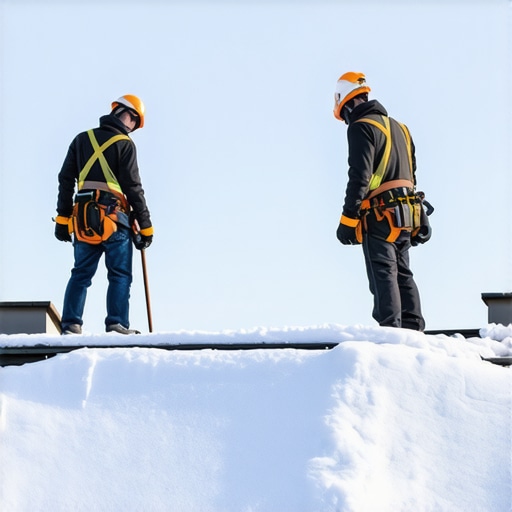
The Anatomy of a Structural Groan: Why Your Roof Fails at 3 AM
The sound isn’t a bang; it’s a slow, rhythmic groan that vibrates through the drywall of your bedroom ceiling. As a veteran who has spent two and a half decades crawling through freezing attics, I know that sound. It is the sound of a roof deck reaching its yield point. When local roofers talk about snow load, they usually give you some marketing fluff about ‘winter-ready’ shingles. But if you want the truth, you have to look at the physics of weight and the way heat moves. My old foreman used to say, ‘Water is patient. It will wait for you to make a mistake.’ In the North, that mistake is usually ignoring how 2026 climate shifts are dumping heavier, wetter ‘heart attack’ snow on structures built for lighter powder.
The Physics of Failure: Why 2026 Snow is Different
We aren’t just dealing with fluff anymore. The 2026 winter season has shown a pattern of rapid freeze-thaw cycles. This creates a sandwich: a layer of ice, a layer of heavy wet snow, and another layer of ice. When you have a roof pitch that isn’t shedding, you’re not just looking at a couple of inches of white stuff. You’re looking at 40 to 60 pounds per square foot. For a standard 2,000 square foot roof, that is the equivalent of parking several heavy-duty pickup trucks on your rafters. If your roofing companies didn’t account for the dead load and the live load during the last install, you’re in for a disaster. One of the biggest culprits is the ‘shiner’—a nail that missed the rafter and sits exposed in the attic. In winter, that nail becomes a frost-point, attracting moisture that eventually leads to hidden plywood rot as it thaws, weakening the very deck meant to hold the snow.
“Roof systems shall be designed and constructed to support the maximum expected snow load for the region, taking into account drift and sliding snow conditions.” – International Residential Code (IRC) R301.2.3
The Ice Dam Mechanism: Capillary Action and Heat Leaks
Most local roofers will tell you to just buy a roof rake and start pulling. That’s like putting a Band-Aid on a gunshot wound. The real enemy is the attic bypass. When warm air leaks from your living room into the attic space, it warms the underside of the roof deck. The snow melts, runs down to the cold eave, and freezes. This creates a dam. Once that pool of water sits behind the ice, capillary action takes over. Water literally climbs uphill under your shingles. If you don’t have a high-quality Ice & Water shield—self-adhering membranes that seal around the nails—that water is going straight into your soffits. I’ve seen situations where attic sagging occurred simply because the insulation was blocked at the eaves, preventing the roof from staying cold. You need to ensure your R-Value is up to 2026 standards, or you’re just paying to melt snow from the bottom up.
The Forensic Autopsy: Identifying the Weak Points
When I walk a roof after a heavy storm, I’m looking for the ‘cricket’—that small peaked structure behind a chimney designed to divert water and snow. If a contractor skipped the cricket, you’ll have a mountain of ice sitting against your chimney flashing, which is a recipe for a catastrophic leak. We also check for shingle lifting caused by the sheer weight of sliding snow pulling at the granules. If you see shingles curled or pulled away at the edges, the structural integrity of your shedding system is gone. This is why roofing isn’t just about shingles; it’s about a managed system of ventilation and structural support. For those in commercial spaces, the stakes are even higher, requiring specific heavy snow maintenance protocols to prevent flat roof collapse.
“A roof is only as good as its flashing.” – Old Roofer’s Adage
The Surgery: How to Fix a Failing System
Don’t let a ‘trunk slammer’ tell you that more shingles will solve a weight issue. If your roof is struggling with 2026 snow loads, the ‘surgery’ often involves increasing the attic ventilation to maintain a cold roof environment and possibly sistering rafters to handle the PSF requirements. You need to verify that your roofing companies are not just licensed, but carry valid insurance that covers structural work, not just cosmetic shingle swaps. If you ignore the warning signs—the cracks in the plaster, the doors that suddenly won’t close during February, or the smell of moldy insulation—you aren’t just risking a leak; you’re risking the entire deck. Snow doesn’t forgive, and in 2026, the weight is only getting heavier. Get a forensic inspection before the next drift turns your attic into a basement.