
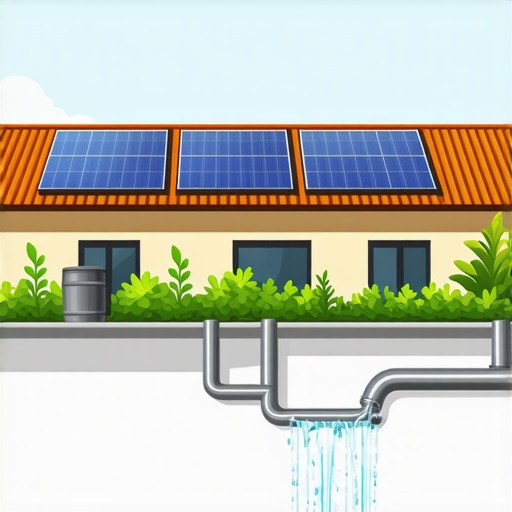
The Hard Truth About Desert Runoff
My old foreman used to say, ‘Water is patient. It will wait for you to make a mistake.’ In the scorching 118°F heat of a Phoenix summer, you'd think water is the last thing on a roofer's mind. But when the monsoons hit, that bone-dry dust turns into a torrent, and if your system isn't dialed in, that water isn't just hitting your barrels—it's rotting your structural integrity. I've seen too many DIY rainwater setups where some "trunk slammer" slapped up a plastic barrel and a flex-hose, only to have the back-pressure force water up under the drip edge and into the soffit. That's not eco-friendly; that's a homeowner's insurance nightmare. To actually reclaim rainwater without killing your house, you have to understand the physics of the roof deck.
"A roof is only as good as its flashing." – Old Roofer's Adage
1. Choose the Right Material for Potable Quality
If you're looking at roofing companies to install a system for water harvesting, the first thing we need to talk about is the "Material Truth." In the Southwest, most homes are topped with asphalt shingles or concrete tiles. Asphalt is the "toxic sponge" of the roofing world. When the UV radiation beats down on a standard 3-tab or architectural shingle, it breaks down the petroleum-based bitumen. This process, known as thermal degradation, releases oils and fiberglass particulates into your collection tank. If you're using that water for a vegetable garden, you're basically seasoning your tomatoes with motor oil. For true reclamation, you want a standing-seam metal roof or high-glazed tiles. Metal doesn't just shed water faster; it doesn't leach. However, even with metal, you have to watch out for the sealants. Using cheap, high-VOC caulking at the crickets or valleys will contaminate your supply. I always recommend looking into bio-based roof shingle sealants to keep the chemistry of your water clean. These plant-based alternatives don't off-gas like the industrial-grade solvents used by some local roofers who are just trying to get the job done fast.
2. The Physics of Conveyance and the "First Flush"
Reclaiming rainwater isn't just about catching it; it's about the velocity and the filtration. When rain hits a roof that's been baking in the sun for three months, the first ten minutes of runoff are essentially liquid sandpaper. It's filled with bird droppings, dust, and scorched mineral granules. If you don't have a "first flush diverter," all that sludge goes straight into your cistern. You also need to look at your gutters. A standard 5-inch K-style gutter might handle a drizzle, but it'll overflow during a desert downpour, leading to fascia rot. I prefer a 6-inch box gutter with a steep pitch—at least 1/8 inch per foot. If the pitch is too shallow, water stands, and standing water in 100-degree heat is a breeding ground for biological growth. This eventually leads to shingle blistering or algae problems that will foul your water. Zooming into the mechanics: the water should move via gravity through a valley lined with 24-gauge steel, hitting a debris screen before it ever touches a downspout. Check your starter strip; if it's loose, water will find its way behind the gutter, defeating the whole purpose.
"The roof shall be covered with materials that are compatible with the environment and the intended use of the structure." – International Residential Code (IRC) Principle
3. Seal the Envelope Against Thermal Shock
In places like Texas or Nevada, your roof undergoes "Thermal Shock" every day—expanding in the heat and contracting at night. This movement creates micro-gaps. If you're trying to reclaim water, any leak is a loss of pressure and a point of entry for contaminants. You need to ensure that the areas around your B-vents and plumbing stacks are armored. Many roofing companies will just use a standard rubber boot, which cracks in three years under the desert sun. I demand stainless steel flashing with a high-heat silicone collar. This prevents water entry at attic joint seals, which is where I usually find the worst rot during a forensic inspection. Furthermore, if your roof shows signs of shingle lifting, your water collection efficiency drops because the water starts taking paths of least resistance under the shingles rather than over them. Always verify your contractor's credentials and valid insurance before letting them modify your drainage system. A bad rainwater install can void your material warranty faster than a hail storm, leaving you with a dry tank and a wet attic.
The Forensic Conclusion
Don't let a "green" dream turn into a structural nightmare. Reclaiming rainwater is a game of millimeters and material compatibility. If you use the wrong metal, you get galvanic corrosion. If you use the wrong sealant, you get chemical runoff. If you use the wrong contractor, you get a mess. Focus on the crickets, the flashing, and the pitch. Keep your water clean and your decking dry. That's the only way to do it right.