
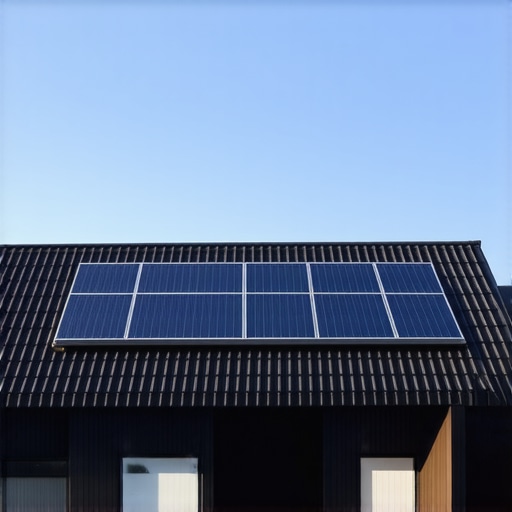
The 2:00 AM Drip: When Solar Ambition Meets a Brittle Deck
I’ve spent twenty-five years on hot roofs, and I can tell you exactly what a failure sounds like before I even see the water stain. It’s the sound of a drill bit chewing through a shingle that has been baked by the desert sun until it has the structural integrity of a saltine cracker. In cities like Phoenix or Las Vegas, where the UV radiation is a constant assault, homeowners are rushing to install 2026-spec solar brackets without checking the bones of their house. I recently walked a job where the solar installer had used standard L-feet on a fifteen-year-old 3-tab roof. As I stepped near the array, the crunching sound under my boots told me everything. The shingles weren’t just old; they were functionally dead. My old foreman used to say, ‘Water is patient. It will wait for you to make a mistake.’ And boy, does solar provide plenty of opportunities for mistakes. When you bolt a heavy racking system through a compromised roof, you aren’t just adding green energy; you’re inviting a slow-motion disaster into your attic.
The Physics of Failure: Why Solar Brackets Are More Than Just Bolts
Most local roofers will tell you that a roof is a system, but many solar companies treat it like a mounting board. Let’s look at the mechanism of a leak at the bracket level. When an L-foot bracket is installed, it requires a penetration through the shingle, the underlayment, and at least two inches into the center of a rafter. Sounds simple, right? Wrong. In the Southwest, thermal expansion is the silent killer. During a July afternoon, your roof deck can hit 160°F. At night, it might drop to 80°F. This 80-degree swing causes the metal bracket to expand and contract at a different rate than the wood rafter and the asphalt shingle. This differential movement creates a micro-gap around the lag bolt. If the installer didn’t use a high-grade EPDM washer or skipped the sealant ‘hockey puck’ underneath the flashing, capillary action will take over. Water doesn’t just fall into a hole; it gets sucked in. It moves sideways under the shingle, finding its way to the shiner—that missed nail or bolt that’s now a direct conduit for moisture to reach your insulation.
‘The installation of solar panels shall not compromise the weather protection or structural integrity of the roof covering.’ – International Residential Code (IRC) R908.1
The Material Truth: 2026 Standards and Your Decking
Before you even think about the tax credits, you need to understand what lies beneath. If your roof is over ten years old in a high-UV zone, the oils in the asphalt have likely evaporated. This leads to identifying shingle blistering, which makes the surface brittle. When an installer walks across these shingles to set the 2026 brackets, they are causing micro-fractures. You might not see the leak this winter, but by 2027, the plywood decking will start to turn to mush. If you suspect your roof isn’t up to the task, check for signs of hidden shingle lifting before the panels go up. Once the array is installed, finding and fixing a leak becomes three times more expensive because you have to pay a solar crew to de-install the panels just so the roofing companies can reach the shingles.
The Forensic Autopsy: How Brackets Fail in the Heat
Let’s zoom in on the flashing. A proper 2026 solar bracket should include a metal flashing plate that tucks up under the course of shingles above it. However, I often see ‘top-mount’ brackets that rely entirely on a chemical sealant. In the Southwest, those sealants have a shelf life. The UV rays eat the polymers, the sealant cracks, and suddenly you have a 3/8-inch hole directly into your home. If you want to avoid this, you need to ensure your roofing professional coordinates with the solar team. I always recommend a 2026 attic heat map survey to see if your current ventilation is sufficient. If the attic is already too hot, adding solar panels can actually trap more heat, accelerating the decay of the plywood. I’ve seen decks so rotted from trapped condensation and bracket leaks that the plywood felt like soggy cardboard. At that point, you aren’t looking at a repair; you’re looking at a full structural tear-off.
‘A roof is only as good as its flashing.’ – Old Roofer’s Adage
The Trap of the “Lifetime Warranty”
Don’t get sucked in by the marketing. A solar company’s warranty often only covers the panels and the racking, not the water tightness of your shingles. And if your roof was already near the end of its life, the roofer’s warranty is void the moment the solar guys start drilling. This is why you must hire specialist local roofers who understand the intersection of solar and waterproofing. They know how to install a cricket if the array disrupts water flow and how to check for hidden decking decay before the first bolt is turned. Remember, a “free” solar installation that destroys a $20,000 roof isn’t a bargain; it’s a liability.
The Fix: Preparing Your Roof for 2026
If you’re determined to go solar, start with the underlayment. Standard felt paper is a joke in the desert. You want a high-temp synthetic underlayment that can handle the extreme heat generated under the panels. Consider the benefits of synthetic felt pads which offer much better tear resistance around bracket penetrations. You should also ensure that roofing companies check your communication protocols; as noted in why communication is a major metric, the handoff between the roofer and the solar installer is where most leaks are born. If they aren’t talking about the flashing depth and the torque specs of the lag bolts, you’re the one who will be holding the bucket when the monsoons hit.