
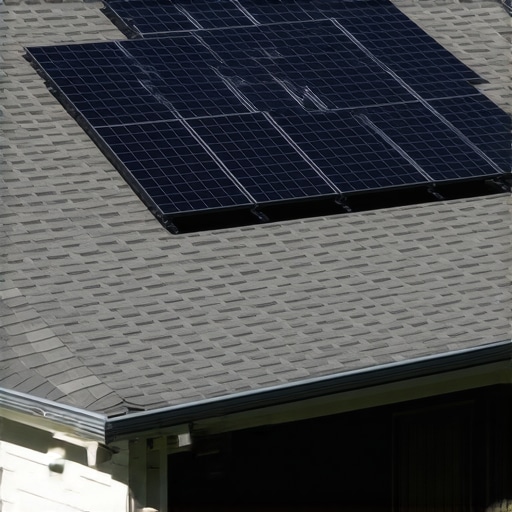
The Hidden Physics of the 2026 Solar Gold Rush
Walking on that roof felt like walking on a sponge. I knew exactly what I’d find underneath before I even pulled my pry bar. The homeowner had spent sixty grand on a high-efficiency solar array, but they had mounted it over a 15-year-old asphalt shingle roof that was already gasping its last breath in the brutal Arizona heat. When we finally peeled back the panels, the shingles looked like scorched earth—brittle, curled, and completely devoid of the granules that protect the underlying mat. This is the reality most local roofers won’t tell you during a sales pitch: a solar upgrade isn’t just about the glass on top; it’s about the structural integrity of the deck below. In the desert Southwest, where UV radiation and thermal shock are the primary killers of any residential roofing system, installing solar without a total roof forensic audit is a recipe for a six-figure disaster.
When we talk about the cost of a 2026 solar upgrade, the number on the solar company’s invoice is only half the story. The physics of solar mounting creates a micro-climate on your roof. You have a massive glass surface absorbing radiant energy, and while it creates electricity, it also creates an oven effect. Air gets trapped in the four-inch gap between the panel and the shingles. In 110°F weather, that stagnant air pocket can hit 160°F. This accelerated thermal degradation causes the asphalt volatiles—the oils that keep your shingles flexible—to outgas at three times the normal rate. If your roofing companies aren’t discussing thermal expansion and the specific needs of a solar-ready deck, they aren’t doing their job.
“The service life of the roof covering should be at least equal to the expected service life of the solar energy system.” – NRCA (National Roofing Contractors Association) Guidelines
The ‘Detach and Reset’ Nightmare
The biggest hidden cost in 2026 is the ‘Detach and Reset’ (D&R) fee. If your roof fails five years into a twenty-year solar lease, you have to pay a crew to come out, carefully disconnect the array, store the panels on your lawn, and then reinstall them once the new roof is on. Currently, D&R costs are hovering around $2,500 to $4,000 per square (100 square feet) of solar coverage. For a standard residential system, you’re looking at an unbudgeted $8,000 to $12,000 expense simply because the previous contractor didn’t check for signs of hidden decking plywood decay before the rails went down.
Material Truths: What Actually Survives Under Solar?
In the Southwest, standard organic felt paper is a relic of the past. If you’re going solar, you need a high-performance synthetic underlayment. Why? Because when a solar technician drives a lag bolt through your roof to secure a mounting bracket, they are creating a penetration. If they miss the rafter—a common mistake we call a shiner—they’ve just punched a hole directly into your attic. A high-quality synthetic shingle felt pad offers better tear strength and sealability around those penetrations compared to cheap 15-lb felt that shatters like a cracker when it gets hot.
Furthermore, the choice of the shingle itself matters. Most ‘Lifetime Warranties’ are marketing fluff designed to make you feel good while the fine print excludes ‘excessive heat’ or ‘improper ventilation.’ For a solar-ready roof, you should be looking at Class 4 impact-rated shingles or, better yet, a concrete tile or standing-seam metal system. Metal is the gold standard for solar because the panels can be clamped directly to the seams, eliminating the need for roof penetrations entirely. If you are stuck with asphalt, you must ensure your roof deck ventilation is immaculate. Without cross-ventilation, that heat pocket under the panels will cook your rafters from the outside in.
Capillary Action and the Solar Rack Trap
Water is a patient thief. It doesn’t just fall; it creeps. In a desert monsoon, wind-driven rain can hit your solar array and get forced sideways. This is where capillary action comes into play. The water travels along the mounting rails, finds a bracket, and sits there. If the flashing isn’t triple-redundant, that water will eventually find the bolt hole. By the time you see a brown spot on your ceiling, the plywood has likely been wet for months. This is why I always tell homeowners to look for signs of hidden shingle lifting near the mounting feet. If the shingles are pushed up even a quarter-inch by the bracket, they lose their seal, and the wind will do the rest.
“Flashing is the first line of defense; if it relies solely on sealant, it is a temporary fix, not a roofing solution.” – International Residential Code (IRC) Section R903
The Contractor Shell Game
The 2026 market is flooded with ‘solar-roofing’ hybrids. These are often solar companies that sub-contract the roofing work to the cheapest bidder to keep their margins high. You need to ask three hard questions: Who is actually on the roof? Do they have a dedicated roofing license? And how do they handle unforeseen wood rot once the old shingles are off? If their answer is ‘we just caulk it,’ run. You want a crew that knows how to build a cricket around large obstructions and understands that a roof is a system, not just a surface.
The real cost of a 2026 solar upgrade includes the price of doing it right the first time. This means stripping the roof down to the deck, replacing any questionable plywood, installing a high-temp ice and water shield (even in the desert, for the self-sealing properties around bolts), and choosing a material that can stand the heat. Anything less is just a very expensive way to ruin a perfectly good house.