
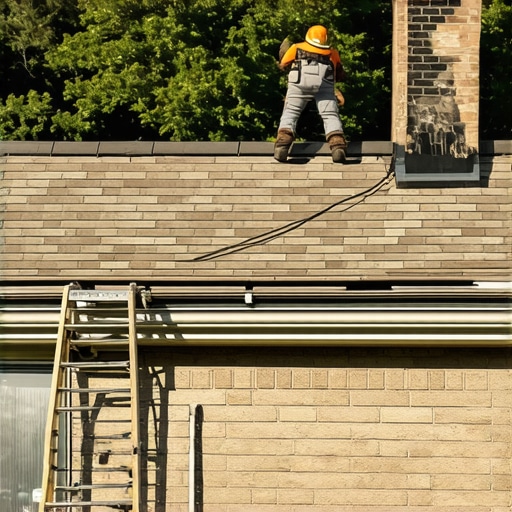
The Forensic Autopsy of a Coastal Roof Failure
Walking onto a steep-slope roof in a high-humidity environment like the Gulf Coast, you don’t just use your eyes; you use your feet. Last summer, I was inspecting a property where the homeowner complained of a ‘musty smell’ in the guest room but swore the roof was fine because it was only six years old. Walking on that roof felt like walking on a damp sponge. I didn’t need to see a leak to know that the plywood decking underneath was already losing its structural integrity. This is the reality of shingle lifting. It is a silent killer of homes. While you are downstairs watching the news, the wind is performing a slow-motion heist, prying up your shingles and inviting the rain to do its worst. When shingles lift, even by a fraction of an inch, the physical defense of your home is compromised. Local roofers often see this as the beginning of the end, yet most homeowners don’t notice it until they have a bucket in the middle of their living room.
The Physics of Lift: How Bernoulli’s Principle Ruins Your Day
To understand why shingles lift, we have to talk about aerodynamics. Your roof is essentially an airplane wing that doesn’t want to fly. When high-velocity winds hit the windward side of your house, they are forced upward. This creates a zone of high pressure at the eave and a low-pressure vortex just above the shingles. This pressure differential creates uplift. If your shingles aren’t perfectly sealed, the wind finds the ‘butt edge’ of the shingle and forces it upward. Once that factory seal-strip is broken, the shingle acts like a sail. This isn’t just about the wind; it’s about the capillary action that follows. Once a shingle is lifted, water doesn’t just fall off; it gets sucked underneath through surface tension. It can travel three or four feet horizontally along the starter strip before finding a shiner—that’s a nail that missed the rafter—and following that nail straight into your attic insulation. If you suspect your roof is struggling, you need to look for signs of hidden shingle lifting before the next storm cycles through.
“A roof is only as good as its flashing and the integrity of its fasteners against uplift forces.” – Old Roofer’s Adage
1. The Shadow Line: Detecting the ‘Ghost Lift’
The first sign isn’t a hole; it’s a shadow. During the ‘Golden Hour’—late afternoon when the sun is low—look at your roof from the ground with binoculars. You are looking for uneven shadow lines. A healthy roof should look flat, a monolithic plane of asphalt and granules. If you see staggered, jagged shadows under the edges of specific shingles, that’s a sign that the sealant strip has failed. This usually happens because of thermal shock—the rapid expansion and contraction of materials as the roof goes from 160°F in the midday sun to 75°F at night. This cycle eventually fatigues the asphalt adhesive until it snaps. Once that seal is broken, the shingle stays ‘memorialized’ in a slightly lifted position, even when the wind isn’t blowing.
2. The ‘Shiner’ and Fastener Fatigue
If you have access to your attic, the most honest assessment of your roof happens from the inside. Take a high-powered flashlight and look for ‘shiners.’ These are nails that the roofing crew fired into the deck but missed the rafter or the truss. In high-wind zones, these nails are the first points of failure. When the wind lifts a shingle, it puts immense leverage on the fastener. If the nail wasn’t driven perfectly flush—if it was ‘over-driven’ or ‘under-driven’—the shingle’s fiberglass mat will eventually tear around the nail head. This is known as nail pull-through. You might notice signs of improper roof nailing if you see rusted nail tips or water stains around the penetrations in your decking. Every shiner is a highway for water to bypass your shingles and rot your rafters.
3. Granule Avalanches in the Gutters
Check your gutters. If you find piles of granules that look like coarse coffee grounds, your shingles are effectively ‘balding.’ While some granule loss is normal, excessive loss is a symptom of shingle lifting. When a shingle lifts and flaps in the wind—even if it doesn’t blow off—the constant mechanical movement causes the granules to rub against each other. This friction strips the asphalt of its UV protection. Once the asphalt is naked, the sun bakes it brittle in a matter of weeks. Brittle shingles can’t seal. It’s a vicious cycle that leads to hidden decking plywood decay because the moisture trapped under those lifted flaps has nowhere to go but into the wood.
“Fasteners shall be driven flush with the shingle surface and not into the roofing material.” – International Residential Code (IRC) R905.2.5
4. Perimeter Pull-Back at the Drip Edge
The edges of your roof are the most vulnerable. Most local roofers who are rushing will skip the proper installation of a starter course or fail to properly secure the drip edge. If you see shingles at the very edge of your roof curling upward or looking ‘wavy,’ you have a perimeter failure. This is where most high wind damage starts. The wind gets under the edge, and because there is no shingle above it to weight it down, it peels the roof back like a sardine can. If you can see the metal of your drip edge from the street, your shingles have already lifted and shifted.
5. The Sponge Effect: Decking Deflection
Finally, we go back to the ‘sponge’ feeling. If you are brave enough to get on a ladder, safely push on the shingles near the valleys or the crickets (those small diversions behind chimneys). If the roof feels soft or has ‘give,’ the lifting has already transitioned into a structural problem. Water has been getting under those lifted shingles for months, soaking the underlayment and rotting the plywood. You are no longer looking at a simple repair; you are likely looking at a full tear-off. If you ignore this, the next heavy storm won’t just lift shingles; it will take the decking with it. You should consult with roofing companies immediately if you detect any soft spots, as this indicates the shear strength of your roof is compromised.
The Fix: Why Caulk is Not a Strategy
I see ‘trunk slammers’—those fly-by-night contractors—try to fix lifted shingles by squirting a bit of roofing cement under the flap. This is a Band-Aid on a gunshot wound. Roofing cement dries out, cracks, and eventually fails. The only real fix for widespread shingle lifting is to address the root cause: poor ventilation or improper fastening. If your attic is a furnace, reaching 140°F, it will cook the adhesive from the inside out. You need to ensure your ridge vents and soffit vents are clear to prevent the thermal pressure that contributes to shingle failure. Don’t wait for the water to hit your floorboards. A proactive inspection today is thousands of dollars cheaper than an emergency tarping job in the middle of a hurricane. Real roofing isn’t about the shingles you see; it’s about the physics of the system you don’t.