
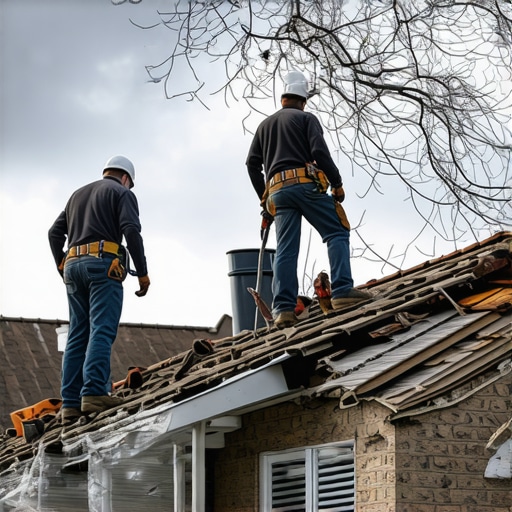
The sirens stop, the rain tapers off to a drizzle, and you step out into your driveway to find a three-foot section of your ridge cap sitting next to the mailbox. This is the moment the clock starts ticking. Before the sun is even fully out, you’ll hear the sound of white vans rolling through the neighborhood. These are the ‘storm chasers,’ out-of-state crews who follow hail and high winds like vultures following a scent. I’ve spent twenty-five years on the roof deck, and if there is one thing I’ve learned, it’s that a storm doesn’t just break a roof—it reveals every shortcut the previous installer took. My old foreman used to say, ‘Water is patient. It will wait for you to make a mistake.’ When high winds hit, that patience ends, and every ‘shiner’—those missed nails that didn’t hit the rafter—becomes a pivot point for a catastrophe.
The Physics of Failure: Why Shingles Fly
High-wind damage isn’t just about a gust ‘blowing’ a shingle off; it’s about the Bernoulli Principle acting on your home. As wind speeds increase over the peak of your roof, it creates a low-pressure zone. The high pressure inside your attic or under the shingle tries to equalize, effectively sucking the roofing material off the deck. This is known as uplift. If your local roofers didn’t use the correct 6-nail pattern required for high-wind zones, or if they high-nailed above the sealant strip, the shingle has no structural integrity against this suction. Once the first tab lifts, you get a ‘zipper effect.’ The wind catches the underside, the sealant bond snaps like a dry twig, and suddenly you’re missing three squares of material before you can even grab a tarp.
“The primary purpose of a roof is to shed water, but its survival depends on its ability to stay attached to the structure under extreme wind loads.” – NRCA (National Roofing Contractors Association)
The Storm Chaser Defense: Spotting the ‘Free Roof’ Scam
Within 24 hours of a major wind event, someone will knock on your door offering a ‘free’ inspection and promising to ‘handle your insurance company.’ Be very careful. These roofing companies often use aggressive sales tactics to get you to sign a contingency agreement before you’ve even seen the damage. They aren’t looking for a long-term fix; they are looking for the insurance check. They will often overlook structural issues like attic decking rafters sag, opting instead to slap new shingles over compromised wood. If they don’t have a local address or they’re pushing you to bypass the permit process, they are cutting corners that will haunt you during the next hurricane season.
The Forensic Walk-Through: Functional vs. Cosmetic Damage
When you’re assessing the aftermath, don’t just look for missing pieces. Real wind damage is often subtle. You need to look for ‘creased’ shingles. This happens when the wind lifts the shingle tab, folds it back, and then it lays back down. The fiberglass matting inside the shingle is now snapped. It might look fine from the ground, but that shingle is dead. It will never seal again, and the next rain will push water sideways via capillary action right into your nail holes. This is why forensic investigation is vital. I always tell homeowners to check their gutters. If you see a sudden influx of granules, it’s a sign the shingles were ‘scoured’ by high-velocity wind, stripping away the UV protection.
Emergency Mitigation: The Band-Aid vs. The Surgery
If you have an active leak, you need immediate storm fixes. But a tarp is not a repair. A common mistake I see is people nailing a tarp directly through the good shingles around the hole. Congratulations, you just created a hundred more leak points. Use ‘sandbagging’ or 1×2 wood strips to secure the tarp, and always tuck the top edge of the tarp under a course of shingles higher up the slope to prevent water from running under the plastic.
“Fasteners shall be driven flush with the shingle surface and shall not be overdriven. Shingle laps shall be aligned to provide the required coverage.” – International Residential Code (IRC) R905.2.5
Navigating the Insurance Adjuster Dance
Your insurance adjuster is looking for ‘functional damage.’ This means the roof’s ability to shed water has been compromised. They aren’t interested in the fact that your shingles look a bit ‘weathered.’ To get a fair shake, you need to document everything. Take photos of the shingles on the ground, the debris in the yard, and the specific ‘bruises’ on the roof. If you have a trusted local roofer, have them present when the adjuster arrives. A pro-level roofer can point out the subtle creasing and seal failure that an overworked adjuster might miss during a ‘catastrophe’ claim cycle.
Choosing the Right Materials for the Rebuild
If the damage is extensive enough for a full replacement, don’t just put back what was there. If you’re in a high-wind zone, look for storm proof roofs with Class H wind ratings (up to 150 mph). Ask about ‘starter strips’—most ‘trunk slammers’ skip these or use flipped-over shingles, but a true starter strip is the only thing that keeps the first course of your roof from peeling up like a banana skin in a gale. Also, consider the underlayment. Standard felt paper is garbage in a storm; once the shingles go, the felt tears instantly. Synthetic underlayment or a ‘peel-and-stick’ secondary water barrier is what keeps your living room dry when the shingles decide to relocate to the next county.
The Final Verdict on Emergency Services
Dealing with high-wind damage is an exercise in patience and skepticism. Don’t let the panic of a hole in your roof drive you into the arms of a contractor who won’t be here in six months to honor a warranty. Real roofing is about more than just hammers and nails; it’s about managing the invisible forces of air pressure and water tension. Protect your deductible, verify the licenses of your roofing companies, and remember: if a deal sounds too good to be true in the wake of a storm, your attic is the one that’s going to pay the price. Stay off the ladder if the wind is still kicking—no roof is worth a trip to the ER.