
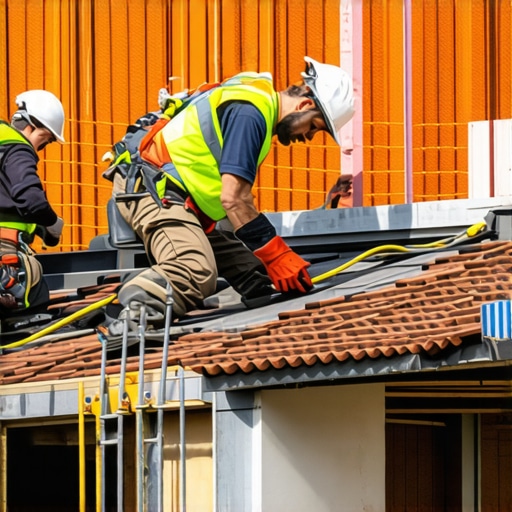
The Anatomy of a Fallen Record
I’ve spent a quarter-century on steep-slope decks, and if there’s one thing I’ve learned, it’s that a roofing company’s reputation is only as solid as its last job site. I’m not talking about the aesthetics of a architectural shingle; I’m talking about whether every man on that crew went home with ten fingers and ten toes. My old foreman used to say, ‘Water is patient, but gravity is downright aggressive. It will wait for you to make a single mistake.’ That’s the reality for local roofers working in the freeze-thaw cycles of the North, where a morning frost turns asphalt granules into a skating rink. When we talk about building local project safety records, we aren’t just talking about wearing hard hats for show; we are talking about the forensic details of preventing a catastrophe.
“Fall protection is the most frequently cited violation in residential construction. A roof is only as safe as the systems and training supporting the person on it.” – National Roofing Contractors Association (NRCA)
1. The Anchor Point Fallacy: Beyond the ‘Shiner’
One of the biggest threats to a safety record is the improper installation of temporary fall protection anchors. In the trade, we talk about a shiner—a nail that misses the rafter and hangs out in the attic space, doing absolutely nothing for structural integrity. When a local roofing company is rushing, they might slap an anchor down into 7/16-inch OSB without hitting a rafter. If a 200-pound man falls, that OSB will unzip like a wet paper bag. To build a real safety record, your crew must verify every anchor hit. You need to understand the physics of the load; the anchor isn’t just a hook, it’s a life-line that depends on the shear strength of the fasteners. If you’re working on a structure with questionable integrity, you might find signs of hidden decking plywood decay, which makes standard anchoring impossible and requires a different approach to fall restraint.
2. Ladder Geometry and Soil Stability
I once walked onto a site where a sub-contractor had his 40-foot extension ladder set up on a patch of thawing mud. The angle was all wrong—closer to 1:2 than the mandatory 4:1 ratio. As the day warmed up, the soil turned to soup, and the feet of that ladder began to migrate. This is where most roofing companies fail. Safety records aren’t built in the boardroom; they are built by checking the ground conditions every single morning. In cold climates, the frost heave can make the ground appear solid when it’s actually a trap. You have to use mud sills or stabilizers. It’s imperative for checking crew safety gear regularly to ensure that the feet of your ladders still have their slip-resistant pads intact and haven’t been worn down to the bare aluminum.
3. The Documentation Trail: If It Isn’t Written, It Didn’t Happen
For a local roofer to maintain an ironclad safety record, documentation must be obsessive. This means daily JHA (Job Hazard Analysis) sheets. You need to record the wind speeds, the temperature (which affects shingle brittleness and slip-factors), and the specific safety measures taken for that day’s tasks. When an inspector or a client looks at your history, they want to see a pattern of discipline. This documentation protects you when things go sideways. It’s part of having an ironclad 2026 contract that specifies safety responsibilities. Without this paper trail, your safety record is just hearsay. You should also be building local project safety records by archiving photos of every safety setup on every job.
“The building official shall have the authority to require the removal of any materials that do not conform to code or safety standards.” – International Residential Code (IRC)
4. Managing the ‘Chaos’ of the Tear-Off
The tear-off phase is the most dangerous part of any residential project. You’ve got debris falling, dust obscuring vision, and the constant sound of pry bars against wood. It’s sensory overload. To keep a clean record, you must manage the zone. This means designated drop areas and constant ground-crew communication. If you are performing a full tear-off, the risk of stepping on a stray nail or tripping over a loose piece of underlayment increases exponentially. A veteran roofer knows that a clean site is a safe site. We use magnetic sweeps not just at the end of the day, but every time a square of shingles comes down. It’s about preventing the ‘shrapnel’ from becoming a medical claim.
5. Crew Size and the Fatigue Factor
Safety records take a nosedive when crews are overworked. In the roofing world, ‘fast’ often leads to ’emergency.’ If you have a four-man crew doing the work of six, corners will be cut. Fatigue leads to thermal bridging in the brain—you stop thinking clearly. You start ignoring the cricket you should have built or the valley flashing that needs extra attention because you’re just trying to get off the roof before the sun goes down. A company that cares about its record will evaluate crew size based on the pitch and complexity of the roof, not just the profit margin. When the heat in the attic hits 140°F, or the wind starts flapping the underlayment, that’s when you need a fresh crew, not one that’s been caffeinating their way through a 12-hour shift. Professional handling of local project crew safety means knowing when to call it a day.
The Long-Term Cost of Cutting Corners
If you think safety is expensive, try having an accident. A single fall can wipe out a decade of profit and destroy a local roofing company’s reputation overnight. The ‘trunk slammers’ will tell you that harnesses slow them down, but they’re the ones who disappear when the lawsuits start flying. Building a safety record is about respect—respect for the trade, respect for the client’s property, and respect for the physics of the roof deck. Don’t be the guy who realizes the plywood has turned to mush only after his foot goes through it. Invest in the gear, document the process, and lead with a forensic mindset. That is how you survive twenty-five years in this business without a broken bone or a broken reputation.