
The Ghost of the 2-Man Crew: A Forensic Look at Labor
My old foreman used to say, ‘Water is patient. It will wait for you to make a mistake.’ He didn’t just mean a hole in the roof; he meant the fatigue that sets in when two guys try to do a ten-man job. In twenty-five years of forensic roofing, I’ve seen more failures caused by exhausted installers than by faulty materials. When you’re looking at local roofers, the first thing you shouldn’t look at is the price—it’s the headcount on the ladder. In 2026, the industry is leaner, but physics haven’t changed. If you have a 40-square roof in a climate like Boston or Buffalo, and a contractor shows up with three guys, you aren’t getting a roof; you’re getting a countdown to a leak.
The Physics of Fatigue and the ‘Shiner’ Epidemic
Let’s talk about shiners. For the uninitiated, a shiner is a nail that misses the rafter or the intended nailing strip. When a crew is too small, they move too fast to compensate. By 3:00 PM, when the sun is beating down or the Northeast wind is biting through their layers, their aim slips. A nail driven just a quarter-inch too high or too low compromises the entire wind rating of the shingle. We call it mechanism zooming—looking at the specific capillary action where water, pulled by surface tension, travels sideways along a misplaced nail head until it finds a gap in the underlayment. Once it’s there, it sits on your plywood, slowly turning it into a sponge. This is why improper roof nailing is the silent killer of modern homes.
“A roof is only as good as its flashing, and flashing is only as good as the man who installs it.” – Old Roofer’s Adage
The Anatomy of a 2026 Performance Crew
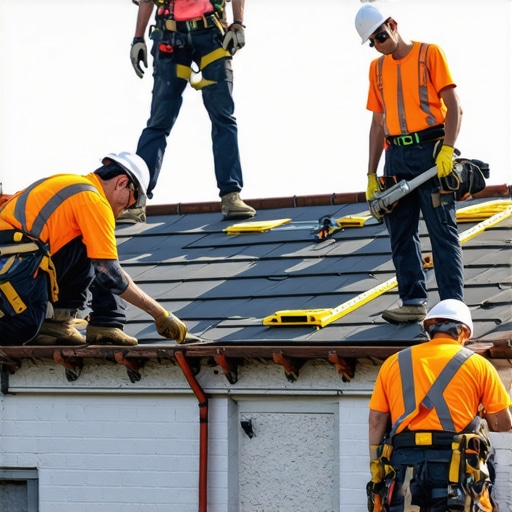
When evaluating roofing companies, you need to understand the choreography. A professional job isn’t a scramble; it’s a military operation. For a standard residential replacement, a crew of 5 to 7 is the sweet spot. Here is how that labor is divided: One dedicated foreman who stays on the ground or moves between the roof and the client to ensure quality control; two ‘tear-off’ specialists who handle the heavy debris; two ‘installers’ who focus strictly on the shingle slope patterning; and at least one ground technician whose only job is to ensure that nails don’t end up in your dog’s paws or your car tires. If the guy doing the nailing is also the guy carrying the bundles up the ladder, his heart rate is too high to maintain the precision needed for complex areas like a cricket or a deep valley.
The Northeast Factor: Ice Dams and the ‘Dried-In’ Race
In the North, we have a unique enemy: the clock. By November, the ‘dried-in’ phase is a race against the weather. You need a crew large enough to strip the old materials and install the Ice & Water shield before the afternoon humidity or a sudden lake-effect snow squall hits. A small crew will take two days to strip a roof, leaving it vulnerable to thermal bridging and condensation issues overnight. A large, synchronized crew can have a 30-square house stripped and protected with synthetic felt by lunch. If you see your contractor cutting corners on the contract details regarding crew size, walk away. They are likely planning to sub-contract the work to a ‘trunk slammer’ who won’t be there when the ice dams start backing up under your eaves in January.
“Roofing assemblies shall be installed in accordance with the manufacturer’s instructions and the requirements of this chapter.” – International Residential Code (IRC) R903.1
The Trap of the ‘Lifetime’ Warranty
I’ve seen it a thousand times. A homeowner hires the cheapest of the roofing companies because they offered a ‘Lifetime Warranty.’ Here’s the forensic truth: that warranty is void the moment a nail is driven incorrectly. Manufacturers don’t cover ‘installer error,’ and guess what a small, overworked crew produces? Error. When we perform a decking plywood decay inspection, we often find that the rot started years ago because the ‘bargain’ crew didn’t have the manpower to properly flash the chimney or install a proper drip edge. They were too busy trying to finish before dark so they could get paid. You aren’t just paying for shingles; you’re paying for the focus and stamina of the people holding the hammers. If you are negotiating labor costs, don’t squeeze them so hard that they have to cut the crew size to make a profit. That’s how you end up with a roof that looks good from the curb but fails in the first heavy gale.
Conclusion: The Forensic Verdict
Before you sign, ask for the names of the leads. Ask how many squares they expect to lay per man-day. If the answer is more than 10 squares per installer, they are rushing. A rushed roof is a leaky roof. Don’t let the ‘tapestry’ of a sales pitch fool you—roofing is a gritty, physical labor game where numbers matter. Look for a crew that has a dedicated safety officer and enough hands to keep the site clean. Your attic, your rafters, and your bank account will thank you when the first blizzard hits and your ceiling stays dry.