
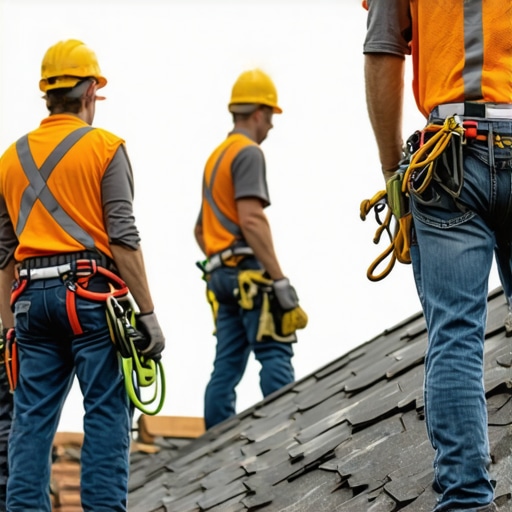
The Reality of the Roof Deck: Why Most Local Roofers Fail Before the First Nail
Walking on that roof felt like walking on a sponge. I knew exactly what I’d find underneath—rotting plywood, saturated insulation, and a crew of three guys standing on a 10/12 pitch with nothing but their sneakers and a prayer to hold them up. In my 25 years as a forensic roofing investigator, I have seen the same story play out from the Gulf Coast to the panhandle. When the humidity hits 90% and the sun is beating down at 140 degrees on an asphalt surface, safety isn’t just about a handbook; it’s about the physics of survival. Roofing companies that treat safety like a checkbox are the ones who end up in the news or, worse, leaving you with a half-finished job and a lawsuit on your lawn. If you’re hiring local roofers, you need to look past the shiny trucks and look at the boots on the shingles.
Tip 1: Establishing the Structural Integrity Benchmark
You cannot have crew safety without deck integrity. Most roofing accidents happen because a worker steps where they think there is a rafter, but instead, they find ‘oatmeal’—plywood that has been disintegrated by years of trapped moisture and capillary action. Water is patient; it creeps under the laps of your shingles and sits on the wood until the lignin dissolves. Before a crew even unrolls their first bundle, a forensic-level inspection is required. We aren’t just looking for leaks; we are looking for the signs of hidden decking plywood decay. If the deck is soft, the harness anchor points are useless. You can’t bolt a fall-arrest system into mush.
“Safety must be a primary consideration for all roofing projects, and fall protection is the most critical element of any roofing safety program.” – NRCA Safety Manual
Tip 2: The Thermal Threshold and Cognitive Failure
In the Southeast, the enemy isn’t just gravity; it’s the sun. When a roofer’s core temperature climbs, their cognitive function drops. This leads to the ‘shiner’—that missed nail that doesn’t hit the rafter. While a shiner is a leak waiting to happen, it’s also a symptom of a crew that is physically failing. Roofing companies must implement strict hydration and shade rotations. We’re talking about the ‘Wet Bulb’ effect. When the air is too humid to allow sweat to evaporate, the body stops cooling. A local roofer who is dizzy is a roofer who is going to slip. This is why managing local project crew safety fast involves pre-planning for heat stress, not just reacting to it when someone starts staggering.
Tip 3: Fall Arrest Systems vs. ‘Jewelry’
I’ve seen plenty of crews wearing harnesses that aren’t actually tied to anything. In the trade, we call that ‘jewelry.’ It’s for show. A real fall-arrest system requires a tensioned lifeline and a clear understanding of ‘fall clearance.’ If a roofer is 10 feet off the ground but has a 12-foot lanyard, that harness is just a decoration. You need to see workers actively clipped in, especially near the valley or the cricket—those high-traffic areas where water and debris accumulate, making the surface as slick as a skating rink. When evaluating local roofers, you should check for proper crew safety gear. If the equipment looks frayed or sun-bleached, it’s a sign they aren’t maintaining the very things that keep them alive.
Tip 4: Debris Management and Ground-Level Physics
Safety isn’t just for the guys on the square; it’s for everyone on the ground. A single square of shingles (100 square feet) weighs about 230 to 250 pounds. When that material is being stripped, it becomes a projectile. I once investigated a site where a falling bundle of old felt took out a gas line because the crew didn’t have a controlled drop zone. Efficient roofing companies use debris nets and plywood shields to protect your home’s perimeter. This is a critical part of maintaining local project safety records. If a company can’t keep their own workspace clean, they aren’t going to keep your property safe from ‘shiners’ left in your grass for your tires to find later.
Tip 5: The Wind-Driven Rain Protocol
In our tropical climate, a storm can blow in in twenty minutes. A crew that isn’t fast with a tarp is a crew that is going to cause a disaster. But ‘fast’ shouldn’t mean ‘dangerous.’ The moment the wind picks up, every sheet of underlayment becomes a sail. I have seen workers nearly lifted off a roof because they tried to hold down a piece of synthetic felt during a gust. Safety means knowing when to get off the roof. An ironclad contract should detail the ‘Stop Work’ triggers. This protects the crew from falls and protects your home from being open during a downpour. If they aren’t monitoring the radar, they aren’t a professional crew.
“A roof is only as good as its flashing, but a roofer is only as good as his feet.” – Old Roofer’s Adage
The Material Truth about Warranties and Risks
Many homeowners think a ‘Lifetime Warranty’ covers everything. It doesn’t. If a worker is injured on your property and the roofing company doesn’t have proper workers’ comp and safety protocols, that warranty won’t help you with the legal fallout. You need to hire roofing professionals who understand the mechanism of failure—both in the materials and in the human element. Don’t let a ‘trunk slammer’ tell you that safety gear ‘slows them down.’ Speed without safety is just a shortcut to a lawsuit. Always verify their standing and look for companies that invest in high-quality synthetic shingle underlayments which provide better traction than old-school organic felt. Better traction means fewer slips, and fewer slips mean a faster, safer completion of your project. In the end, the cost of safety is pennies compared to the cost of a catastrophic failure. Stop looking for the cheapest bid and start looking for the crew that will still be on their feet when the last ridge cap is nailed down.