
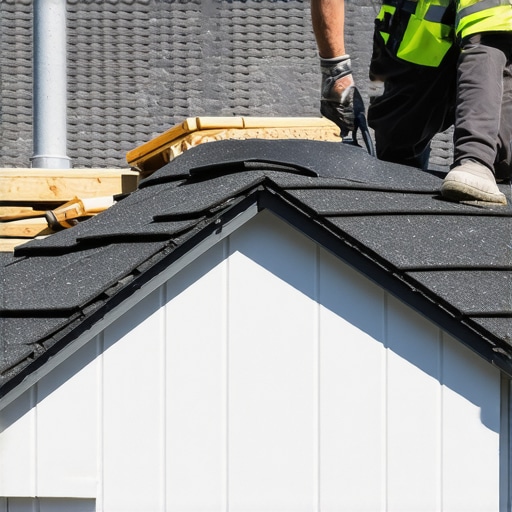
The Invisible Layer That Actually Saves Your Attic
Look, I’ve spent three decades on these slopes, and if I had a nickel for every time a homeowner obsessed over shingle color while ignoring the underlayment, I’d be retired on a beach in Florida. Most people think the shingles do all the heavy lifting. They’re wrong. Shingles are just the armor; the underlayment is the skin. My old foreman used to say, ‘Water is patient. It will wait for you to make a mistake.’ And in our northern climate, where the wind howls off the lake and drives sleet sideways, that mistake is usually using old-school organic felt paper when you should have gone synthetic.
Walking on a roof prepped with cheap felt is like walking on wet newspaper. It’s slippery, it tears, and it’s a relic of a time when we didn’t know better. I’ve seen local roofers slap down #15 felt on a Friday, only for a weekend storm to turn that paper into a wrinkled mess of gray mush. When you nail shingles over wrinkled felt, you get shingle buckling—a cosmetic nightmare that eventually invites water to pool where it shouldn’t. If you want to avoid this, you need to understand how to avoid shingle buckling before the first nail is even driven.
“Underlayment is the primary secondary water barrier for the roof system.” – National Roofing Contractors Association (NRCA)
1. Extreme Moisture Resistance vs. Organic Decay
Traditional felt is made of cellulose—basically recycled paper soaked in asphalt. In places like Minnesota or Michigan, where humidity swings are wild, that paper acts like a sponge. It absorbs moisture from the air, expands, and then shrinks when the sun finally hits it. That constant movement shears your fasteners and loosens the seal. Synthetic felt pads, made from woven polypropylene or polyethylene, are functionally waterproof. They don’t absorb a drop. When we talk about signs of poor underlayment, the first thing I look for is that ‘telegraphing’ look where you can see the lines of the paper through the shingles. Synthetic doesn’t do that. It stays flat, keeping the deck bone dry even if a shingle blows off during a midnight gale.
2. Tear Strength and the ‘Shiner’ Problem
I’ve investigated hundreds of leaks where the culprit wasn’t a hole in the shingle, but a tear in the felt around a ‘shiner’—that’s trade talk for a nail that missed the rafter. In a high-wind event, shingles can lift. If your underlayment is weak, the wind pressure will literally rip the felt right off the nail heads. Synthetic underlayment has a tear strength roughly 20 times higher than organic felt. You can’t rip this stuff with your hands; you need a sharp hook blade. This means even if your shingles take a beating, the underlayment stays pinned to the deck. Without that grip, you’re looking at hidden decking plywood decay that rots your home’s skeleton from the outside in.
3. UV Stability: The ‘Blacked-In’ Safety Net
Sometimes a project gets delayed. Maybe the roofing companies have a crew shortage, or a storm shuts down the site for a week. Organic felt can’t handle UV exposure. After three days in the sun, the asphalt degrades and the paper becomes brittle enough to snap like a cracker. Most high-quality synthetic pads are UV-stabilized for up to six months. This ‘black-in’ phase is vital. It means your house is protected while the crew waits for the shingles to arrive. If your contractor is using cheap paper and leaves it exposed to the sun, they are already compromising the system before it’s even finished. This is one of the hidden costs of roof replacement—the price of having to redo work that was damaged by the elements during the install.
“The roof shall be covered with an approved underlayment… installed in a manner that prevents water from entering the building.” – International Residential Code (IRC) R905.1.1
4. Better Traction and Crew Safety
You might think, ‘Why do I care if the roofer is safe? I just want a dry house.’ Well, you care because a roofer who feels safe does better work. Synthetic pads often have a non-slip, fiber-textured top layer. When a guy is standing on a 10/12 pitch roof, and there’s a light morning dew, organic felt is a death trap. If the crew is sliding around, they aren’t focusing on hitting the nail line. They’re missing the ‘sweet spot’ on the shingle, leading to high-nailing and eventual blow-offs. A stable work surface means the roofing job is done with forensic precision. Before you sign any papers, make sure you have an ironclad contract that specifies exactly which brand and grade of synthetic underlayment will be used.
The Forensic Verdict
Don’t let a slick salesman tell you that ‘standard felt’ is good enough because it’s ‘what we’ve always used.’ We used to use lead paint too, but we got smarter. In a northern climate with ice dams and freeze-thaw cycles, synthetic is the only choice that makes sense for your wallet and your peace of mind. If you see them loading rolls of heavy, stinking black paper onto your roof, stop the job. You’re paying for a 2026 roof; don’t let them give you 1950s technology.