
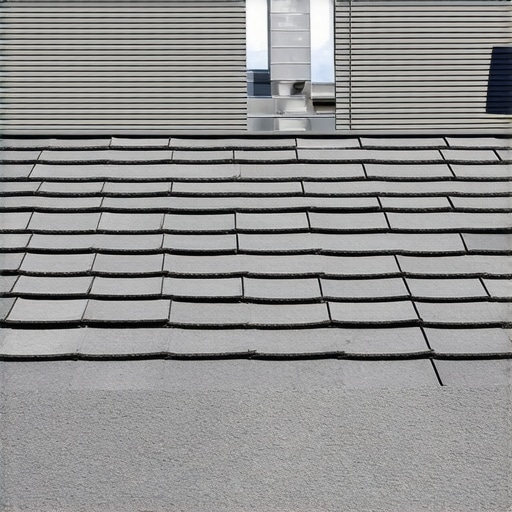
The Invisible Layer That Determines if Your House Rots
Most homeowners spend hours debating the exact shade of ‘Weathered Wood’ or ‘Charcoal’ for their shingles, but they couldn’t tell you a single thing about what’s sitting directly on their roof deck. That is a massive mistake. As someone who has spent twenty-five years peeling back failed roofs, I can tell you that the shingles are just the armor; the underlayment is the skin. If that skin is weak, your house is toast. In the humid, wind-lashed environments of the Southeast, where the air feels like a wet blanket and the afternoon storms hit like a fire hose, the traditional 15-pound or 30-pound asphalt felt—the stuff we trade guys call ‘stinky black paper’—is a liability you don’t want.
My old foreman, a man who had more tar under his fingernails than blood in his veins, used to lean over a 12-pitch gable and say, ‘Water is patient. It will wait for you to make a mistake. It doesn’t need a hole; it just needs a hint of a path.’ He was right. When you use cheap, organic felt paper, you’re essentially laying down a layer of recycled cardboard soaked in oil. It’s thirsty. It absorbs moisture, it ripples, and eventually, it decays. That’s why the industry has shifted toward synthetic shingle felt pads. These aren’t just ‘plastic sheets’; they are engineered barriers designed to withstand the physics of failure that local roofers see every single day.
“A roof is only as good as its flashing and the integrity of the layer beneath the shingle.” – Old Roofer’s Adage
The Physics of the ‘Wick’: Why Organic Felt Fails
Before we get into the benefits, you need to understand the mechanism of failure. Traditional felt is hygroscopic. That’s a fancy word for saying it acts like a sponge. When humidity spikes or water gets driven under a shingle by a 60-mph gust, organic felt absorbs that moisture. When it gets wet, it expands. Because it’s nailed down every few inches, that expansion has nowhere to go but up, creating ripples. These ripples lift the shingles, creating ‘humps’ that look terrible and, more importantly, break the thermal seal of the shingle. Once that seal is broken, wind can get under the shingle and rip it right off the deck. If you’ve ever seen shingle buckling, there’s a high chance the underlayment is the culprit.
Benefit 1: Superior Moisture Resistance and the End of Rot
Synthetic felt pads are made from woven or spun-bonded polyethylene or polypropylene. Unlike asphalt felt, they are non-absorbent. Water cannot penetrate the fibers, and it cannot be wicked through the material. In a coastal environment, this is the difference between a dry attic and hidden decking plywood decay. When water stays out of the wood, the wood stays strong. I’ve seen 10-year-old roofs where the plywood looked like it was brand new because the synthetic barrier did its job, and I’ve seen 5-year-old roofs with organic felt where I could put my hammer through the rafter tails because the felt held the moisture against the wood until it turned into a mushroom farm.
Benefit 2: UV Stability and the ‘Open Roof’ Window
In the trade, we know things don’t always go to plan. A storm rolls in, a crew member gets sick, or the shingle delivery is delayed. If you have organic felt on a roof, it can only stand the sun for a day or two before the oils bake out, the paper turns brittle, and it starts to crack. Synthetic felt pads are UV-stabilized. Some of them can sit exposed for six months without losing their structural integrity. This provides a massive safety net for roofing companies and homeowners alike. If a hurricane hits and shingles are stripped, a high-quality synthetic underlayment can actually act as a secondary water barrier, keeping your interior dry even when the armor is gone. This is often part of achieving immediate leak storm patches during emergencies.
Benefit 3: Tear Strength and the ‘Shiner’ Defense
One of the biggest headaches on a job site is tear-off and installation. Asphalt felt is incredibly fragile. If a roofer steps on it the wrong way, it tears. If a high wind catches it before the shingles are down, it flies off like a kite. Synthetic underlayment is almost impossible to tear by hand. This strength is vital because it prevents the material from pulling away from the fasteners. When a roofer hits a ‘shiner’—a nail that misses the rafter—you want an underlayment that grips that fastener tight. The high-tensile strength of synthetic materials ensures that the fasteners stay sealed and the underlayment stays flat against the deck, even under the pressure of foot traffic on a 140-degree afternoon.
“Underlayment shall be applied in accordance with the manufacturer’s installation instructions.” – International Residential Code (IRC)
Benefit 4: Weight and Square Coverage Efficiency
A single roll of 30-pound organic felt covers about two squares (200 square feet) and weighs nearly 60 pounds. A roll of synthetic underlayment can cover ten squares (1,000 square feet) and weighs only 30 pounds. Why does this matter to the homeowner? It’s not just about making the crew’s life easier. It’s about efficiency and fewer seams. Every seam in your underlayment is a potential point of entry for water. By using wider, longer rolls of synthetic material, we reduce the number of laps and joins. Fewer laps mean fewer places for capillary action to pull water sideways under your shingles. If you’re worried about costs, remember that while the material might be slightly more expensive, the labor savings and the reduction in waste often balance the checkbook, especially when considering the hidden costs of roof replacement later down the line.
The Trap: Don’t Fall for the ‘Minimum Code’ Roofing Companies
I see it all the time. A local roofer gives a low-ball bid. How do they do it? They use the absolute cheapest materials that ‘meet code.’ Technically, 15-pound felt meets code in many places, but it’s like wearing a paper bag in a monsoon. You need to ask your contractor exactly what brand and type of synthetic underlayment they are using. If they don’t know, or if they try to tell you ‘felt is felt,’ show them the door. You want a product with a slip-resistant surface for crew safety and a high perm rating to allow the house to ‘breathe.’ If you ignore these details, you might end up with moisture trapped in insulation, which leads to mold and skyrocketing energy bills.
Final Forensic Thoughts
Choosing the right underlayment is a one-time decision that protects your home for thirty years. Don’t let a contractor save a few hundred bucks by using 19th-century technology on your 21st-century home. Insist on a high-performance synthetic shingle felt pad. It stays flatter, lasts longer, and provides a level of peace of mind that a roll of tar paper simply cannot match. If you notice signs of failure early, such as rotted fascia or soffit boards, it’s often because the water management system—starting with the underlayment—has failed at the edges. Get it right the first time, and you won’t have to see a guy like me poking around your attic with a flashlight and a grimace.