
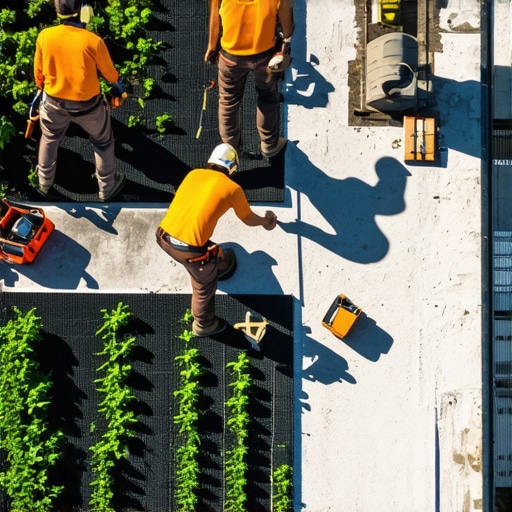
The Truth Under the Shingle: Why Bio-Mats Are Taking Over the Roof Deck
I’ve spent the last quarter-century crawling through 140-degree attics and peeling back layers of shingles like I’m performing an autopsy on a corpse that died of neglect. Most roofing companies you hire today are focused on the ‘jewelry’—those pretty architectural shingles that look great from the curb. But as a forensic roofer, I don’t care about the jewelry. I care about the skin and the bones. My old foreman used to say, ‘Water is patient. It will wait for you to make a mistake, and then it will sit there and rot your house from the inside out while you’re sleeping.’ He was right. Most local roofers are still slapping down cheap synthetic underlayment that breathes about as well as a plastic bag, and in our northern climate, that’s a death sentence for your plywood.
We are seeing a massive shift in 2026. The industry is finally moving toward Bio-Mats, a specialized, organic-based underlayment that does more than just keep the rain off for a week. It manages the physics of a home. If you’re in a place like Boston or Minneapolis, you aren’t just fighting rain; you’re fighting the physics of ice dams and warm air leakage. When that warm air hits the cold underside of your roof deck, it creates ‘attic rain.’ If your underlayment can’t handle that moisture, you end up with decking rot before the shingles even hit their ten-year mark.
“A roof is only as good as its flashing and the substrate that supports it. If the underlayment fails, the assembly fails.” – Old Roofer’s Adage
1. Superior Vapor Permeability (Stopping the Attic Rain)
The primary reason roofing companies are ditching standard synthetics for 2026 Bio-Mats is vapor transmission. Most cheap underlayments act as a total vapor barrier. While that sounds good, it’s actually a disaster in cold climates. Warm, moist air from your shower or kitchen migrates into the attic. If it can’t escape through the roof deck and underlayment, it condenses. I’ve seen thousands of ‘shiners’—nails that missed the rafter—covered in white frost in January. When that frost melts, it drips, leading homeowners to think they have a leak. Bio-Mats allow that vapor to pass through without letting liquid water back in. This prevents the moisture from being trapped against the wood, which is how you avoid underlayment rot.
2. Thermal Bridging Reduction
In the North, we deal with thermal bridging where the heat from inside the house travels through the rafters and melts the snow on the roof, leading to ice dams. Bio-Mats are thicker and have a higher R-value density than a thin sheet of plastic. They act as a tiny buffer, a thermal break that helps keep the roof deck temperature more uniform. When a roofer just rolls out thin felt, they are doing nothing to help the home’s thermal envelope. Professional local roofers use Bio-Mats because they know it reduces the temperature spikes that cause shingles to curl and age prematurely. If you don’t address this, you’ll start seeing ridge cap lift within a few seasons.
3. The ‘Self-Healing’ Gasket Effect
Every time a roofer drives a nail into your roof, they are punching a hole in your waterproofing. On a standard 30-square roof (that’s 3,000 square feet for the laypeople), there are tens of thousands of nails. Each one is a potential leak point. Bio-Mats are engineered with a high-density organic core that ‘hugs’ the nail shank. Think of it like a gasket. When the nail penetrates, the material compresses around it. This is vital when the wind starts howling and trying to push water uphill through capillary action. Without this gasket effect, water creeps right down the nail and into the plywood. I’ve performed autopsies on roofs where every single nail hole was surrounded by a black ring of mold because the underlayment didn’t seal.
4. Dimensional Stability and ‘The Wave’
Standard underlayments, especially the cheap stuff, expand and contract at different rates than the wood deck. Have you ever looked at a roof and seen ‘waves’ or wrinkles under the shingles? That’s often the underlayment buckling. Bio-Mats are dimensionally stable. They don’t react to humidity shifts the same way felt does. This means your shingles lay flat, which is essential for the starter course and the gable edges. If the underlayment wrinkles, it lifts the shingle just enough for a high wind to get a ‘finger’ under it and rip it off. In 2026, nobody wants a call-back because of a ‘shingle flutter’ that could have been prevented by using a better mat.
“Roofing systems shall be designed and installed in accordance with this code and the manufacturer’s installation instructions.” – International Residential Code (IRC)
5. UV Protection During the ‘Exposure Phase’
Sometimes a project gets delayed. Maybe a storm rolls in, or the crane for the shingles is a day late. Standard underlayment starts to degrade the moment the sun hits it. The UV rays break down the polymers, making the material brittle. By the time the shingles go on, the underlayment is already compromised. Bio-Mats are built with UV inhibitors that allow them to sit exposed for weeks if necessary without losing their structural integrity. This is a safety net for the homeowner. If your contractor is using a material that can’t handle a little sun, they are cutting corners. You can always tell a pro by the quality of the ‘temporary roof’ they leave behind at the end of the day.
6. Traction and Jobsite Safety
Let’s talk about the guys actually doing the work. A 12/12 pitch roof is basically a cliff side. If the underlayment is slippery or tears easily, people get hurt. Bio-Mats have a textured, non-slip surface that allows the crew to move safely. Why does this matter to you? Because a safe crew is a careful crew. When workers are sliding around, they drop tools, they scuff shingles, and they miss the ‘sweet spot’ on the nail line, creating fastener failure. A Bio-Mat stays put and provides a solid foundation for the entire installation process. It won’t tear at the fasteners, which is a common issue with underlayment tears seen in cheaper builds.
7. Long-Term Adhesion to Critical Areas
The most vulnerable parts of your roof aren’t the big flat areas; they are the valleys, the chimneys, and the crickets. Bio-Mats interface better with the flashing tapes and sealants used in these high-stress zones. When you use a high-quality mat, the adhesives actually ‘bite’ into the fibers of the mat, creating a unified water barrier. If you’re using a cheap, oily felt, the tape will eventually peel away, leading to those classic valley leaks that drive homeowners crazy. In 2026, roofing companies are looking for a system that doesn’t rely on luck and a prayer to stay dry.
The Marketing Lie: ‘Lifetime’ Warranties
Don’t let a salesman tell you the shingles have a ‘Lifetime Warranty’ and expect that to mean the roof will last forever. Most of those warranties only cover the material cost of the shingle itself—not the labor to tear it off, not the rotted plywood underneath, and certainly not the underlayment. If your roofer uses a 20-year shingle over a 5-year underlayment, you have a 5-year roof. Period. The Bio-Mat is the insurance policy that ensures the shingles actually live out their intended lifespan. It’s the difference between a roof that just ‘passes code’ and a roof that actually protects your family.
Conclusion: Don’t Step Over a Dollar to Pick Up a Dime
When you’re getting quotes from local roofers, ask them specifically what is going under the shingles. If they say ‘standard synthetic’ or ’15-pound felt,’ thank them for their time and show them the door. You want a company that understands the forensic reality of how roofs fail. You want someone who uses Bio-Mats because they understand vapor drive, thermal bridging, and the physics of water. It might cost a few hundred dollars more on the front end, but it will save you thirty thousand dollars when you don’t have to replace the entire deck in a decade. A roof is a system, not a product. Make sure the system is built to survive.