
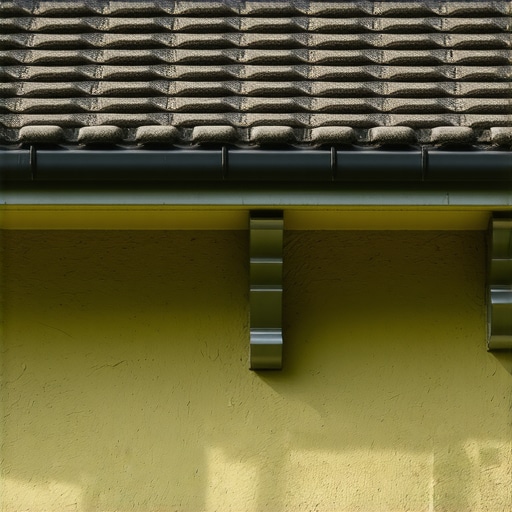
The first time you notice the leak, it’s not on the roof. It’s a rhythmic thwack-drip against the siding during a Nor’easter, or a pool of standing water sitting dangerously close to your foundation in the morning. Most homeowners spend their lives looking at the shingles, but they forget the metal troughs hanging off the edge of their world. As a forensic roofer, I’ve seen more basements flooded by a single loose screw than by a hundred blown shingles. My old mentor, a grizzled foreman who could smell a leak from the driveway, always used to tell me: ‘Water is a patient thief; it will wait for you to make a mistake, and it loves nothing more than a gutter that’s lost its grip.’ When those gutter straps—the literal skeleton of your drainage system—start to give way, your house is no longer shedding water; it’s inviting it in for a stay.
The Physics of Gutter Failure in Cold Climates
In the Northeast, we deal with the brutal cycle of freeze and thaw. It’s not just rain; it’s the weight of a heavy wet snow followed by a flash freeze. A standard gutter can hold hundreds of pounds of ice if the downspouts are clogged. That weight creates an immense amount of leverage on the gutter straps. When those fasteners were driven in by local roofers who were in too much of a hurry, they often missed the rafter tails, leaving what we call a ‘shiner’—a nail that’s just hanging in the air or barely biting into the fascia board. Over time, the constant thermal expansion and contraction of the aluminum trough pulls those fasteners out millimeter by millimeter. This is fastener withdrawal, and it’s the beginning of the end for your drainage system.
“A roof is only as good as its flashing and drainage.” – Old Roofer’s Adage
Once the strap is loose, the gutter pitch is compromised. Gutters aren’t supposed to be level; they need a precise slope—usually a quarter-inch for every ten feet—to keep water moving toward the downspout. If a strap pops, you get a ‘belly’ in the gutter. Water sits there, attracts mosquitoes, grows algae, and adds even more weight, which pulls the next strap loose. It’s a mechanical domino effect that ends with your gutter lying in the hydrangeas.
Sign 1: The Gap Between the Fascia and the Trough
If you stand under your eaves and see daylight between the back of the gutter and the fascia board, you’ve got a problem. This isn’t just a cosmetic issue. When that gap opens up, surface tension causes rainwater to wrap around the back of the gutter instead of falling into it. This water then runs directly down your fascia and into your soffits. If you don’t catch it, you’ll be calling for emergency roof services to fix storm damaged soffits before the season is out. The wood starts to soften, the paint peels, and the rot begins to migrate into the structure of your home.
Sign 2: The Tell-Tale Rust Streaks or ‘Tiger Stripes’
Look at the side of your gutters. Do you see vertical dark lines? We call those tiger stripes. While some of that is just environmental dirt, heavy staining often indicates that water is overflowing the front or back of the trough because the straps have allowed the gutter to tilt. Even worse are the orange rust streaks coming from the fastener holes. That’s the sound of a steel nail reacting with the aluminum gutter—galvanic corrosion. It eats the hole wider until the strap simply falls off. Most roofing companies worth their salt will use stainless steel or high-grade coated screws to avoid this, but the ‘trunk slammers’ will use whatever is cheap in their bucket.
Sign 3: Visible Sagging or ‘The Belly’
This is the most obvious sign, but people often ignore it until the gutter is hanging at a 45-degree angle. You can spot this by looking down the line of the roof. The gutter should be a straight, purposeful line. If it looks like a wet noodle, the straps have failed. When water pools in these low spots, it leads to hidden decking plywood decay because the moisture stays trapped against the roof edge. Water doesn’t just sit; it wicks. It uses capillary action to move upward into the roof deck, rotting out the very edge of your roofing system where it’s hardest to see.
Sign 4: The Sound of Metal Groaning in the Wind
On a windy night, listen to your eaves. A properly secured gutter system is silent. If you hear a rhythmic metallic clicking or a deep groan, that’s the sound of a gutter strap that has lost its tension. The gutter is rocking back and forth in the wind. Every time it rocks, it’s enlarging the hole in the wood fascia. Eventually, the hole becomes so large that no screw will bite, and you’ll have to replace the entire fascia board. To prevent this, you need to ensure the installation of roof edging is done correctly to provide a solid backing and drip edge that directs water into the center of the trough, reducing the lateral force on those straps.
Sign 5: Foundation Erosion and Landscape Trenches
If you see a trench being dug into your mulch or soil directly beneath the gutter, it means the water is overtopping. This usually happens because the loose straps have caused the gutter to pull away or tilt forward. This is the most dangerous sign. That water is heading straight for your foundation. Over a few seasons, this can crack a concrete wall or flood a crawlspace. This is why local roofers emphasize gutter maintenance as much as the shingles themselves; the roof protects the top of the house, but the gutters protect the bottom.
“Water is the primary agent of deterioration in the building enclosure.” – Building Science Institute
The fix isn’t just