
The Anatomy of a Slow Motion Disaster
Walking on that flat roof felt like walking on a giant, sun-baked sponge. I knew exactly what I’d find underneath before I even pulled my knife out. It was a 10,000-square-foot warehouse in the humid corridor of the Southeast, and the owner was complaining about a ‘minor drip’ in the breakroom. When I stepped near a HVAC curb, the membrane gurgled. That’s the sound of a roof that has surrendered. Underneath that TPO skin, the polyiso insulation had turned into a heavy, sodden mess, and the metal decking was beginning to resemble lace. This isn’t just a leak; it’s a structural liability caused by the physics of poor drainage. Most local roofers will sell you a patch, but if you don’t understand how water moves—or stays—on a flat surface, you’re just throwing money into a swamp.
The 48-Hour Rule and the Physics of Ponding
In the trade, we talk about ponding water like it’s a terminal illness. If water sits on your roof for more than 48 hours after a rainstorm, your drainage has failed. It’s not just about the weight, though a single ‘square’ (100 square feet) of water an inch deep weighs about 520 pounds. The real killer is hydrostatic pressure. On a flat roof, water finds every microscopic void in a seam. While a sloped roof uses gravity to shed water before it can penetrate, a flat roof allows water to sit and search. Over time, UV radiation breaks down the adhesives, and that sitting water uses capillary action to ‘wick’ its way into the substrate. Once it’s in, it stays. This is why you need to learn how to identify ponding water before the mold starts growing in your rafters.
“A roof is only as good as its flashing, and a flat roof is only as good as its slope.” – Old Roofer’s Adage
Tip 1: The Tapered Insulation Solution
The biggest lie in roofing is the term ‘flat.’ No roof should be truly flat. You need a slope—at least a quarter-inch per foot—to move water toward the exits. If your structure was built dead-flat, the only way to fix the ‘birdbaths’ is with a tapered insulation system. We use rigid foam blocks, cut at an angle, to create a synthetic slope under the membrane. This directs water away from the ‘dead zones’ and toward your drains. Without this, you’re just waiting for standing water on flats to eat through your investment. I’ve seen roofing companies try to ‘level’ these areas with heavy coatings, but all that does is create a bigger bowl for the water to sit in. You need surgery, not a Band-Aid.
Tip 2: The Logic of Scuppers and Crickets
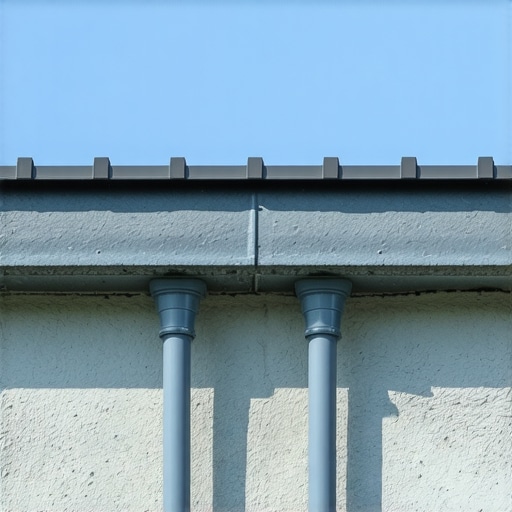
If your roof is a bathtub, the scuppers are the overflow drains. But here’s what the ‘trunk slammers’ won’t tell you: a hole in the wall isn’t enough. You need a ‘cricket.’ In roofing terms, a cricket is a small, diamond-shaped peaked structure built behind a chimney or an HVAC curb to divert water around the obstruction. Without a cricket, water hits that curb like a dam and just sits there, slowly eating the flashing. Furthermore, your scuppers need to be clear of the ‘biological load’—that’s the fancy word for the muck, leaves, and dead pigeons that congregate at the drainage points. If you don’t have a maintenance plan, you’ll end up looking for fixes for clogged roof drains while your ceiling tiles are hitting the floor. I once saw a scupper so clogged with Algae that it had grown a small ecosystem, complete with frogs, while the warehouse below was rotting from the inside out.
Tip 3: Don’t Ignore the Secondary Drainage
Every flat roof should have a primary system and an emergency secondary system. If your primary drains get choked during a tropical downpour, where does the water go? If it has nowhere to escape, the water level rises until it tops the flashing of your skylights or equipment curbs. This is how ‘phantom leaks’ happen—the roof is technically waterproof, but the water level exceeded the height of the waterproof ‘boots.’ You need overflow scuppers set two inches higher than your primary drains. When you see water pouring out of those secondary holes, it’s the building’s way of screaming for help. If you ignore it, you’ll eventually find signs of hidden decking decay that can lead to a total deck collapse.
“The International Building Code (IBC) Section 1503.4 requires that ‘design and installation of roof drainage systems shall comply with Section 1503 and the International Plumbing Code.'” – IRC Building Standards
The Forensic Verdict
Choosing between roofing companies often comes down to who actually understands the plumbing of a roof. Before you sign a contract, you need to check for valid insurance and ask them about their plan for ‘positive drainage.’ If they don’t mention tapered systems or crickets, they aren’t roofers; they’re just shingle-tossers who are out of their depth on a flat deck. Don’t let your roof become a pond. The smell of rotting plywood and the sight of a sagging steel deck are expensive lessons that gravity is always happy to teach you.