
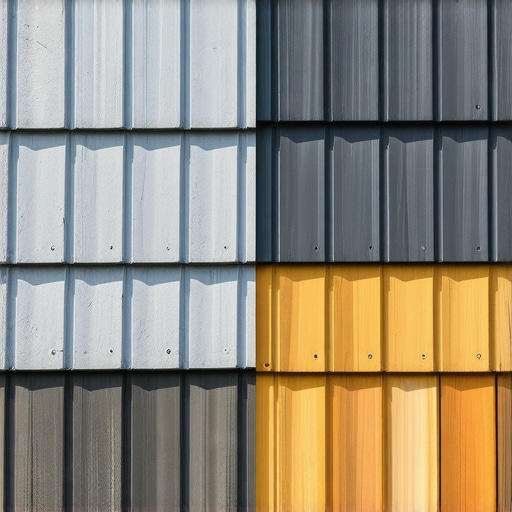
Walking on that roof felt like walking on a sponge. I knew exactly what I would find underneath before I even pulled my flat bar out of my belt. This wasn’t just old age; it was a slow-motion biological car wreck. The homeowner thought they had a ‘classic’ cedar look, but what they actually had was a multi-thousand-dollar science experiment in fungal growth. As a guy who has spent twenty-five years investigating why enclosures fail, I see this daily. People fall in love with the silver-gray patina of natural wood, but they forget that wood is organic. It wants to return to the earth. In our northern climate, where the freeze-thaw cycle hits like a sledgehammer every November, the choice between synthetic and natural shakes isn’t just about ‘curb appeal’—it is about whether you are buying a 30-year asset or a 12-year liability. When you hire local roofers to slap up a new deck, you better know which side of the physics fence you are sitting on.
Let’s talk about the biology of a failure. Natural wood shakes, usually Western Red Cedar, are essentially bundles of microscopic straws. These straws are designed by nature to move water. When they are on a tree, that’s great. When they are nailed to your house with a ‘shiner’—that’s a missed nail for you rookies—those straws start sucking up moisture through capillary action. Water doesn’t just sit on a roof; it travels. It moves sideways, defying gravity, crawling under the laps of the shakes. In cold regions, this water freezes, expands, and slowly rips the wood fibers apart from the inside out. This is why you see local roofers constantly dealing with early shingle curling on wood roofs that weren’t vented properly. If there is no air gap behind that wood, it stays wet. And if it stays wet, it rots. Period.
“A roof is only as good as its flashing.” – Old Roofer’s Adage
Synthetic shakes, on the other hand, are the industry’s attempt to cheat physics. These are typically made from engineered polymers or chemically enhanced composites. They don’t have straws. They don’t absorb water. When the sun beats down on a 140°F July afternoon, the synthetic material isn’t losing natural oils or ‘checking’ (splitting). It just sits there. However, don’t think synthetics are a magic wand. You have to account for thermal expansion. While wood grows and shrinks with moisture, plastic grows and shrinks with heat. If your roofing companies don’t leave the proper gap at the hips and valleys, those expensive synthetic shakes will buckle and ‘oil-can,’ looking like a cheap plastic toy within two seasons. I have seen ‘high-end’ installs ruined because the crew didn’t understand that polymer moves differently than organic fiber. You need a crew that understands project safety and technical specs specifically for engineered materials.
The ‘Lifetime Warranty’ trap is where most homeowners lose their shirts. In the roofing world, ‘Lifetime’ usually refers to the expected life of the product, not your life, and certainly not the life of the house. For natural wood, the warranty is often non-existent once the bundles leave the yard because the manufacturer can’t control how much moss you let grow on it. For synthetics, the warranty is often prorated so aggressively that by year 15, it wouldn’t cover the cost of a single square of material. This is why I tell people to ignore the glossy brochures and look at the ‘Mechanism of Failure.’ In cold climates, the primary enemy is the ice dam. When heat leaks from your attic, it melts the bottom layer of snow, which then runs down to the cold eaves and freezes. This creates a reservoir of standing water. Wood shakes will soak that up like a thirsty dog. Synthetics won’t, but the water will still find the nail holes if you haven’t installed a proper ice and water shield. If you’re seeing issues already, you might need to check for hidden shingle lifting before the next storm hits.
“The primary function of a roof is to shed water, yet its secondary and often more difficult function is to manage the vapor that wants to escape the building.” – NRCA Manual Excerpt
Let’s get into the ‘Cricket’ and the ‘Valley.’ These are the intersections where roofs actually die. On a natural wood roof, the valleys are often lined with copper or galvanized steel. Over time, the tannins in the cedar—the very stuff that makes it smell good—actually corrode the metal. It’s a slow-motion chemical war. Synthetic shakes are inert. They don’t care about tannins. But because synthetics are often thicker and more rigid, they require specialized flashing at the valley and ridge. If your local roofers are using standard 3-tab asphalt flashing techniques on a synthetic shake job, they are setting you up for a leak at the attic joint seals. I’ve seen beautiful homes with $80,000 roofs failing because someone didn’t know how to stop water entry at attic joints. It’s the small details, the ‘unseen’ parts of the assembly, that dictate longevity.
The cost comparison is usually where the cynicism kicks in. Natural cedar shakes have skyrocketed in price because of logging regulations and supply chain issues. You’re paying a premium for a material that is literally dying the moment you nail it down. Synthetics are even more expensive upfront—sometimes 20-30% more—but you aren’t paying for a ‘maintenance plan’ that involves power washing and oiling every five years. If you choose wood, you are married to that roof. You’ll be calling roofing companies for repairs every time a heavy wind rips a brittle shingle off. If you’re already in that boat, look for immediate leak storm patches to get you through until replacement. For my money, if you want the look of wood in a harsh northern climate, you go synthetic. You lose the ‘smell’ of cedar, but you gain the ability to sleep during a hailstorm without wondering if your roof is being turned into mulch. Don’t be the guy whose plywood turns to oatmeal because you chose aesthetics over physics. Pick a material that can handle the thermal bridging and moisture loads of your specific zip code, and hire a pro who knows the difference between a ‘shiner’ and a seal.