
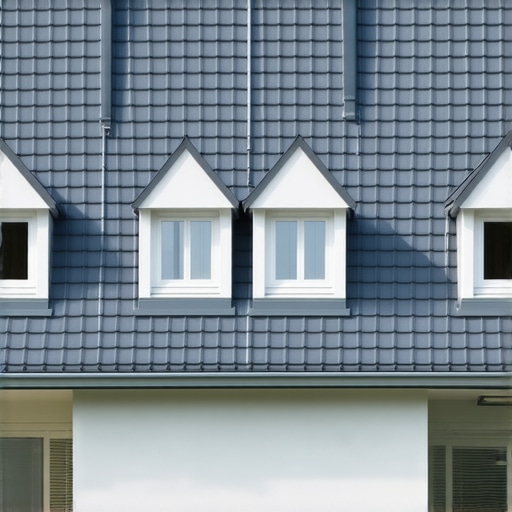
The Anatomy of a Slow-Motion Disaster
You smell it before you see it. That heavy, cloying scent of damp wood and ancient dust that hits you the second you crack the attic hatch. If you’ve got a steep-pitched roof—what we in the trade call a ‘steep gable’—that smell is usually the first warning of a ventilation failure. I’ve spent twenty-five years crawling through these spaces, and I can tell you that most roofing companies treat ventilation like an afterthought. They slap on some shingles and a ridge vent and call it a day. But on a 12/12 pitch roof, the physics of air changes completely. If that heat can’t escape, it doesn’t just sit there; it cooks your shingles from the inside out until they start to curl like burnt bacon.
My old foreman, a guy who had been nailing squares since the Nixon administration, used to grab me by the tool belt and say, ‘Water is patient, kid. It will wait for you to make a mistake, but heat is aggressive. It’ll tear the house down while you’re still sleeping.’ He was right. On these steep gables, you aren’t just fighting rain; you’re fighting the stack effect—the natural tendency of hot air to rise. If you don’t give that air a clear, unobstructed path out of the peak, it finds its way into your plywood. I’ve seen 7/16-inch OSB turn into something resembling wet cardboard because a ‘pro’ forgot to check the intake at the eaves. When you start seeing hidden decking plywood decay, the surgery to fix it is going to cost you three times what the original roof did.
“The primary purpose of attic ventilation is to maintain a cold roof temperature to control ice dams and to remove moisture that moves from the conditioned space to the attic.” – NRCA (National Roofing Contractors Association) Manual
Tip 1: The ‘Short-Circuit’ Trap – Gable Vents vs. Ridge Vents
Here is the forensic truth that most local roofers won’t tell you: more vents do not always mean more ventilation. This is the most common mistake I see on steep-pitched homes. A homeowner sees a ridge vent at the top and big decorative gable vents on the sides and thinks they’re golden. In reality, they’ve created a short-circuit. Because air takes the path of least resistance, the ridge vent starts sucking air from the gable vents just a few feet away, rather than pulling the heavy, humid air up from the soffits at the bottom of the roof. This leaves a massive ‘dead zone’ of stagnant air sitting right over your living space.
When this happens, the bottom half of your roof stays boiling hot. In the winter, that heat creates a prime environment for ice dams. The snow melts at the top, runs down to the cold eaves, and freezes into a block of ice that pushes water right back under your shingles through capillary action. You’ll end up with poor gable seal issues that allow moisture to penetrate the rake edges. If you have both, the forensic fix is simple: seal the gable vents from the inside. Force the roof to breathe from the bottom to the top. It’s a vacuum system, not a cross-breeze system.
Tip 2: The Baffle Battle – Protecting the Intake
You can have the most expensive ridge vent in the world, but if your intake is choked, it’s useless. On steep gables, the rafters meet the top plate of the wall at a sharp angle. This is where insulation contractors usually mess up. They blow in R-49 fiberglass and pack it tight right into the corners, completely blocking the soffit vents. This is the ‘strangulation’ of a roof. Without air coming in at the eaves, the ridge vent will actually try to pull air from your house—sucking your expensive AC or heating through light fixtures and attic hatches.
To fix this, we use baffles—long plastic or foam channels that keep the insulation away from the underside of the deck. I always look for ‘shiners’ here—nails that missed the rafter and are sticking through the plywood. If those nails are rusty or have white frost on them in the winter, you know your baffles aren’t working. The moisture in the air is hitting those cold nails and condensing. If you ignore this, you’ll eventually see attic decking rafters sag under the weight of moisture-heavy wood. Always ensure your baffles extend past the height of the insulation to maintain that clear 2-inch ‘chute’ for the air to move.
Tip 3: Calculate the Net Free Area (NFA) with Precision
Roofing isn’t just about hammers; it’s about math. The 1/300 rule is the industry standard—you need 1 square foot of ventilation for every 300 square feet of attic floor space. But on a steep gable, the volume of air in that attic is much larger than a shallow ranch-style roof. If your roofing contractor isn’t calculating the Net Free Area of your vents, they are guessing. A standard plastic ridge vent might only provide 18 square inches of NFA per linear foot. If the peak of your gable is only 10 feet wide but the attic is 40 feet deep, you are mathematically guaranteed to fail.
I’ve walked on roofs where the shingles were so brittle they snapped under my boots like crackers. That’s the result of ‘baking.’ When the NFA is too low, the attic temperature can soar to 150°F. This high heat degrades the asphalt binders in the shingles, leading to shingle buckling. A forensic investigator looks for the ‘fried’ look of the granules. If they are falling off in sheets into your gutters, your roof is literally gasping for air. You need to balance the intake and exhaust perfectly—50% at the eaves, 50% at the ridge.
“A roof is only as good as its flashing and its ability to breathe.” – The Roofer’s Creed
Tip 4: Manage the ‘Cricket’ and Valley Dead Spots
On complex steep gables, you often have chimneys or secondary gables that create ‘dead spots’ for airflow. A chimney wider than 30 inches needs a cricket—a small peaked structure behind it to divert water. But crickets also create air pockets. In a cold climate, these are the spots where condensation builds up first. I always check the valleys where two steep roofs meet. Because the pitch is so high, water moves with incredible velocity. If the ventilation isn’t pulling air through those valley rafters, the plywood underneath will rot while the rest of the roof looks perfect.
When we do a forensic teardown, we often find that the valley flashing is fine, but the wood underneath is delaminated. That’s because moisture-laden air got trapped in the ‘corner’ of the gable and had nowhere to go. Ensuring that your ridge vents are cut all the way to the edge of the intersection is key. Don’t let your contractor stop the ridge vent three feet short of the gable wall just because it ‘looks better’ from the street. Function must drive the form, or you’ll be paying for a new deck in ten years.
The Cost of ‘Cheap’ Ventilation
The biggest lie in roofing is that all installs are equal. A ‘trunk slammer’ will give you a low-ball quote because they aren’t spending the time to cut proper intake vents or install baffles. They’ll slap a ridge vent over a slot that’s only half an inch wide because it’s faster. But physics doesn’t care about your budget. If you don’t vent a steep gable correctly, the thermal shock of hot days and cold nights will tear the fasteners loose. You’ll end up with leaks that no amount of caulk can fix because the problem isn’t the hole—it’s the pressure. Invest in the airflow now, or invest in a forensic restoration later. Your roof is the skin of your house; don’t let it suffocate.