
You probably don’t think about your gable edges until you’re staring at a damp, yellowing circle on your ceiling or hearing the unsettling rhythmic drip behind your drywall after a Nor’easter. Most homeowners look at the center of their roof for trouble, but as someone who has spent twenty-five years peeling back shingles like scabs, I can tell you that the real carnage usually starts at the edges. The gable, or the rake edge, is the frontline of your home’s defense against wind-driven rain and ice. When that seal is compromised, your roof isn’t just leaking; it is breathing in moisture like a sponge in a bucket.
My old foreman, a man who could spot a ‘shiner’—that’s a missed nail for the uninitiated—from a ladder three stories down, used to tell me, ‘Water is patient. It will wait for you to make a mistake, and the gable is where most mistakes go to hide.’ He wasn’t wrong. A poor gable seal is rarely a loud failure. It is a slow, methodical rot that eats your decking from the outside in. In our climate, where the wind-driven rain hits the siding and climbs upward through capillary action, a bad seal is a death sentence for your fascia and your peace of mind.
“A roof is only as good as its flashing, and the rake edge is where flashing goes to be forgotten by the lowest bidder.” – Old Roofer’s Adage
The Physics of Failure: How Water Defies Gravity
Before we look at the signs, you need to understand the ‘Mechanism of Failure.’ Most people think water only moves down. Wrong. In a high-wind event, air pressure builds up against the gable wall. This creates a pressure differential that can literally suck water uphill, under your shingles, and over the edge of your underlayment. If your roofing companies didn’t install a proper drip edge or failed to use a high-quality starter course, that water is going straight into the grain of your plywood. Once it gets there, it doesn’t leave. It sits in the dark, warm attic space, feeding mold and turning your structural support into something with the structural integrity of wet cardboard. This is why how 2026 roofing companies secure 2026 gable edges is the most important part of a tear-off job.
Sign 1: The ‘Ghost Breeze’ and Attic Light Leaks
The first sign of a failing gable seal doesn’t require a ladder; it requires a flashlight and a dark attic on a sunny day. If you climb up into your attic and see slivers of daylight peeking through where the roof deck meets the gable wall, you have a problem. This isn’t ‘ventilation’—it’s a wide-open door for pests and moisture. These gaps are often caused by the wood ‘moving.’ As your house settles and the seasons change, the gable trim can pull away from the roofline. If the local roofers who installed the roof didn’t use a proper sealant or integrated flashing, those gaps become conduits for thermal bypass. In the winter, your expensive heated air escapes through these cracks, hitting the cold underside of the roof and flash-freezing into frost. When that frost melts, it looks like a roof leak, but it’s actually a seal failure causing condensation. This often correlates with local roofers 3 signs of 2026 attic air leaks, which can devastate your energy bills.
Sign 2: The ‘Wavy’ Rake Edge and Shingle Uplift
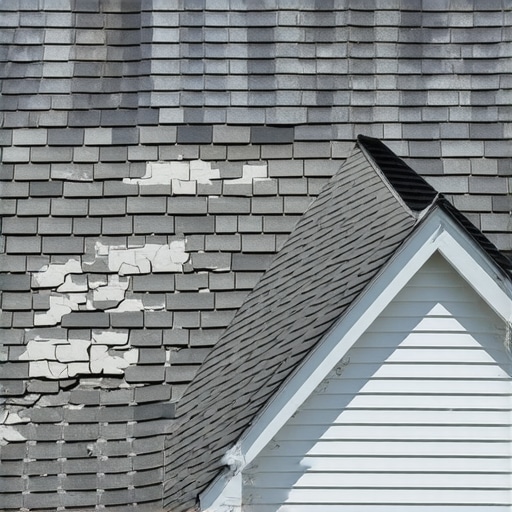
Walk out into your yard and look up at the edge of your roof where it meets the sky. Does the line look straight, or does it look like a mountain range? If you see shingles lifting, curling, or looking ‘ragged’ along the rake, the seal has already failed. This is often caused by the lack of a ‘starter course’ at the edge. A lazy roofer will just hang the field shingles over the edge without a dedicated starter strip. Without that adhesive bond, the wind catches the underside of the shingle. This creates ‘chatter,’ where the shingle flaps against the deck. Eventually, the fastener holes widen—we call this ’rounding out’—and the shingle either blows off or allows water to travel horizontally underneath it. Once water gets under that first shingle, it follows the path of least resistance, which is usually right into your fascia board. If you see this, you likely have roofing services 5 fixes for loose roof fascia boards early on your to-do list before the whole board rots off.
Sign 3: Internal Staining and The ‘Soft Spot’
The most damning evidence of a poor gable seal is found on the fascia and the soffit. If you see dark, ‘teardrop’ stains on the wood trim of your gables, the water is already behind the shingles. This is the result of ‘blow-back.’ Without a properly installed drip edge—specifically one with a large enough ‘kick-out’—water clings to the underside of the shingle and rolls back onto the wood. This is a common failure when local roofers 5 signs of 2026 eave-drip failure are ignored during a quick ‘bash-and-dash’ roofing job. If you take a screwdriver and poke the wood behind the gutter or along the rake and it feels like a ripe peach, you are looking at decking decay. You aren’t just looking at a shingle repair; you are looking at a forensic tear-off to replace the rotten substrate. I’ve seen ‘squares’ of roof that looked fine from the street but were completely detached from the rafters because the nails had nothing but mush to hold onto. This leads directly to local roofers 5 signs of 2026 decking rot 2, which is a structural nightmare.
“The International Residential Code (IRC) is clear: flashing shall be installed at wall and roof intersections. Yet, the gable edge remains the most frequent site of code violations in residential construction.” – Building Science Institute
The Surgery: Fixing the Gable for Good
You can’t fix a bad gable seal with a tube of caulk. That’s a ‘Band-Aid’ that will last exactly one season of thermal expansion and contraction. The real fix—the ‘surgery’—requires pulling back the shingles at the rake edge, installing a high-temp ice and water shield that wraps over the edge of the decking, and then installing a heavy-gauge D-style drip edge. Only then do you lay your starter course and field shingles. It’s more work, and it’s why the cheap guys won’t do it. But when a storm hits at 2 AM and the wind is screaming at 60 mph, you’ll be glad you paid for the forensic-level detail. Don’t let a local roofer tell you that ‘standard felt’ is enough for a gable in this climate; it isn’t. You need a secondary water barrier that can handle the hydrostatic pressure of wind-driven rain. If you suspect your roof was installed by a ‘trunk slammer,’ get a real pro out there to pull a few shingles and check the anatomy of the edge. Your attic—and your wallet—will thank you.