
The Black Streak Epidemic: Why Your Roof is Turning Into a Petri Dish
If you live anywhere near the humid corridor of the Southeast—from the swamps of Louisiana to the salt air of the Florida coast—you know exactly what I am talking about. Those ugly, vertical black streaks that look like someone poured motor oil over your ridge vent. Most homeowners call me out thinking their roof is rotting or that they have ‘black mold.’ It is not mold. It is Gloeocapsa magma, a hardy cyanobacteria that has evolved to survive in one of the most inhospitable environments on earth: your roof deck. At noon in July, your shingles hit 160 degrees. At midnight, they are dripping with dew. This bacteria loves it. It does not just sit there; it eats. It feeds on the calcium carbonate—the limestone filler—that modern manufacturers use to weigh down shingles and keep costs low. When you see those stains, you are seeing a colony of organisms literally digesting your home’s first line of defense.
The Forensic Scene: A Slip-and-Slide on the Gables
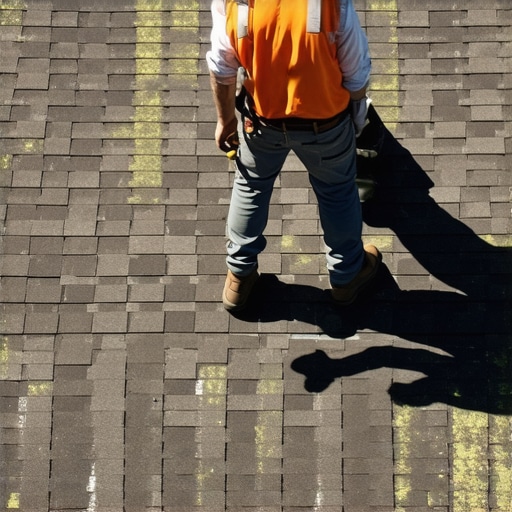
I remember walking a roof in a coastal subdivision about three years ago. Walking on that roof felt like walking on a sponge, and when my boot hit a particularly dark patch of algae, I almost took a twenty-foot ride to the concrete driveway. The surface was slicker than ice. I knew exactly what I would find underneath. As I peeled back a few tabs, the granules just rolled off into my hand like dry sand. The algae had compromised the bond between the asphalt and the ceramic granules. This is the ‘Mechanism of Failure’ that local roofers often ignore. They see a stain; I see a structural degradation of the UV protection layer. Without those granules, the sun fries the asphalt in months, not years, leading to underlayment fail scenarios that ruin your attic insulation.
“The primary purpose of a roof is to shed water, but its secondary duty is to resist biological colonization which leads to premature granule loss.” – Old Roofer’s Axiom
1. Copper-Infused Granule Integration
The most effective way to stop the bleed is at the manufacturing level. When you are talking to local roofers about a replacement, don’t just ask about the color. Ask about the copper ion concentration. Modern Algae-Resistant (AR) shingles contain a percentage of copper-coated granules. When it rains, moisture hits those granules and releases copper ions. These ions are toxic to Gloeocapsa magma. Think of it like a permanent, slow-release pesticide for your roof. However, be cynical. Most ‘lifetime’ AR warranties only last 10 to 15 years because the copper eventually leaches out completely. You need to ensure the roofer isn’t just selling you the base-level shingle; you want a high-density copper distribution to ensure the biocidal wash continues for the actual life of the roof. If the roofer leaves a ‘shiner’—a nail that missed the joist and sits exposed—that metal can actually interfere with the ionic flow across the shingle face, creating a ‘dead zone’ where algae can take root.
2. The Zinc or Copper Strip Strategy
If your roof has plenty of life left but looks like a mess, you don’t necessarily need a tear-off. You need a sacrificial anode. We install 99% pure zinc or copper strips just below the ridge cap. When rain washes over these strips, it creates a metallic solution that flows down the ‘valleys’ and ‘squares’ of your roof. This solution kills any microscopic spores before they can form a colony. The physics here is simple: metallic salts are natural herbicides. I have seen roofs that were pitch black turn clean after a single season of zinc exposure. If you are looking for long-term protection, zinc strips are the trade secret that ‘trunk slammers’ won’t tell you about because it’s a one-and-done fix that prevents them from coming back for a ‘cleaning’ job every two years.
3. Attic Air Flow and the Dew Point Problem
Algae thrives on moisture. If your attic is a hot, humid box, the roof deck stays warm and damp long after the sun goes down. This is where soffit blockage becomes a major contributor to biological growth. If air isn’t moving from the eaves to the ridge, the shingles on the north-facing slope never truly dry out. I have investigated dozens of homes where the south side was clean and the north side was a forest. Why? Because the north side stays below the dew point longer. By increasing the ventilation—ensuring that every ‘square’ of the roof has adequate intake and exhaust—you can lower the surface temperature and humidity of the shingles. This disrupts the life cycle of the cyanobacteria. If your roofer isn’t checking your intake vents with a mirror or a smoke pen, they aren’t fixing the problem; they are just ignoring the physics of the building envelope.
“Provisions for attic ventilation are essential to prevent moisture accumulation and the subsequent deterioration of the roofing materials.” – International Residential Code (IRC) R806.1
4. Professional Soft Washing (Never Pressure Wash)
I get a twitch in my eye when I see a ‘handyman’ on a roof with a 3000 PSI pressure washer. You might as well take a belt sander to your shingles. Pressure washing blasts the ceramic granules off, exposing the raw asphalt to the sun and cutting the life of your roof by five years in a single afternoon. The only way to clean a roof is a ‘Soft Wash’ system using a sodium hypochlorite solution mixed with a surfactant. The bleach kills the algae at the root (the ‘sheath’), and the surfactant allows it to cling to the steep slopes without running off into your rose bushes. But here is the catch: you have to neutralize the runoff. If your roofing companies aren’t soaking your landscaping first and using a diverter on your downspouts, they are going to kill your grass along with the algae. It is a surgical procedure, not a ‘hose it down’ job.
5. Environmental Mitigation and Overhang Management
Water is patient. It will wait for you to make a mistake. One of the biggest mistakes is letting a majestic oak tree hang its branches over your gables. This creates a double-whammy: it provides the shade that keeps the roof damp, and it drops organic debris (leaves, sap, pollen) that provides a secondary food source for the algae. I always tell homeowners that a 10-foot clearance between the canopy and the ridge is non-negotiable. If you want a clean roof, you need UV light. The sun is the best natural disinfectant we have. By trimming back limbs, you allow the wind to move across the roof, accelerating the evaporation process and making it impossible for the Gloeocapsa magma to maintain the hydration it needs to survive. Look for roof debris clearing services that actually understand the canopy-to-shingle relationship.
The Bottom Line: Don’t Let the Stains Deceive You
A stained roof is a symptomatic roof. It is telling you that your moisture levels are too high, your metal content is too low, or your ventilation is failing. Don’t let a fast-talking salesman convince you that you need an immediate replacement just because of some black streaks. Conversely, don’t ignore them, or you’ll be dealing with fascia board decay when the water finally works its way past the compromised shingle layers. Investigate the cause, address the biology, and remember: a roof is a system, not just a covering. If you treat it like a chemistry problem instead of an aesthetic one, you’ll save yourself thousands in the long run.