
The Phantom Leak: Why Your Ceiling is Wet When It’s Not Raining
You’re sitting in your living room in the dead of January, watching the snow pile up on the lawn, and you see it. A dark, tea-colored ring forming right above the bay window. You call one of those storm-chasing roofing companies, and they tell you that you need a new roof. But here’s the kicker: your shingles are only seven years old. I’ve spent twenty-five years crawling through fiberglass insulation and sweating in 140-degree attics, and I can tell you right now, it’s probably not the shingles. It’s the breath. Or rather, the lack of it.
My old foreman used to say, ‘Water is patient. It will wait for you to make a mistake.’ Usually, he was talking about a ‘shiner’—that’s a missed nail that acts as a conduit for water—but more often than not, the mistake isn’t a hole in the roof; it’s a blocked soffit. When those intake vents under your eaves are choked off, your house stops breathing. It becomes a pressurized chamber of warm, moist air that has nowhere to go but into your wood deck. By the time you see the stain on the ceiling, the forensic damage is already done. We call it ‘attic rain,’ and it’s a symptom of a system in total respiratory failure.
“A roof is only as good as its flashing—and its ability to move air.” – Old Roofer’s Adage
Sign 1: The ‘Frost Forest’ on Your Roof Decking
If you want to know if your local roofers actually know their trade, ask them to go into the attic during a cold snap. If they just stay on the ladder, fire them. When I poke my head through an attic hatch and see the underside of the plywood covered in white fuzz, I know the soffits are dead. This isn’t just frost; it’s the physical manifestation of your family’s lifestyle—showers, boiling pasta, even breathing—trapped in the rafters. Without fresh air rushing in from the eaves to push that moisture out of the ridge vent, the water vapor hits the freezing plywood and turns to ice. When the sun hits the roof the next morning, that ice melts. It drips onto your insulation, kills your R-value, and eventually creates those mystery stains. You’re not looking for a leak from the sky; you’re looking at a sign of attic air leaks and massive condensation buildup.
Sign 2: The Rusting Shank (The Anatomy of a Shiner)
Next time you’re in the attic, look at the nails. Every roofing square uses hundreds of them. In a healthy roof, those nails stay dry. But when soffits are blocked, the metal nail shank becomes a ‘thermal bridge.’ It stays much colder than the surrounding air. Moisture finds that cold metal and clings to it, forming a bead of water. Over time, the nail rusts, and the wood around it begins to soften. We call this ‘decking rot.’ If you see orange streaks running down your rafters, your roof is literally rusting from the inside out because your ventilation is stagnant. Most roof decking decay starts right here at the fastener, not at the shingle surface.
Sign 3: Peeling Paint and the Rotting Fascia Line
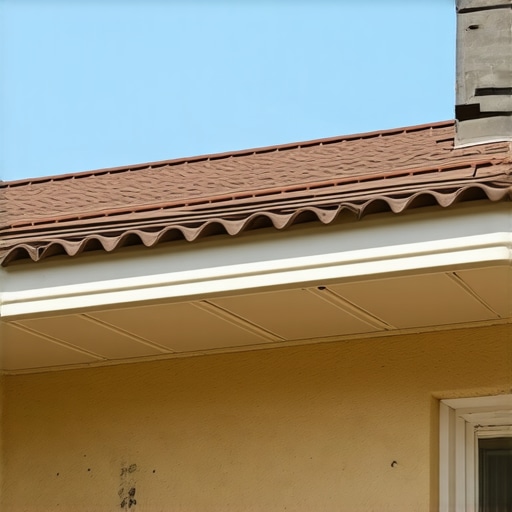
Look at the exterior of your home, specifically where the roof meets the walls. Are the boards behind your gutters starting to look like wet cardboard? That’s your fascia, and it’s often the first casualty of blocked soffit vents. When air can’t enter through the soffit, moisture gets trapped behind the drip edge. It sits there, soaking into the grain of the wood. Eventually, the paint bubbles and peels. Many homeowners keep repainting their trim, not realizing they are just putting a Band-Aid on a corpse. If the wood feels soft when you poke it with a screwdriver, you’re looking at fascia board decay. This is usually caused by ‘over-blowing’ insulation—a rookie mistake where a contractor blows cellulose right over the intake vents, thinking they are doing you a favor by adding more R-value.
Sign 4: The Winter Gutter Glacier (Ice Damming)
Ice dams are the ‘smoking gun’ of ventilation failure. In the North, we see these massive icicles that look like something out of a horror movie. Here’s the physics: heat stays trapped at the top of your attic because the soffits aren’t bringing in cold air to flush it out. This ‘hot spot’ melts the snow on the roof. The water runs down to the eaves, which are much colder because they overhang the house. The water refreezes, forming a dam. Then, the next batch of meltwater pools behind that dam and gets forced under the shingles by hydrostatic pressure. This is why local roofers emphasize that stopping roof ice dams starts with air intake, not just heat cables. If your soffits were clear, the roof deck would stay at a uniform temperature, and that ice wouldn’t have a chance to form.
“Ventilation shall be provided at a rate of 1 square foot of net free area for every 150 square feet of attic floor space.” – International Residential Code (IRC)
Sign 5: The Shingle ‘Crunch’ and Granule Loss
Go outside and look at your gutters. Are they filled with what looks like coarse black sand? That’s shingle grit, and it’s the lifeblood of your asphalt roof. When an attic doesn’t breathe, the temperature of the shingles can soar to 160 degrees or higher. This literally ‘bakes’ the oils out of the asphalt. The shingles become brittle—we call it ‘toasting.’ Once the oils are gone, the granules fall off, leaving the fiberglass mat exposed to UV rays. If your roof is only ten years old and losing granules like a balding head, your soffits are likely choked. You can check your roof airflow yourself by holding a piece of tissue up to the soffit vent on a windy day; if it doesn’t flutter, your roof is suffocating.
The Forensic Fix: Surgery vs. Band-Aids
Fixing this isn’t about more caulk. It’s about ‘The Surgery.’ We have to pull back the insulation and install baffles—plastic or foam channels that keep the air path open. Sometimes, it means cutting new intake holes because some ‘trunk slammer’ builder twenty years ago only installed two vents for the whole house. If you ignore this, you’re not just looking at a new roof; you’re looking at a full deck replacement and mold remediation. Don’t wait for the ceiling to fall in. Get someone who knows how to read the signs of a soffit blockage before your house turns into a sponge.