
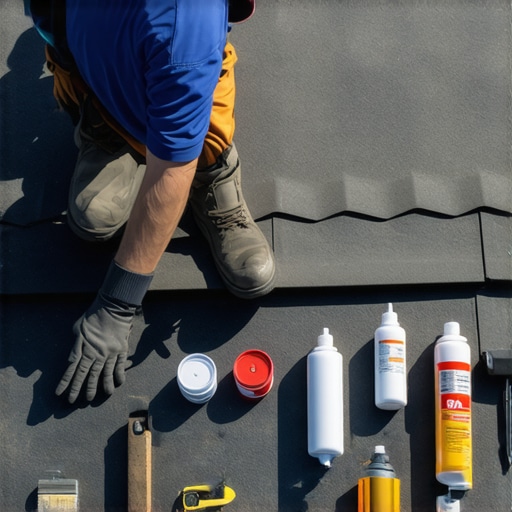
The 3 AM Kitchen Puddle: A Forensic Post-Mortem of Flat Roof Failure
The monsoon finally hit El Paso after five months of relentless, 110-degree heat. You’re standing in your kitchen, barefoot, listening to the rhythmic plink-plink of water hitting a plastic bucket. That sound isn’t just rain; it’s the sound of physics winning and your bank account losing. As a roofing veteran with over two decades on the hot-mop and TPO crews, I’ve seen this exact scene play out a thousand times. You think you have a roofing problem, but what you actually have is a chemistry problem. In the Southwest, flat roofs are essentially shallow swimming pools with bad plumbing. When the temperature on your roof deck swings from 160°F at noon to 70°F during a desert thunderstorm, the material undergoes thermal shock. This violent expansion and contraction turns tiny pinholes into gaping fish-mouths.
My old foreman, a grizzly guy who’d spent forty years smelling like hot asphalt, used to say, ‘Water is patient. It will wait for you to make a mistake.’ It waits for that one dry-rotted seam or that slightly lifted flashing. If you’ve spotted a leak, you’re already behind. By the time it hits your ceiling, it has likely traveled fifteen feet sideways from the actual entry point, creeping along a rafter via capillary action. Before you call one of those storm-chasing roofing companies that disappear the moment their tailpipe clears the county line, you need to understand what actually works for a patch and what is just a ‘trunk slammer’ special.
1. High-Solids Silicone: The UV-Resistant Powerhouse
In our climate, UV radiation is the primary assassin of roofing materials. Most cheap caulks you find at a big-box store will turn into brittle, chalky crackers within six months. High-solids silicone is different. It doesn’t use solvents that evaporate over time; it’s a moisture-cure product that thrives where others fail. When you apply a silicone patch, you’re creating a permanent, rubberized shield that reflects nearly 90% of those brutal desert photons. This is particularly effective if you are dealing with how to seal a 2026 flat roof against standing water. It stays flexible. It doesn’t care about the heat. However, a word of warning: nothing—and I mean nothing—will ever stick to silicone once it’s cured, not even more silicone. You have to get it right the first time.
“A roof is only as good as its flashing.” – Old Roofer’s Adage
2. Polyurethane Sealants: The Structural Muscle
If your leak is happening at a transition point—like where the roof deck meets a parapet wall—you need structural adhesion. Polyurethane is the ‘muscle’ of the sealant world. It grabs onto masonry, metal, and wood with a death grip. We often use it to seal around scuppers or ‘crickets’—those small slopes we build to divert water toward the drains. Unlike silicone, polyurethane is paintable, which is handy if you’re trying to match a specific desert tan on your parapets. But be careful: polyurethane doesn’t handle ponding water as well as silicone. If your roof has ‘bird baths’ (depressions where water sits for more than 48 hours), polyurethane will eventually soften and fail. For heavy-duty transition repairs, local roofers often prefer this for its sheer grabbing power.
3. PMMA (Polymethyl Methacrylate) Cold-Liquid Resin
When I’m performing a forensic repair on a high-stakes commercial roof, I reach for PMMA. This is a two-component resin that you catalyze on-site. It’s not just a sealant; it’s a liquid-applied reinforced membrane. You lay down a layer of resin, embed a fleece fabric, and saturate it again. Once it cures, it is tougher than the original roof. It’s the closest thing to ‘roofing surgery’ you can perform without a total tear-off. It handles extreme thermal expansion without breaking a sweat. If your roof has complex penetrations or weird angles that a standard shingle-hacker couldn’t handle, this is your solution. You can see why experts suggest 4 critical repairs for flat roofs in 2026 involve these advanced liquid resins.
4. Asphalt Mastic (The ‘Silver Dollar’ Patch)
Let’s talk about the old-school stuff. Asphalt mastic, often reinforced with SBS (Styrene-Butadiene-Styrene), is the thick, black ‘bull’ that roofers have used for decades. It’s cheap, it’s messy, and it works—temporarily. In the Southwest, we use a silver-coated version to reflect heat. The problem? Mastic is a ‘shiner’ in terms of longevity. It dries out, cracks, and pulls away from the substrate as the oils evaporate. I’ve torn off roofs where the plywood looked like oatmeal because a previous contractor just kept slapping layers of mastic over a leak instead of fixing the flashing. It’s a band-aid, not a cure. If you’re in a pinch, it’ll get you through the night, but don’t expect it to survive three summers in El Paso.
5. Silicone-Based Sealant Tapes
Sometimes you don’t need a bucket; you need a roll. Silicone-based tapes are incredible for sealing seams on EPDM or TPO roofs that have started to ‘fish-mouth.’ These tapes have an incredibly aggressive adhesive backing that bonds instantly. If you have a puncture from a fallen branch or a dropped tool, a tape patch is often the cleanest and most effective DIY fix. For more on this, check out commercial roofing 3 benefits of silicone roof tapes. It’s about creating an airtight, watertight bond that moves with the building.
“The National Roofing Contractors Association (NRCA) recommends that all roof systems be inspected at least twice a year to identify potential failure points before they manifest as interior leaks.” – NRCA Technical Manual
The Forensic Reality: Why Patches Fail
Most people think a leak is a hole. It’s rarely that simple. A leak is usually a failure of a system. When local roofers look at a flat roof, we aren’t just looking for cracks; we’re looking for ‘ponding’—areas where water sits long enough to exert hydrostatic pressure. Water is heavy. One square (100 square feet) of water an inch deep weighs about 500 pounds. That weight deflects the roof deck, creating a deeper pool, which leads to more weight. This cycle is what leads to rafters sagging. If you see your ceiling dipping, you’re no longer in ‘patch’ territory; you’re in ‘structural emergency’ territory. You need to know 4 things to do if attic decking rafters sag immediately to prevent a total collapse. Don’t be the homeowner who ignores a ‘soft spot’ until the roof is in the living room. Every day you wait, that plywood is absorbing moisture, becoming a breeding ground for mold and losing its structural integrity. A $500 patch today beats a $25,000 deck replacement next year. Every. Single. Time.