
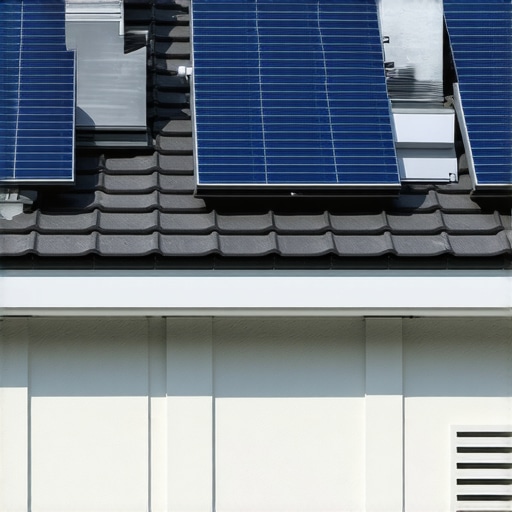
The Desert Pressure Cooker: Why Your Roof is Dying
I’ve spent the better part of thirty years crawling through attics that felt more like a pizza oven than a residential structure. In places like Phoenix or the high plains of Texas, the sun isn’t just a light source; it is a relentless abrasive that grinds down your materials through a process called thermal shock. When local roofers talk about ‘2026 solar vents,’ they often treat it like a trendy gadget, but a forensic roofer sees it differently. We see a mechanical intervention designed to stop your plywood from becoming as brittle as a cracker. If you don’t understand the physics of the airflow, you’re just paying a roofing company to poke a hole in your most expensive asset.
The Mentor’s Warning
My old foreman, a man who could spot a ‘shiner’—that’s a missed nail for the uninitiated—from two stories down, used to say, ‘Heat is the silent carpenter. It slowly pulls every nail until the whole house screams.’ He was right. Most homeowners focus on the shingles, but the real war is fought in the 140-degree air trapped between your ceiling and your roof deck. Without active movement, that heat bakes the oils out of your asphalt, leading to premature granule loss and the kind of decking rot that makes a roof feel like a sponge underfoot. In 2026, the technology has shifted toward intelligent solar-powered extraction, but before you let anyone up that ladder, you need to grill them with three specific questions.
“The primary purpose of attic ventilation is to maintain a balance between the temperature and moisture levels within the attic space and the exterior environment.” – National Roofing Contractors Association (NRCA)
Question 1: How Will You Balanced the Intake to Prevent ‘Short-Circuiting’?
This is where most ‘trunk slammers’ fail the test. They want to sell you a high-tech solar fan, but they ignore the soffit vents. Physics doesn’t care about your marketing brochure. If a solar vent is pulling 1,500 cubic feet per minute (CFM) out of the top of your roof, that air has to come from somewhere. If your local roofers haven’t cleared your intake vents or installed enough ‘Net Free Area’ at the eaves, that solar fan will start pulling conditioned air from inside your house through recessed lights and attic hatches. You’re literally paying to air condition the neighborhood. Worse yet, if you have an existing ridge vent, a powerful solar fan can ‘short-circuit’ the system, pulling air only from the nearby ridge instead of the cool eaves, leaving the rest of the attic stagnant. You need to ensure they are looking for attic air leaks before they bolt down the fan.
Question 2: Is the Unit Rated for 130+ MPH Gusts and Monsoons?
In the Southwest, we don’t just get heat; we get violent microbursts. A solar vent is a giant sail sitting on your roof. If the mounting bracket isn’t heavy-gauge galvanized steel or aluminum, a 70-mph gust will rip that unit right off, leaving a gaping 14-inch hole in your roof during a downpour. When interviewing local roofers, ask about the solar brackets and their wind uplift rating. I’ve seen cheap plastic housings crack after three years of UV exposure, allowing water to bypass the flashing and drip onto the insulation. Once that happens, the ‘capillary action’ of water takes over, wicking moisture sideways along the rafters until your fascia starts to crumble. You aren’t just buying a fan; you’re buying a flashing system that must survive a decade of desert sun.
Question 3: What is the Real-World CFM vs. The Marketing ‘Peak’?
Most solar fans boast about their CFM in ‘full sun,’ but your roof needs ventilation most when the sun is setting and the thermal mass of the shingles is still radiating 150-degree heat into the attic. A forensic analysis of attic heat spikes shows that the most critical cooling time is between 4 PM and 8 PM. Does the vent have a battery backup or a high-efficiency motor that can kick in at lower light levels? If your roofing company can’t explain the motor’s power curve, they are just selling a commodity, not a solution. You should also be looking for benefits of attic solar fans that include smart thermostats, which prevent the fan from running in the winter when you actually want to keep some heat in to prevent ‘thermal bridging.’
“Ventilation shall be provided at a rate of 1 square foot of net free area for every 150 square feet of attic floor space.” – International Residential Code (IRC) R806.2
The Material Truth: Why ‘Lifetime’ is a Lie
Let’s talk about the ‘Lifetime Warranty’ scam. Many local roofers will tell you that their vent or shingle is guaranteed for life. In the trade, we call that ‘marketing glue.’ If the ventilation isn’t calculated correctly, the shingles will bake from the inside out, and the manufacturer will deny your claim faster than a coyote in a chicken coop, citing ‘improper ventilation.’ This is why we focus on the mechanics of failure. When I perform an autopsy on a 10-year-old roof that should have lasted 25, the culprit is almost always a lack of airflow that turned the asphalt into a dry, brittle shell. Don’t fall for the shiny surface; ask about the CFM math and the intake balance. If they don’t bring a calculator to the estimate, they aren’t the right roofing company for you.