
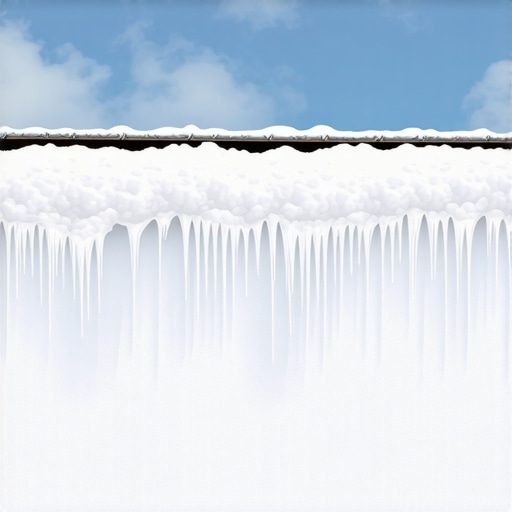
The Midnight Drip: Why Your Living Room Ceiling is Sagging
It usually starts with a sound you can’t ignore at 2 AM—a rhythmic, heavy plink against the hardwood. You grab a bucket, look up, and see a wet, gray bloom spreading across the plaster. Outside, the eaves are decorated with three-foot ice daggers that look like something out of a horror movie. Most homeowners think the ice is the problem. It’s not. The ice is just the forensic evidence of a house that is cannibalizing its own roof. As a veteran who has spent 25 years peeling back layers of failed shingles, I can tell you that by the time you see that drip, the damage started months, maybe years ago, in the dark corners of your attic. If you want to stop this before the 2026 winter turns your home into a swamp, you have to understand the physics of failure. Most roofing companies will try to sell you a quick fix—a heat cable or some salt pucks. That’s like putting a band-aid on a gunshot wound. Real protection requires a surgical approach to thermodynamics and material science.
The Forensic Scene: Walking on a Sponge
I remember walking a roof in a bitter January wind where the snow was barely an inch deep, yet the gutters were choked with solid ice. Stepping onto the lower third of that roof felt like walking on a wet sponge. I didn’t even need to tear it off to know what I’d find. Underneath those shingles, the OSB decking had turned into a delaminated mush. The homeowner had hired local roofers the year before who promised a ‘lifetime’ fix but failed to address the thermal bridging happening right above the master bedroom. Water doesn’t just fall; it migrates. Because of the hydrostatic pressure created by a pool of meltwater trapped behind an ice wall, that water was being forced upward, defying gravity, and sliding right under the shingle laps. It was finding every single shiner—those nails that missed the rafter—and using them as a highway straight into the insulation.
“A roof is only as good as its flashing and the air management beneath it.” – Old Roofer’s Adage
The Physics of the Freeze: Mechanism Zooming
To stop an ice dam, you have to understand the ‘Cold Roof’ principle. In a perfect world, the temperature of your roof deck should match the outside air. But your house is a heat-leaking sieve. Heat moves from your living space into the attic through attic bypasses—holes for plumbing stacks, recessed lights, and pull-down stairs. This warm air rises to the peak, warming the roof deck. The snow on top starts to melt from the bottom up. That liquid water flows down the roof until it reaches the eave, which is overhanging the house and is stone-cold. The water freezes instantly, creating a dam. Now, you have a reservoir of water sitting on your roof. This is where identifying attic air leaks becomes a matter of home survival. If that water stays liquid long enough, it uses capillary action to pull itself into the grain of the wood, eventually causing the decking rot that ends with a square of shingles falling through your ceiling.
Why Most Roofing Solutions are Marketing Myths
Don’t let a salesman talk you into just ‘more insulation.’ If you add insulation without sealing the air leaks, you’re just making the insulation wet, which drops its R-Value to nearly zero. I’ve seen brand new roofs fail in two seasons because the contractor didn’t understand how to stop roof ice dams through proper ventilation. You need a balanced system. If you have plenty of intake at the soffits but your ridge vent is clogged or non-existent, the air stagnates. Conversely, if you have soffit blockage from blown-in insulation, your roof will cook in the summer and rot in the winter. You need to ensure that the valley areas—where two roof planes meet—are clear and protected. This is often where the most significant ice buildup occurs because of the concentrated water flow.
“The total R-value of a roof system must account for the convective heat transfer within the attic space to prevent edge-melt conditions.” – Adapted from NRCA Guidelines
The Surgery: A Three-Pronged Defense
If you’re serious about the 2026 season, you need to do more than just clear the snow with a rake. First, you need a high-temperature Ice and Water Shield. This is a rubberized asphalt membrane that self-seals around every nail. It should extend from the eave at least three feet past the interior wall line. If your local roofers only go to the wall line, they’re cutting corners. Second, you must address the cricket or any architectural features that trap snow. Third, perform a roof winterization check that includes a blower door test or an infrared scan of your attic. Finding where the heat is escaping is the only way to kill the dam at its source. If you see a ‘hot spot’ on the shingles where the snow melts faster than elsewhere, that is your target. Often, it’s a leaky bathroom fan duct that was never vented to the outside, dumping gallons of moist, warm air directly against the underside of the plywood. Ignoring these details is why roofing companies stay in business—they love coming back to fix the same leak every five years. Break the cycle by fixing the physics, not just the shingles. The cost of waiting is not just a new roof; it’s the structural integrity of your rafters and the health of your family when the black mold starts to grow in the damp insulation.