
The Ghost in the Attic: Why Your Nose Knows Before Your Eyes Do
That faint, earthy scent wafting down when you open the attic scuttle isn’t just ‘old house smell.’ It is the scent of a biological war being waged against your roof deck. By the time most homeowners notice a dark stain on the ceiling, the battle has been raging for months, if not years. In my twenty-five years of climbing ladders and crawling into soffit spaces that would make a claustrophobic person faint, I have learned one thing: mold is a symptom of a physics failure. Specifically, a failure of the thermal envelope. Local roofers who actually know their trade—not the ‘tailgate contractors’ who disappear after the first storm—understand that mold isn’t just about a leak; it’s about the invisible movement of moisture and air.
My old foreman used to say, ‘Water is patient. It will wait for you to make a mistake.’ He was right. Whether it is a single missed nail or a slightly misaligned piece of flashing, moisture finds the path of least resistance. In our northern climate, where the temperature swings between the freezing bite of January and the humid soup of July, your roof is constantly expanding and contracting. This movement is where the trouble starts. When roofing companies talk about a ‘system,’ they aren’t just trying to upsell you on shingles. They are talking about the delicate balance between insulation, ventilation, and waterproofing that keeps your decking dry and your family healthy.
“Attic ventilation is the primary means of removing moisture that migrates from the living space into the attic. Without it, condensation will inevitably lead to structural decay.” – NRCA Roofing Manual
The Forensic Zoom: How a Shiner Becomes a Petri Dish
Let’s talk about the ‘shiner.’ In trade talk, a shiner is a nail that missed the rafter. It’s sitting there, exposed in the attic space, cold as a tombstone. During a typical winter night, warm, moist air from your bathroom or kitchen escapes into the attic because of an ‘attic bypass’—a gap around a light fixture or a plumbing stack. That warm air hits the cold steel of the shiner and reaches its dew point instantly. Droplets form. This is the ‘sweating’ effect. Over a single season, that nail drips repeatedly onto the same spot of OSB decking or plywood. This localized moisture creates the perfect microclimate for mold spores. When identifying attic dampness, we look for these rusted nail heads first. They are the ‘canaries in the coal mine’ for a much larger ventilation issue.
The Mechanism of Capillary Action in the Valleys
Most people think water only moves down. That’s a rookie mistake. Through capillary action, water can actually travel upward and sideways under your shingles, especially if the valley was installed by someone who didn’t understand ‘closed-cut’ versus ‘woven’ techniques. In a valley, a massive amount of water is concentrated into a small area. If the shingles aren’t trimmed back properly or if the ‘cricket’ (a small peaked structure behind a chimney) isn’t diverterting water, the liquid gets trapped. It wicks under the shingle edges, soaks the felt, and stays there. Because it’s shaded and damp, mold begins to rot the plywood from the outside in. By the time you notice hidden decking plywood decay, the wood often feels like wet cardboard under my boots.
The 2026 Tech Stack: Attic Heat Mapping and Moisture Sensors
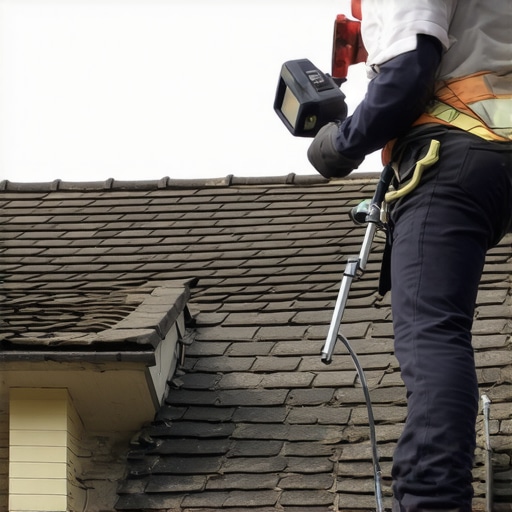
In 2026, the best roofing companies aren’t just using their eyes. We’ve moved beyond the ‘poke it with a screwdriver’ method. We now utilize infrared thermography to identify thermal bridges. A ‘thermal bridge’ is a spot where heat is escaping your home, warming the roof deck, and causing localized snow melt that leads to ice dams. These ice dams back water up under the shingles, where it sits and rots. We also recommend that homeowners invest in a 2026 attic heat map survey. This isn’t marketing fluff; it’s a forensic tool. By seeing the temperature differentials across your roof, we can pinpoint exactly where condensation is likely to form long before the mold becomes visible to the naked eye. If your ridge vent isn’t sealed correctly, as seen in poor ridge vent sealing signs, the entire airflow of the attic is ‘short-circuited,’ leaving dead air pockets in the corners where mold loves to grow.
“Any roof system that does not account for the movement of air and the management of vapor will eventually fail, regardless of the quality of the top-layer material.” – Building Science Axiom
The Anatomy of a Fix: Surgery vs. Band-Aids
When local roofers find mold, the temptation for a cheap contractor is to spray it with bleach and call it a day. That is a Band-Aid on a bullet wound. Bleach is mostly water; it kills the surface mold but the moisture soaks deeper into the wood, feeding the roots (hyphae) of the fungi. True roofing ‘surgery’ involves three steps. First, you must stop the moisture source—this often means fixing shingle lifting or re-flashing the chimney. Second, you must replace the structural members that have lost their integrity. Third, you must fix the ventilation. If you have 15 squares of roofing (1,500 square feet), you need a specific amount of Net Free Venting Area (NFVA). If the intake at the soffits is blocked by insulation, your ridge vent is useless. It’s like trying to drink through a straw with your finger over the bottom.
Why the ‘Specialist’ Matters in 2026
The roofing industry is full of generalists who can nail a shingle but can’t explain the physics of an attic bypass. This is why you need to find specialist local roofers who understand building science. A specialist knows that a bathroom fan vented directly into the attic is a death sentence for a roof. They know that in our climate zone, ice and water shields must extend at least 24 inches past the interior wall line to be effective against the hydrostatic pressure of an ice dam. They don’t just look at the shingles; they look at the ‘gut’ of the house. If you ignore the signs of moisture, you aren’t just risking a leak; you are risking the structural bones of your home and the air quality of your bedrooms. Water is patient, but you shouldn’t be. When the snow starts to melt and you see those first signs of uneven drying on your roof, call someone who knows how to look under the hood. Your future self, and your wallet, will thank you.