
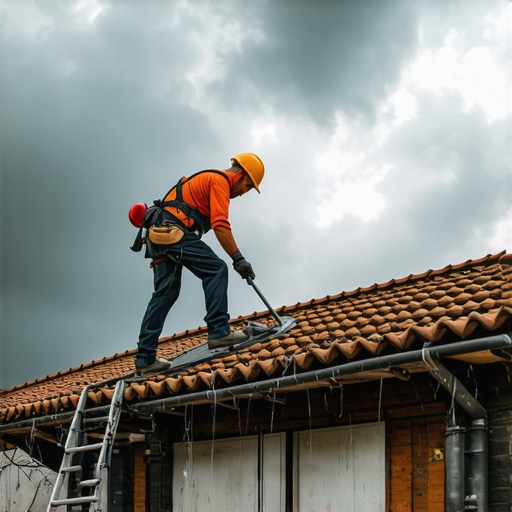
The Midnight Drip: A Forensic Post-Mortem of Storm Damage
It usually starts with a sound you can’t ignore—a rhythmic tink-tink-tink against the plastic of a trash can or the hollow thud on your living room hardwood. By the time you see the yellow-brown ring forming on your ceiling, the battle is already half-lost. In my twenty-five years as a forensic investigator for failed roofing systems, I’ve seen this scene play out from the Gulf Coast of Florida to the humid bays of Houston. When a tropical storm or a sudden humid downpour hits, your roof isn’t just a shield; it’s a hydraulic system under immense pressure.
Walking on that roof the next morning felt like walking on a sodden sponge. I knew exactly what I’d find underneath. The homeowners thought a few missing shingles were the culprit, but the reality was more sinister. The wind-driven rain had found a shiner—a nail missed by a lazy installer that sat just outside the rafter—and used it as a highway. The water followed the nail shank, bypassed the underlayment, and had been quietly rot-feeding the OSB decking for months. The storm just provided the volume necessary to make the failure visible. This is why emergency roof services aren’t just about throwing a tarp over a hole; they are about understanding the physics of water entry.
“The roof shall be covered with approved roof coverings secured to the building or structure in accordance with the provisions of this code.” — International Residential Code (IRC), Section R903.1
Step 1: The Triage – Internal Damage Control and Safety
Before you even think about looking for local roofers, you have to stabilize the interior. Water is patient, but it is also heavy. A single square (100 square feet) of saturated insulation can weigh hundreds of pounds, threatening to bring your entire ceiling down on your furniture. Your first move is the ‘Surgeon’s Poke.’ Take a small screwdriver or a nail and find the center of the sagging drywall. Poke a hole. It sounds counterintuitive to make another hole, but you are relieving the hydrostatic pressure. Letting that water drain into a bucket prevents the drywall from shattering and spreading a mess of wet gypsum and fiberglass across your room.
Do not, under any circumstances, climb onto a roof during a wind event or while the surface is wet. In the Southeast, where algae-resistant shingles are common, a wet roof has the coefficient of friction of a greased slide. I’ve seen roofing companies lose seasoned pros to a simple slip on a 4:12 pitch. Safety isn’t just a suggestion; it’s the difference between a repair bill and a hospital stay. Wait for the ‘eye’ or the tail end of the storm when the winds drop below 20 mph before attempting any exterior stabilization.
Step 2: Identifying the Breach – The Physics of the Leak
When the rain is coming sideways at 60 mph, water does things it shouldn’t. It moves uphill. This is called capillary action. If your local roofers didn’t install a proper cricket behind your chimney or if the valley flashing was short-changed, the wind pushes water under the shingles. Once it’s under the primary layer, it hits the underlayment. In our tropical climate, cheap 15-lb felt paper often dries out and cracks within five years due to the intense UV radiation and thermal shock.
You need to look for signs of hidden decking decay. If the shingles look intact but the roof feels ‘soft’ underfoot, the water is likely entering from a higher point—perhaps a ridge vent or a pipe boot—and running down the rafters. If you see shingles lifting at the edges, that’s a sign of poor uplift rating. Most residential shingles in storm-prone zones should be high-wind rated, but if the installer didn’t use the ‘six-nail’ method, those ratings are useless. You might find signs of improper roof nailing, which are the primary cause of shingles becoming projectiles during a storm.
Step 3: The Immediate Patch – Tarping for the Long Haul
A ‘Blue Roof’ is a common sight after a hurricane, but most tarps are installed incorrectly. A trunk slammer will just nail a tarp directly into the shingles. This creates a hundred new leak points. The professional way involves 2×4 ‘furring strips.’ You wrap the edge of the tarp around the wood and screw the wood into the roof. This creates a tensioned seal that won’t flap in the wind. A flapping tarp acts like sandpaper, grinding the granules off your remaining shingles and ruining their UV protection.
Ensure the tarp goes over the ridge of the roof. If you stop the tarp halfway up the slope, water will simply run under the top edge and continue to drown your attic. In the Southeast, we deal with extreme humidity even after the rain stops. A poorly vented tarp can trap moisture in the attic, leading to a secondary disaster: mold. If you have to keep a tarp on for more than 48 hours, you must check your attic for immediate leak sealing needs and ensure your soffit vents aren’t blocked by displaced insulation.
“A roof is only as good as its flashing.” — Old Roofer’s Adage
Step 4: Vetting Your Emergency Response Team
When the storm clears, the ‘Storm Chasers’ appear. These are roofing companies that follow hail and wind maps, knocking on doors and promising ‘free’ roofs. Don’t fall for it. You need a contractor who understands the local building codes, specifically the high-velocity hurricane zone (HVHZ) requirements if you’re near the coast. Ask them about their Secondary Water Resistance (SWR) techniques. A real pro will suggest a self-adhering modified bitumen underlayment—often called ‘Ice and Water Shield’ in the north, but used here for wind-driven rain protection.
Before signing anything, make sure you verify a license status. In the chaos of post-storm repairs, many uncertified workers will try to pull ‘over-the-counter’ permits or skip them entirely. If the work isn’t permitted and inspected, your insurance company may refuse to cover future claims. A legitimate company will provide a detailed estimate measured in squares and will show you exactly where the flashing failed, whether it was at a valley, a cricket, or a rusted-out drip edge.
The Cost of Hesitation: Why ‘Later’ is a Dangerous Word
In our climate, a small leak is a biological ticking clock. Within 72 hours, the moisture in your attic, combined with the 90-degree heat, creates a literal incubator for mold. The structural integrity of your rafters can be compromised faster than you think. If you ignore the signs of a failing roof system, you aren’t just risking a few shingles; you’re risking the structural skeleton of your home. Professional emergency roof services are an investment in forensic prevention. Get the tarp up, get the water out, and find a roofer who knows that a roof is a complex assembly of physics, chemistry, and craftsmanship—not just a pile of shingles and nails.