
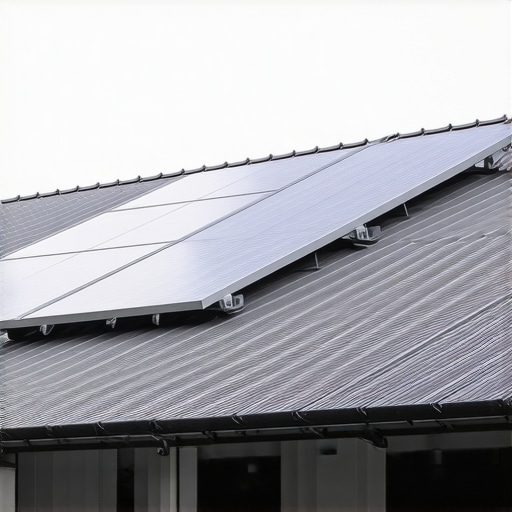
The Anatomy of a Solar-Induced Drip
The call always comes in after the first real monsoon hits the desert. You see it on the ceiling first—a brownish bloom shaped like a bruise right over the master bed. The homeowner is confused because they just spent forty grand on a high-end solar array, and the roofing companies promised them the ‘green’ dream. But up on the deck, under the blinding glare of the Southwest sun, the reality is far more cynical. As a forensic roofer, I don’t see energy savings when I look at a solar array; I see eighty to one hundred fresh penetrations in a water-shedding surface that was never designed to be a Swiss cheese experiment. My old foreman used to say, ‘Water is patient. It will wait for you to make a mistake.’ And solar installers, who are often more interested in electrical circuits than roofing physics, make plenty of them. They aren’t thinking about the 140°F heat that turns standard asphalt into a soft sponge, making it vulnerable to every lag bolt they drive home. Every solar bracket is a potential failure point where the thermal expansion of metal meets the brittle reality of a sun-baked roof.
The Forensic Autopsy: Why Brackets Fail
When we talk about solar leaks, we aren’t just talking about a hole. We are talking about the mechanism of failure. In the arid Southwest, the primary enemy is thermal shock. During the day, that aluminum solar rail is baking. It expands. At night, it cools and contracts. This constant mechanical movement is transferred directly to the L-foot bracket and the lag bolt buried in your rafters. If that bolt is a ‘shiner’—a trade term for a nail or bolt that missed the structural wood and is just dangling in the air—it’s going to wiggle. Over two years, that wiggle creates a gap in the sealant. Once that gap exists, capillary action takes over. Water doesn’t just fall into your house; it is sucked into small crevices by surface tension, moving sideways and upwards under the shingles until it finds the decking. If you’ve been seeing odd patterns on your roof, you might want to learn about spotting shingle lifting early, as this is often where the trouble begins.
“Roofing systems shall be applied in accordance with the manufacturer’s installation instructions. Roof replacements shall be integrated with the existing flashings to maintain a weather-tight envelope.” – International Residential Code (IRC) R905.1
The Physics of Capillary Draw and Poor Flashing
Most solar ‘trunk slammers’ rely on a blob of silicone. In the roofing trade, we call that a ‘Texas Band-Aid.’ In the desert heat, silicone dries out, loses its elasticity, and pulls away from the shingle granules. A real roofing professional uses a flashed mounting system. This involves a metal plate that slides up under the course of shingles above the penetration, ensuring that water flowing down the roof deck never even sees the bolt hole. Without this, you are relying entirely on a chemical seal that wasn’t meant to survive a decade of UV radiation. When I’m investigating a failed system, I often find that the installer didn’t even use a ‘cricket’ or any form of water diverter for large arrays that block the natural flow of the roof valley. This leads to ponding water behind the rails, which is a death sentence for asphalt shingles. If you’re worried about the integrity of your setup, check if your home is ready for solar brackets before the next season hits. If the water isn’t moving off the roof fast, it’s moving into it.
The Cost of the Quick Fix vs. Surgical Precision
Repairing these leaks isn’t as simple as squirt-and-go. If the moisture has already hit the plywood, you’re likely looking at delamination. I’ve seen 7/16-inch OSB turn into something resembling wet Shredded Wheat because a single bracket wasn’t flashed properly. The ‘surgery’ involves pulling the solar panels—which usually costs a few thousand dollars just for the labor—tearing out the affected shingles, and replacing the rotted decking. This is why vetting your roofing companies is vital. You need someone who understands that a roof is a system, not just a platform for panels. If your contractor doesn’t talk about ‘flashing’ and ‘decking integrity,’ they aren’t a roofer; they’re an electrician with a ladder. You must ensure they are following the best practices for stopping attic leaks forever, rather than just chasing the drip with a tube of caulk.
“A roof is only as good as its flashing.” – Old Roofer’s Adage
Why the ‘Lifetime Warranty’ is Often Smoke
Don’t get lulled into a false sense of security by a solar company’s 25-year warranty. Most of those warranties cover the panels’ power output, not the watertightness of your roof. When the leak starts, the solar company will blame the roof’s age, and the roofing company will blame the solar installers. You’re stuck in the middle with a bucket in your living room. A forensic roof inspection often reveals that the shingles were already near the end of their life when the solar was installed. Putting a 25-year solar array on a 15-year-old roof is like putting a brand-new engine in a car with no tires. It’s a fundamental error that leads to the ‘surgery’ I mentioned earlier. If you are planning to go green, you need to think about extending shingle life or simply replacing the roof entirely before the brackets go down. It is much cheaper to do it right once than to pay for a ‘detach and reset’ of a solar system three years later. The heat, the wind, and the gravity of the Southwest do not care about your tax credits; they only care about finding a way into your attic.