
The Foreman’s Warning and the 140-Degree Reality
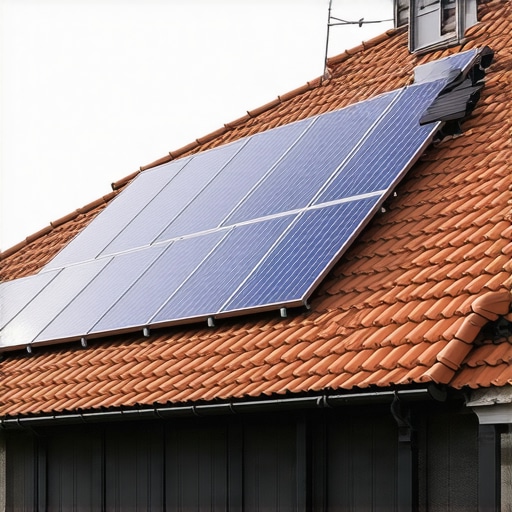
My old foreman used to say, ‘Water is patient. It will wait for you to make a mistake.’ But in the high-desert heat of regions like Phoenix or the Nevada flats, it’s not just water you’re fighting; it’s the sun itself. It’s an invisible hammer, beating down on your roof until the oils in your asphalt are cooked out and your shingles are as brittle as a dried leaf. For twenty-five years, I’ve walked on these ‘ovens,’ feeling the crunch of granules under my boots, knowing that the homeowner is one monsoon away from a disaster. Most local roofers will tell you that a new roof is just about curb appeal, but a forensic look at a failing deck tells a different story. When we talk about solar integration for the 2026 tax window, we aren’t just talking about panels. We’re talking about the physics of the roof deck and how to stop the sun from destroying your investment before the solar system even pays for itself.
“A roof is only as good as its flashing, and when you introduce solar penetrations, you are multiplying your risk factors by the dozens.” – Old Roofer’s Adage
The Material Truth: Why Most Roofs Fail Before the Solar ROI Hits
If you are looking at roofing companies to prep for a 2026 solar install, you have to understand the ‘Material Truth.’ Most guys will sell you a standard 30-year architectural shingle. In a high-UV environment, that ’30-year’ rating is a marketing myth. By year twelve, the thermal shock—that rapid expansion and contraction as the temperature swings 50 degrees from a blistering afternoon to a cool desert night—has already caused ‘thermal fatigue.’ The shingle loses its ability to shed water, and the sealant strips fail. Now, imagine bolting a heavy solar racking system on top of that dying material. You’ve just locked in a failing roof for the next twenty years. Mechanism zooming reveals that when solar panels are installed too close to the roof surface, they create a heat trap. Without at least a four-inch air gap, the temperature between the panel and the shingle can reach 160°F. This accelerates the molecular breakdown of the bitumen, turning your roof into a liability. To identify real savings, you need a material that can handle this ‘micro-climate’ created by the panels. A high-grade synthetic underlayment, rather than old-school organic felt, is non-negotiable. Felt dries out, cracks, and becomes a sieve; synthetic stays flexible, acting as a secondary water barrier even if the primary shingle is compromised by a ‘shiner’—a missed nail that eventually rusts out and creates a leak path.
Way 1: The Integrity of the Deck and the 2026 Tax Cliff
The first way to identify true savings is to evaluate the roof deck’s structural readiness for the 2026 federal solar tax credit shifts. By 2026, the Residential Clean Energy Credit is slated to remain at 30%, but only for those who can prove the structural integrity of the mounting surface. If local roofers find dry rot or delaminated plywood, that isn’t just a repair bill; it’s a threat to your solar efficiency. I’ve seen decks where the plywood had essentially turned to sawdust because the attic ventilation was choked off. When heat builds up in the attic, it bakes the wood from the inside out. If you install solar over a weak deck, the ‘dead load’ of the panels causes the rafters to bow, creating ‘low spots’ where water can pool. This leads to hydrostatic pressure, where the weight of the water actually pushes moisture upward, under the laps of the shingles. A forensic-grade inspection looks for these structural deficits before the first panel is ever moved. You save money by fixing the ‘cricket’—the small peaked structure behind a chimney or large obstruction—now, rather than paying a solar crew $2,500 to de-install and re-install your panels three years from now to fix a $200 leak.
Way 2: Thermal Expansion and the ‘Lag Bolt’ Logic
The second way to identify savings is through the mechanics of the solar mounts themselves. Most roofing companies don’t understand the ‘Lag Bolt Logic.’ Every time a solar installer drives a bolt through your roof and into a rafter, they are creating a potential failure point. In high-heat zones, the metal racking expands and contracts at a different rate than the wood rafters. This is called ‘differential movement.’ Over time, this movement can wallow out the hole around the bolt. If the roofer didn’t use a triple-redundant flashing system—usually a combination of a metal flashing plate, a rubber EPDM gasket, and a high-grade sealant—you are guaranteed a leak. Real savings come from selecting local roofers who coordinate with the solar team to use ‘deck-attached’ mounting systems that minimize these penetrations. We look for ‘integrated flashing’ that becomes part of the roof’s water-shedding course, rather than just a glob of caulk slapped on a shingle. Caulk is a ‘Band-Aid’; proper flashing is ‘surgery.’ One lasts three years; the other lasts thirty.
“Roofing systems shall be designed and installed in accordance with this code and the manufacturer’s installation instructions.” – International Residential Code (IRC) R903.1
Way 3: Ventilation Synergy and the ‘Stack Effect’
The third way to identify 2026 savings is through attic ventilation synergy. Many homeowners don’t realize that solar panels can actually help lower cooling costs by shading the roof, but this only works if the attic is breathing. In the desert, we rely on the ‘Stack Effect’—cool air enters through the soffits at the bottom and hot air escapes through the ridge vent at the top. If your roofing companies didn’t calculate the Net Free Ventilating Area (NFVA) correctly, that heat gets trapped. When you add solar panels, you might be blocking the very path the air needs to escape. Forensic roofing veterans look for ‘short-circuiting’ in the ventilation. If you have a gable vent and a ridge vent, they might be fighting each other, leaving the middle of your attic as a stagnant, 140-degree bubble. By optimizing the ventilation during the roofing phase, you reduce the load on your AC, which in turn allows you to size a smaller, cheaper solar array. That is the definition of ‘hidden savings.’ We aren’t just looking at the ‘square’—the 100 square feet of roofing material—we are looking at the entire thermal envelope of the home.
The Cost of the ‘Cheap’ Contractor
In this industry, ‘cheap’ is the most expensive word in the English language. I’ve seen homeowners save $2,000 on a ‘trunk slammer’ roofer, only to spend $15,000 five years later because the ‘starter strip’ wasn’t installed correctly, and the first high-wind event peeled the roof back like a sardine can. When you add solar to the mix, the stakes are doubled. You need a contractor who understands the ‘starter’ and the ‘valley’—the two most vulnerable parts of the roof. If they aren’t using a ‘closed-cut valley’ or a high-quality metal W-valley in high-debris areas, they are cutting corners that will cost you your 2026 tax savings in repairs. Identifying the right local roofers means asking about their ‘nailing pattern.’ If they are ‘high-nailing’—placing nails above the common bond—the shingles will eventually slip out from under the solar mounts, leaving your roof deck exposed to the UV rays that turn plywood into tinder. Demand a forensic approach, or prepare to pay for it later.