
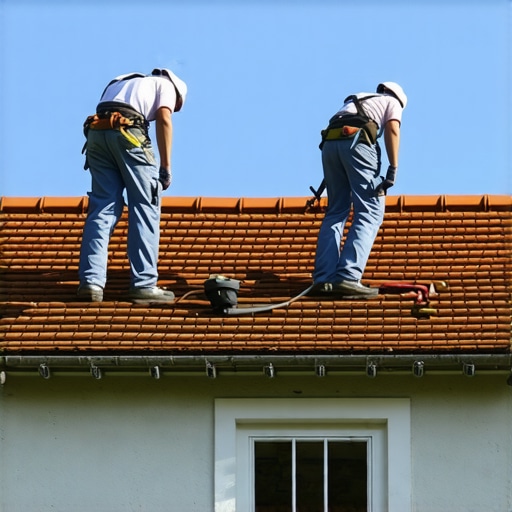
The Wisdom of the Raked Edge: Why Most Roofs Fail Early
I’ve spent the better part of three decades hauling my bones up 12-pitch slopes, and if there is one thing I’ve learned, it’s that most roofing companies aren’t building for 2026; they are building for the day the check clears. My old foreman, a man who could spot a ‘shiner’ from the ground while eating a sandwich, used to growl, ‘Water is patient. It will wait for years just for you to make one mistake.’ He was right. Most local roofers focus on the speed of the ‘square’—that 100 square feet of shingles—rather than the physics of the assembly. If you want your roof to survive the next decade of unpredictable weather cycles, you need to stop looking at the color of the shingles and start looking at the forensic reality of the deck. I’ve seen 40-year shingles fail in eight years because someone forgot that a house needs to breathe as much as it needs to stay dry. It’s not just about keeping rain out; it’s about managing the microscopic movement of air and moisture that occurs every single hour under those layers of asphalt.
1. The Ventilation Vacuum: Stop Cooking Your Decking
The biggest lie in the industry is that the sun is the primary killer of a roof. While UV radiation certainly degrades the bitumens, the real assassin is the heat trapped in your attic. In a poorly ventilated space, attic temperatures can soar to 140°F or higher. This heat doesn’t just sit there; it bakes the plywood from the underside. This is ‘thermal degradation,’ and it turns your sturdy 5/8-inch CDX plywood into something resembling a brittle wafer. Local roofers who know their craft understand the 1/300 rule for ventilation. You need one square foot of net free vent area for every 300 square feet of attic floor space. But it’s not just about the math; it’s about the path. If your intake vents at the soffit are stuffed with fiberglass insulation, your ridge vent is essentially a vacuum that can’t pull air. This creates a stagnant, humid environment where the dew point is reached every night, leading to condensation. That condensation drips onto the deck, rots the fasteners, and suddenly those ‘lifetime’ shingles are held down by rusted needles. According to the National Roofing Contractors Association (NRCA):
“Proper ventilation is essential for the long-term performance of all steep-slope roof systems, preventing moisture accumulation and heat buildup.” – NRCA Manual
Without this balance, you’re basically living inside a slow-cooker.
2. The Fastener Physics: Why ‘Shiners’ and High-Nailing Ruin Everything
Walk onto any job site and listen to the pace of the nail guns. If it sounds like a machine gun, run. High-speed installation is the enemy of longevity. Most local roofers use pneumatic guns set to a generic pressure, but the density of the wood varies. When a nail is driven too deep, it blows through the mat of the shingle, leaving it held by nothing but friction. When it’s ‘high-nailed’—placed above the reinforced ‘strike zone’—the shingle is only held by the layer above it. During a high-wind event, the ‘uplift ratings’ don’t mean a thing because the shingle will simply zip right off the nail head. Then there are ‘shiners’—nails that missed the rafter and are sticking out into the attic space. In the winter, these metal shiners become ice-cold conduits. Warm, moist air from your bathroom or kitchen hits that cold metal, turns to frost, and then thaws, creating a ‘phantom leak’ that rots your framing. A forensic roofer looks for these details. We look for the ‘cricket’—that small, peak-roofed structure behind a chimney that diverts water. Without a cricket, water pools, hydrostatic pressure builds, and eventually, gravity wins. It’s not if it will leak, but when the wood-rot will become structural.
3. The Flashing Myth: Why Caulk Is Not a Permanent Solution
I have a visceral hatred for silicone caulk on a roof. It is the signature of a ‘trunk slammer’—a contractor who intends to be three counties away by the time the first storm hits. Real roofing is done with metal, not a tube of goop. The ‘Achilles heel’ of any roof is the transition point: valleys, chimneys, and where the roof meets a wall. This is where ‘step flashing’ is mandatory. Each individual shingle needs its own L-shaped piece of metal woven into it. Many roofing companies try to save time by using ‘continuous flashing’—a single long strip of metal. But houses move. They expand and contract with the seasons. A continuous strip will eventually buckle and pull away, creating a gap that sucks in wind-driven rain through capillary action. Water can actually move uphill through these tiny gaps if the wind pressure is right.
“A roof is only as good as its flashing.” – Old Roofer’s Adage
If you see a roofer leaning heavily on a caulk gun around your chimney, you are looking at a future repair bill. You want to see ‘counter-flashing’—metal ground into the mortar joints of the brick—providing an umbrella over the step flashing. That is how you reach 2026 and beyond without a bucket in your living room.
4. The Underlayment War: Synthetic vs. The Old Guard
For decades, #15 or #30 felt paper was the standard. It worked, but it was fragile. Today’s roofing landscape is dominated by synthetic underlayments—polypropylene or polyethylene sheets that are nearly impossible to tear. However, there is a catch. Synthetics are great for ‘secondary water resistance,’ but they can be too good. They don’t breathe. If moisture gets trapped between the synthetic underlayment and the plywood deck, it has nowhere to go. This is why local roofers must ensure the deck is bone-dry before installation. If they install over a damp deck after a morning dew, they are sealing in the seeds of dry rot. Furthermore, in valley areas, you should be seeing an ‘ice and water shield’—a thick, rubberized asphalt membrane that self-seals around nails. This is your last line of defense against ice dams. In the North, when snow melts and refreezes at the eaves, it creates a dam that backs water up under the shingles. Without that membrane, that water is going straight into your soffits and walls. Investing in the ‘Material Truth’ means choosing the right underlayment for the climate zone, not just the cheapest roll on the truck.