

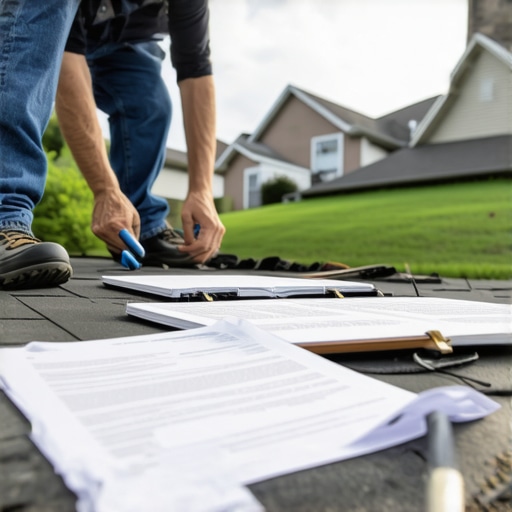
The Denied Claim: Why Your New Roof Is a Liability
You’re sitting at the kitchen table, a fresh denial letter from your insurance carrier staring you in the face. You spent $20,000 on a new roof last year, yet here we are. As a forensic investigator who has spent 25 years crawling through cramped, 140-degree attics and peeling back shingle layers like an autopsy, I see this daily. Most roofing companies aren’t trying to scam you; they simply don’t understand that the rules of the game changed in 2026. The insurance industry has tightened its grip, and if your local roofer didn’t follow the physics of the deck to the letter, you’re the one left holding the bill.
My old foreman used to say, ‘Water is patient. It will wait for you to make a mistake.’ He was usually talking about a poorly kicked-out flashing, but in today’s market, that patience extends to the insurance adjusters. They aren’t just looking for storm damage anymore; they are looking for excuses to void your coverage based on workmanship failures that violate the 2026 IRC Building Codes. If you suspect your contractor missed the mark, you might already be seeing 7 signs your 2026 roof inspection was incomplete.
1. The Invisible Sin: Improper Attic Ventilation and R-Value Ratios
In cold climates, the roof is a thermal regulator. When local roofers slap on 30 squares of architectural shingles but ignore the intake-to-exhaust ratio in your soffits, they are building a pressure cooker. Insurance auditors in 2026 now use thermal imaging to detect heat blooms. If your attic is significantly warmer than the ambient air, it’s a red flag for ice damming. Water doesn’t just fall; it moves through capillary action. When snow melts at the ridge and freezes at the eave, it creates a pool. That water then crawls under the shingles through surface tension, seeking the path of least resistance—usually a staple hole or a ‘shiner’ (a nail that missed the rafter). If your roofer didn’t calculate the 1/300 ventilation rule, your carrier will argue the damage was ‘preventable maintenance’ rather than a ‘covered peril.’ This is exactly why top-rated roofing companies are failing inspections in 2026.
“A roof is only as good as its flashing, and its longevity is only as good as its breathability.” – Old Roofer’s Adage
2. The ‘Shiner’ Epidemic and Structural Fastening Failures
Go into your attic on a freezing morning. If you see what looks like diamonds sparkling on the underside of your plywood, those are shiners. These are nails that missed the rafter during a ‘fast and loose’ installation. In the 2026 audit world, these are considered structural defects. Each shiner acts as a thermal bridge, pulling cold air into the warm attic and causing condensation to drip directly onto your insulation. Over time, this leads to the ‘oatmeal effect’—where your plywood delaminates from the inside out. You won’t see a leak on your ceiling for years, but the deck is already compromised. This explains why your roof decking might be rotting even without a visible leak. If an auditor sees more than five shiners per square, they often flag the entire installation as sub-standard.
3. Failure to Document the Ice & Water Shield
In the North, the Ice & Water shield is your last line of defense. It’s a self-adhering polymer modified bitumen membrane that seals around every nail. However, many roofing companies take shortcuts by only running a single 36-inch course. In 2026, many local codes (and insurance requirements) demand two courses to reach past the interior wall line. If the contractor didn’t take a geo-tagged photo of the bare deck with the shield installed before the shingles went down, the insurance company will assume it wasn’t done. This lack of documentation is one of the 5 red flags in 2026 local roofer quotes you can’t ignore. Without proof of that secondary water barrier, any future leak claim at the eaves will be summarily denied.
4. Using ‘Caulk-and-Walk’ Flashing Techniques
Flashings are the most critical part of the system, yet they are where the ‘trunk slammers’ save the most time. I’ve seen chimneys ‘re-flashed’ with a thick bead of roofing cement and some spray paint. That’s not a repair; that’s a crime. 2026 audits require step-flashing integrated into each shingle course and counter-flashing let into the mortar joints of the masonry. When a roofer relies on caulk, they are ignoring hydrostatic pressure. Water flowing down a roof hits that chimney and builds up. If there isn’t a metal diverter—a cricket—on the upslope side, that water is going to find its way behind the brick. To protect yourself, you should ask local roofers these 5 questions to avoid 2026 delay costs regarding their flashing methods.
5. Safety and Site Management Red Flags
It sounds unrelated to your leak, but insurance auditors look at site safety as a proxy for workmanship quality. If an auditor drives by a job site and sees workers without fall protection or shingles stacked precariously on a 10/12 pitch, they flag the company. In 2026, insurance carriers are cross-referencing OSHA violations with their claims database. A company that cuts corners on the life of their employees is almost certainly cutting corners on your starter strip and valley lining. When you hire local roofers, you aren’t just paying for shingles; you’re paying for a managed process that survives the scrutiny of a billion-dollar insurance carrier.
“Roofing systems shall be installed in accordance with the manufacturer’s instructions and the requirements of this section.” – IRC Section R903.1
The reality is that roofing has moved from a ‘hammer and nail’ trade to a forensic science. The shingles are just the skin; the underlayment, ventilation, and flashing are the skeleton and lungs. If your contractor doesn’t treat the roof as a holistic system, you’re not getting a replacement—you’re getting a temporary patch that will fail the next time the insurance auditor comes knocking. Don’t let your home become another cautionary tale in my files. Demand better documentation, verify the ventilation math, and never accept caulk where metal should be.