

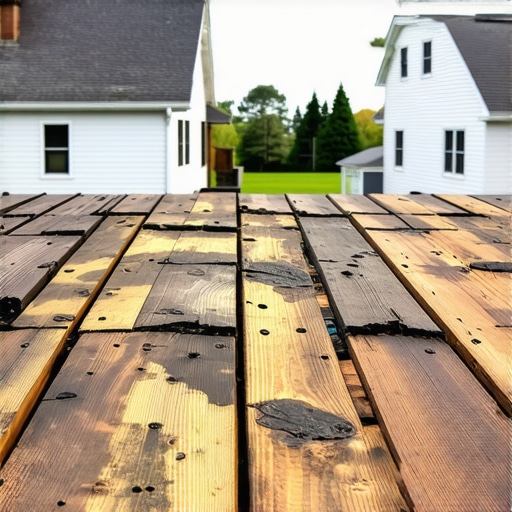
Why Your Roof Decking Might Be Rotting Even Without a Visible Leak
As a seasoned roofing contractor, I’ve seen it hundreds of times: a homeowner calls for a routine inspection or a minor shingle repair, only for us to discover that the structural foundation of their roof – the decking – is soft, molded, or completely rotted. The most shocking part for the homeowner? There wasn’t a single drop of water on their ceiling. When you invest in residential roofing services, you expect the shingles to be the primary line of defense, but the reality is that a roof is a complex system where the most dangerous threats often come from within.
Roof decking, also known as sheathing, serves as the critical bridge between your home’s rafters and the exterior shingles. It provides the structural rigidity necessary to hold the weight of snow, withstand wind uplift, and keep your shingles flat. However, “dry rot” and internal moisture accumulation can compromise this wood silently. Many homeowners only realize they have rot during a full replacement, leading to thousands of dollars in unforeseen plywood or OSB replacement costs. Understanding these “invisible” threats is essential for any property owner. Before you hire a contractor, it is wise to review 5 Denver Roofer Red Flags You Can’t Ignore in 2026 to ensure you are working with someone who understands these structural nuances.
The Science of Attic Condensation: The Silent Killer
The primary reason roof decking fails without a visible leak is a phenomenon known as attic condensation. In a climate-controlled home, daily activities such as showering, cooking, boiling water, and even breathing release gallons of water vapor into the air every day. Because warm air rises, this moisture migrates upward through “bypass” points – recessed lighting, attic hatches, and plumbing stacks – into the attic space.
Once this warm, moist air enters the attic, it encounters the underside of the roof decking. During the colder months, the temperature of that wood is often below the “dew point.” When the moisture-laden air hits the cold wood, it transitions from a gas back into a liquid. This is exactly like the condensation that forms on a cold beer can on a summer day. Over time, this constant dampness saturates the wood fibers, leading to mold growth and eventual structural failure. This process is particularly aggressive in homes that haven’t optimized their thermal envelope. To mitigate this, homeowners often look into Eco-Friendly Roofing: 3 Ways to Lower Roof Heat Thermal Energy Loss Fast Early Fast Early Fast Early Fast Early Fast to stabilize internal temperatures.
Research into “Vented vs. Ventless Attics” shows that in poorly managed spaces, the moisture content of the roof sheathing can exceed 20%, the threshold where wood-decaying fungi begin to thrive. Because this moisture is attacking the wood from the *bottom up*, the shingles on top remain perfectly intact, giving the homeowner a false sense of security while the structural integrity of the home literally rots away beneath their feet.
Ventilation Failures: Why Your Roof Can’t “Breathe”
If moisture is the weapon, poor ventilation is the accomplice. A healthy roof system requires a continuous flow of air to flush out heat and moisture. This is achieved through a balanced system of intake vents (usually located at the soffits or eaves) and exhaust vents (located at the ridge or high on the roof slopes). When this balance is disrupted, the attic becomes a stagnant chamber of humidity.
One of the most common causes of residential roofing services calls regarding rotted decking is actually a simple insulation mistake. Homeowners or inexperienced contractors often push fiberglass batts or blown-in insulation all the way to the edge of the attic, inadvertently blocking the soffit vents. Without intake air, the exhaust vents cannot function, and the “stack effect” is broken. This traps moisture against the roof sheathing, accelerating the rot process.
Furthermore, many older homes rely on gable vents or small box vents that simply do not provide enough square inches of Net Free Ventilating Area (NFVA) for modern living standards. As we seal our homes tighter for energy efficiency, we inadvertently trap more moisture inside, making professional attic ventilation assessments more critical than ever before.
The “Slow Leak” and Capillary Action
Not every leak results in a puddle on your floor. Some of the most devastating roof decking rot is caused by “slow leaks” that never penetrate the attic insulation. These are often caused by capillary action – a physical process where water is “sucked” upward or sideways through tight spaces, such as between overlapping shingles or under flashing that hasn’t been properly sealed.
Pinhole leaks around “nail pops” (where a nail has backed out of the wood) or around aged pipe boots allow small amounts of water to seep onto the decking. Because the amount of water is small, it is absorbed by the wood or the underlayment before it can drip onto the ceiling. However, if this happens repeatedly, the wood never has a chance to dry out. Ice dams are another major contributor. When snow melts and refreezes at the eaves, it creates a reservoir of standing water that can be forced under the shingles and directly onto the eave-zone decking. To prevent these localized failures, experts recommend checking Roofing Services: 5 Ways to Stop Water Entry at Attic Joint Seals Fast Early Fast Early Fast Early Fast Early Fast Early Fast Early Fast Early Fast Early Fast Early Fast.
Material Matters: OSB vs. Plywood Performance
The type of material used for your roof sheathing significantly impacts how it handles moisture. The two most common materials are Plywood and Oriented Strand Board (OSB). While OSB is more common in modern construction due to its cost-effectiveness and consistent density, it behaves very differently than plywood when exposed to moisture.
Plywood is made of layered veneers glued together. When it gets wet, it tends to expand evenly and, more importantly, it dries out relatively quickly once the source of moisture is removed. OSB, however, is made of compressed wood strands and resin. When OSB edges are exposed to moisture, they can swell significantly and “mushroom,” a condition that does not reverse even after the wood dries. Furthermore, OSB tends to hold onto moisture longer than plywood. This prolonged saturation period creates a breeding ground for the fungi that cause roof decking rot. If your home uses OSB, you must be even more vigilant about ventilation. If you suspect damage, consult Local Roofers: 3 Fixes for Rotted Roof Decking to understand your repair options.
Warning Signs: How to Spot Rot from the Inside Out
Since you can’t always see the damage from the curb, you need to know how to perform a “bottom-up” inspection. If you have access to your attic, grab a high-powered flashlight and look for the following warning signs:
- Dark Stains or “Tide Marks”: Look for circular or irregular staining on the wood. Even if it feels dry now, these marks indicate past moisture intrusion.
- Damp or Compressed Insulation: If the fiberglass insulation directly under the roof deck looks flattened or has black “dust” on it (which is often mold), moisture is dripping from the wood above.
- The Smell of Mildew: A musty, earthy odor in the attic is a surefire sign of organic growth.
- Spongy Feel: If you notice a “dip” in the roofline from the outside, or if the roof feels soft underfoot, the sheathing has likely lost its structural integrity. This is why residential roofing services professionals use extreme caution when walking on older roofs.
Modern technology has made this easier. Many contractors now utilize infrared cameras to detect temperature anomalies that indicate moisture trapped within the wood. For more on this, read Why Local Roofers Now Use Thermal Scans for 2026 Quotes.
Professional Solutions and Prevention
Preventing roof decking rot requires a holistic approach to the “roofing system.” It isn’t just about the shingles; it’s about the air beneath them. First, ensure your attic has a balanced ventilation system. This might involve installing baffle vents to keep insulation away from the soffits or upgrading to a continuous ridge vent. Second, ensure that all bathroom and kitchen exhaust fans are vented *entirely* to the outside of the house, not just into the attic or the soffit area.
When it comes to the roof itself, using a high-quality synthetic underlayment can provide an extra layer of protection against minor leaks. According to the National Roofing Contractors Association (NRCA), maintaining a dry deck is the single most important factor in the longevity of a roofing system. If rot is already present, the only solution is to remove the affected shingles and replace the damaged wood. Patching over rotted wood is a recipe for disaster, as the rot will continue to spread and the nails will not hold. For a deeper dive into the repair process, see Residential Roofing: 5 Ways to Fix Rotted Decking.
Conclusion & Call to Action
A roof is much more than what you see from the street. It is a protective shield that must handle moisture from both the sky and the living spaces below. Roof decking rot is a silent, structural threat that can turn a simple shingle replacement into a major construction project. By understanding the science of attic condensation and the importance of ventilation, you can protect your home’s value and safety.
Don’t wait for a ceiling stain to tell you your roof is failing. Contact a professional today for a comprehensive attic and roof deck evaluation. A proactive inspection is the only way to ensure your home’s foundation remains dry and secure for years to come.