
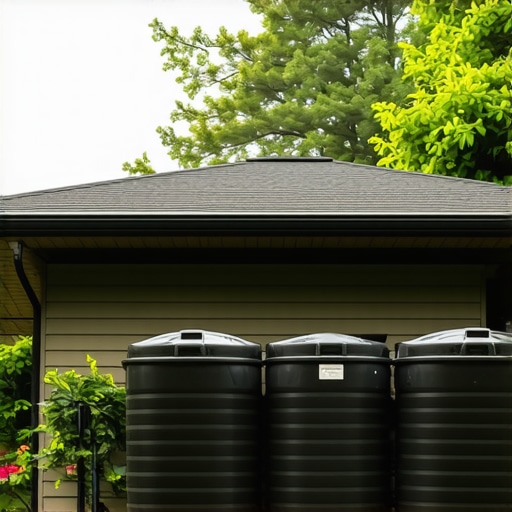
The Anatomy of a Rainwater Disaster
I was standing on a ladder in the humid, salt-heavy air of the Gulf Coast last Tuesday, looking at a dining room ceiling that was sagging like a wet paper bag. The homeowner was baffled. He’d just had a new rainwater collection system installed to comply with the emerging green initiatives, but instead of saving money, he was watching his drywall dissolve. My old foreman used to say, ‘Water is patient. It will wait for you to make a mistake.’ In this case, the mistake wasn’t the tank; it was the roofing. When you change how water leaves a roof, you change the physics of the entire structure. Most roofing companies just slap on a gutter and call it a day, but the 2026 legal landscape doesn’t allow for that kind of laziness anymore.
The Physics of Failure: Why Standard Gutters are Failing the New Codes
Water has a nasty habit of following the path of least resistance, often aided by capillary action. When a rainwater collection system is attached, it creates back-pressure. If your local roofers didn’t account for the increased volume or the potential for debris-clogged intake valves, that water isn’t going into your barrel; it’s wicking back up under your shingles. I’ve seen cases where a simple ‘shiner’—that’s a missed nail for you civilians—acts as a straw, pulling moisture directly into the attic. Once that OSB decking gets saturated in this 95-degree heat, it doesn’t just dry out. It becomes a breeding ground for delamination. This is the forensic reality of the 2026 mandates. You aren’t just moving water; you’re managing a hydraulic system on top of your house.
“A roof is only as good as its flashing.” – Old Roofer’s Adage
Law #1: The Integrated Filtration Mandate (SBR-2026)
The first major shift in 2026 involves the mandatory integration of point-of-origin filtration. You can no longer just dump raw roof runoff into a barrel. The law now requires a multi-stage debris diverter at the eave. From a forensic roofing perspective, this is a nightmare if not installed correctly. These diverters add weight and change the pitch of your gutter runs. If the pitch isn’t exactly a quarter-inch per ten feet, you get ponding. Ponding leads to mosquitoes, and more importantly, it leads to gutter-heavy torque that can pull your fascia board right off the rafters. If you find yourself in this mess, you’ll need to know what to do if your gutter snaps under the weight of these new legal requirements. These systems are heavy, and the days of the ‘trunk slammer’ contractor using 1-inch nails are over.
Law #2: Structural Load Certification for Roof-Mounted Collection
The second law hitting homeowners in 2026 is the requirement for a structural load certification if you’re using roof-mounted collection bladders. A ‘square’ of shingles already weighs about 230 to 450 pounds. Add a hundred gallons of water to a specific section of your roof, and you’re asking for a structural failure. I’ve walked on roofs where the ridge line looked like a swayback horse because someone tried to be ‘eco-friendly’ without checking their rafter spans. If you don’t have a cricket installed to divert water around these heavy collection points, you’re creating a dam. That dam leads to hydrostatic pressure that forces water under even the best-laid shingles. Before you install any roof-mounted system, you must check for signs that your attic rafters are sagging under the existing load.
“The building envelope must be designed to shed water, not just hold it.” – NRCA Technical Manual
Law #3: The Secondary Overflow Discharge Requirement
Perhaps the most ‘lawyer-friendly’ of the new rules is the mandatory secondary overflow discharge. The 2026 code states that if your primary collection tank reaches capacity, the overflow must be directed at least ten feet away from the foundation via a hard-piped system. Why does this matter to roofing professionals? Because most people try to vent the overflow right back up at the roofline. This creates a splash-back effect that destroys the ‘starter strip’ of your shingles. When that starter strip fails, the wind gets under your roof and starts the ‘zipper effect,’ peeling squares off like a banana. This is often misdiagnosed as storm damage, but it’s actually a mechanical failure of the collection system. If you notice your shingles starting to lift near the gutter line, you should look into hidden shingle lifting before the next tropical depression rolls through.
The Band-Aid vs. The Surgery
Most homeowners will try the ‘Band-Aid’ approach to these new laws: a bit of caulk here, a plastic diverter there. As someone who has spent two decades tearing off failed ‘Band-Aids,’ let me tell you—it doesn’t work. The caulk dries out under the brutal UV rays, shrinks, and leaves a gap. That gap is all water needs. The ‘Surgery’ involves a full evaluation of your roof’s edge. This includes installing a proper drip edge that is tucked correctly into the gutter, ensuring the flashing at the valley isn’t being bypassed by the new collection hardware, and potentially upgrading to a thicker gauge aluminum for your downspouts. It costs more upfront, but it beats the hell out of a $20,000 mold remediation bill in three years. Don’t let a ‘cheap’ quote from a local roofer trick you into ignoring the physics of water displacement. If the quote seems too low, they aren’t accounting for the 2026 structural requirements. They’ll be gone when the first leak starts, but the water will still be there, patient as ever, rotting your home from the inside out.