
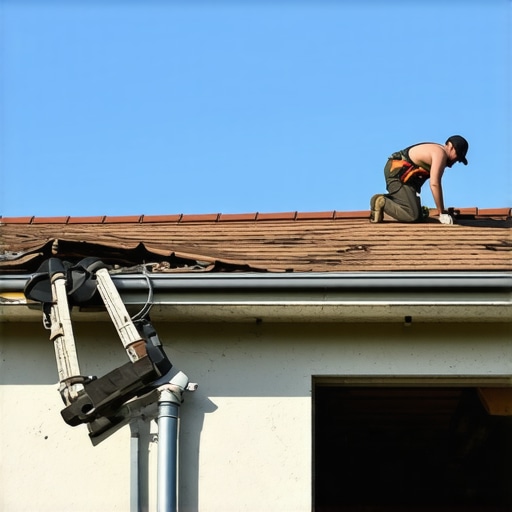
The Anatomy of a Gutter Failure: Why It’s Never Just a Piece of Metal
You’re sitting in your living room during a Gulf Coast downpour when you hear it—a sickening, metallic thwack followed by the sound of a waterfall hitting your foundation. You go outside, dodging the sheets of wind-driven rain, and see twenty feet of seamless aluminum hanging off the eaves like a broken limb. My old foreman used to say, ‘Water is patient. It will wait for you to make a mistake.’ And a snapped gutter is usually the final result of a mistake that’s been brewing for years. To a green rookie, it looks like a broken bracket. To a veteran who’s spent 25 years inspecting forensic failures, it looks like a systemic collapse of the roof’s edge drainage system. When that gutter snaps, the clock starts ticking on your foundation and your fascia boards.
The Physics of the Snap: It’s All About the Load
Why does a gutter snap? In the Southeast, it’s rarely just the weight of the water. It’s the weight of the water combined with a shiner—a missed nail from the original roofing crew that’s been slowly weeping moisture into the rafter tails for a decade. When the wood of the fascia becomes soft, essentially the consistency of wet cake, those long gutter spikes lose their grip. Then comes the wind-driven rain, filling the trough with 500 pounds of liquid weight. The metal gives way, the wood shears, and now you have a gaping wound on the side of your house. It’s not a cosmetic issue; it’s a structural emergency. If you ignore this, you are inviting hydrostatic pressure to begin carving out the soil around your basement or slab, leading to cracks that cost ten times more than any roofing repair.
“A roof is only as good as its flashing.” – Old Roofer’s Adage
1. Immediate Site Stabilization and Safety
The first thing you do isn’t calling the insurance company; it’s making sure the dangling metal doesn’t become a guillotine. A snapped gutter is under tension, often held up by a single remaining screw or a piece of valley flashing. Get your family away from that side of the house. If the gutter is still partially attached, do not—I repeat, do not—climb a ladder in a storm to fix it. I’ve seen enough ‘DIY heroes’ end up in the ER because they tried to manhandle a wet, vibrating piece of aluminum in 40-mph winds. If the gutter has fully detached, pull it away from the house to prevent it from acting as a lever against the remaining fascia. You need to clear the area so that immediate leak control can be established once the wind dies down.
2. The Foundation Diversion Maneuver
When the gutter is gone, the roof becomes a massive funnel directing thousands of gallons of water directly at your foundation. In the tropics, a single afternoon storm can dump enough water to saturate the soil and cause a basement wall to bow. Your second priority is to manage the runoff. If you have plastic tarps or even plywood, lean them against the base of the house at an angle to force the water to shed away from the slab. This is a stopgap. You are essentially creating a temporary cricket on the ground to divert the flow. Without this, you’re looking at decking rot behind gutters which can spread upward into the starter course of your shingles.
3. The Forensic Fascia Audit
Once the rain stops, it’s time for the ugly truth. You need to look at the wood where the gutter was attached. Is it clean, or is it covered in black mold and slime? If the wood is dark and pulpy, the gutter snap is just a symptom of a larger disease: Secondary Water Resistance failure. This usually happens because the drip edge was installed improperly, allowing water to ‘wick’ back behind the metal and onto the fascia board. This is where most local roofers get it wrong—they’ll just screw a new gutter into the same rotted wood. You need to ensure your roofing professional inspects the rafter tails. If the tips of the rafters are soft, you aren’t just looking at a gutter job; you’re looking at a structural repair. A real pro will check for signs of poor roof flashing that might have contributed to the moisture trap.
“Roofing assemblies shall be designed and installed in accordance with this code and the manufacturer’s installation instructions.” – International Building Code (IBC) Section 1501.1
4. Vetting Roofing Companies for the ‘Real’ Fix
Don’t just hire the first guy with a truck and a ladder who says he can ‘hang a new trough.’ You need roofing companies that understand the chemistry of the build. In coastal areas, we deal with salt air and high humidity, meaning those fasteners need to be stainless or high-grade galvanized to prevent galvanic corrosion. Ask them: ‘Are you going to replace the fascia, or are you going to use a gutter bracket with a longer throw to hit the rafters?’ If they don’t talk about ‘pitch’ or ‘downspout capacity,’ show them the door. A gutter is a hydraulic machine; it needs to be calibrated to the square footage of the roof it services. If the replacement doesn’t include a properly lapped drip edge, you’ll be right back in this mess in three years. You want a crew that knows how to spot shingle lifting which often happens near the eaves during the same storms that take down gutters.
The Cost of the ‘Quick Fix’
I’ve walked on thousands of roofs, and the most heartbreaking ones are the ‘cheap’ repairs. Someone uses a bit of caulk and a bigger screw to put a gutter back up on rotted wood. Six months later, the whole eave collapses, taking the soffit and the attic insulation with it. The smell of wet, moldy fiberglass is something you never forget—it’s the scent of money flying out of your bank account. When a gutter snaps, treat it as a warning from your house. It’s telling you that the perimeter defenses have failed. Fix the wood, fix the flashing, and then—and only then—hang the metal. Anything less is just waiting for the next storm to finish what this one started.