
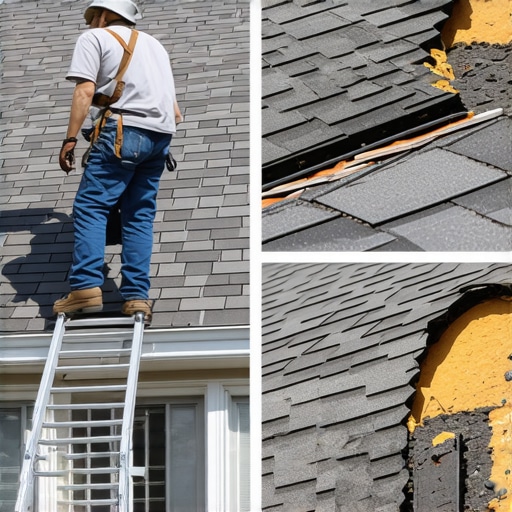
The Anatomy of a Slow-Motion Disaster: When Your Roof Stops Protecting You
You’re sitting in your living room in the humid air of the Gulf Coast, and there it is—a single, rhythmic drip-drip-drip hitting the hardwood. You look up, expecting a massive hole, but the ceiling looks fine, except for a faint yellowish ring that’s growing by the minute. You call a couple of local roofers, and they tell you the same thing: ‘The shingles look okay from the ground.’ They’re wrong. As someone who has spent 25 years peeling back layers of rot and identifying why roofing systems fail long before their ‘guaranteed’ lifespan, I can tell you that the most dangerous leaks don’t come from missing shingles. They come from ‘lifting’—a subtle, invisible failure where the sealant bond breaks, and the shingle becomes a pump for wind-driven rain.
My old foreman used to say, ‘Water is patient. It will wait for you to make a mistake.’ He was right. In our humid, wind-heavy climate, a shingle doesn’t need to blow off to ruin your house. It just needs to lift a quarter-inch during a gust. That tiny gap creates a vacuum effect. Using what we call Mechanism Zooming, let’s look at the physics: as wind rushes over the peak of your roof, it creates a low-pressure zone. If the sealant strip—that thin line of asphalt meant to glue shingles together—has failed, the shingle lifts. This creates a Bernoulli effect, literally sucking water upward and backward under the shingle lap. Once it hits the nail line, it’s game over. It follows the shank of the nail directly into your decking. This is how you end up needing 3 fixes for rotted roof decking because you ignored a shingle that looked ‘fine’ from the driveway.
“The roof shall be covered with approved roof coverings secured to the building or structure in accordance with the provisions of this code.” – International Residential Code (IRC), Section R903.1
Sign 1: The ‘Shadow Line’ and the Sealant Ghost
When I perform a forensic roof inspection, I’m not looking for missing pieces; I’m looking for the ‘Shadow Line.’ On a hot day, shingles should be flat, baked together into a monolithic sheet. If you see a slight shadow under the edge of a shingle course, it means the thermal bond has snapped. In the Southeast, UV radiation is a silent killer. It bakes the oils out of the asphalt sealant until it becomes brittle. Once that bond is ‘unzipped’ by a high wind event, it rarely reseals on its own. You might try to ignore it, but you’re actually looking at 5 ways to spot shingle lifting before the next tropical depression turns your attic into a swimming pool. If you can slide a business card under a shingle with zero resistance, the roof is compromised. It’s no longer a shield; it’s a series of loose flaps waiting for a storm.
Sign 2: The ‘Shiner’ and Fastener Fatigue
Next, we have to talk about ‘shiners.’ In trade talk, a shiner is a nail that missed the rafter or was driven in crooked, leaving the silver head exposed in the attic. But on the roof surface, we look for fastener fatigue. When shingles lift and flutter—even slightly—they pull at the nails. This isn’t just about the shingle; it’s about the ‘square’ (that’s 100 square feet of roofing to you). A fluttering shingle acts like a crowbar, slowly backing the nail out of the plywood. If you see ‘pimple’ bumps under your shingles, those are nail heads being pushed up. This creates a permanent gap that allows capillary action to pull moisture toward the roof’s most vulnerable points. I’ve seen roofing companies try to slap a bit of caulk over these, but that’s a band-aid on a gunshot wound. You need to check your signs of poor roof flashing and fastener integrity before the structural integrity of the deck is lost.
Sign 3: Silt Trails and the ‘Hidden’ Granular Loss
The third sign is the most forensic: Silt Trails. When a shingle lifts, it allows fine sediment and granules to wash underneath the shingle above it. During my inspections, I look at the ‘lap’—the area where one shingle overlaps another. If I see a line of dirt or ‘silt’ tucked up under that lap, it’s proof that water has been traveling uphill. This is often accompanied by ‘dog-eared’ corners where the shingle has slightly curled. These small deformities are the early warning signs of hidden shingle lifting. If you catch this ‘fast and early,’ you might save yourself a $20,000 replacement. If you wait, you’ll be calling for emergency roof services after high wind because your roof ‘suddenly’ failed. It didn’t suddenly fail; it’s been failing for three years, one drip at a time.
“A roof is only as good as its flashing and the integrity of its thermal bonds.” – Old Roofer’s Adage
The Physics of Failure: Why ‘Cheap’ is Expensive
Most homeowners pick local roofers based on the lowest bid. Here is what the ‘trunk slammers’ won’t tell you: they skip the starter strips. The starter strip is a special shingle laid at the eaves and rakes that has a massive adhesive strip to prevent the edges from lifting. Without it, the wind catches the edge like a kite. Once the edge lifts, the wind works its way up the roof, unzipping the sealant on every course. This is why you must ensure your contractor understands stopping water entry at attic joints. In a hurricane-prone area, missing a single ‘cricket’ (that’s a small peaked structure to divert water behind a chimney) or failing to use high-wind rated nails can result in a total loss. Don’t let a ‘shiner’ or a lack of sealant be the reason your insurance claim gets denied because of ‘maintenance neglect.’ Get a real inspection, look for the shadow lines, and stop the lift before the storm does it for you.