
The Anatomy of a Structural Groan: Why Your Roof is Bowing
Walking on that roof felt like walking on a sponge. I knew exactly what I’d find underneath before I even pulled my hammer out of the loop. When you’ve spent nearly three decades crawling through 140°F attics and peeling back layers of failed shingles, you develop a sixth sense for structural surrender. The owner of that house in the snow belt didn’t think much of the slight ‘dip’ in their ridge line until the mid-winter thaw. By then, the rafters weren’t just sagging; they were screaming under the weight of three decades of neglected ice dams and ‘shingle-over’ hack jobs. Most local roofers will tell you that a sag is just a cosmetic issue. They’re lying. A sag is a physics problem that hasn’t reached its terminal velocity yet.
When we talk about sagging rafters, we aren’t just talking about old wood. We are talking about the loss of structural integrity due to the capillary action of water moving sideways under a shingle and deep into the grain of the Douglas Fir or Yellow Pine framing. In cold climates, this is often the result of an attic bypass—warm air from the house leaking into the attic, melting the snow on the roof, which then refreezes at the eaves, creating a massive ice dam. That water backs up, sits there, and eventually turns your structural members into something with the consistency of wet cardboard. If you see a curve where there should be a straight line, the clock is ticking.
“A roof system shall be designed and constructed to support all anticipated loads, including snow, wind, and dead loads from the weight of the materials themselves.” – International Residential Code (IRC), Section R802
Step 1: Immediate Load Assessment and De-Escalation
The first thing you do isn’t calling the insurance company; it’s looking at what is pushing down on the deck. If you are in the middle of a heavy winter, that sag is likely exacerbated by a square or two of heavy, wet snow. A single square (100 square feet) of wet snow can weigh as much as 2,000 pounds. If your rafters are already compromised by rot or undersized framing, that extra ton is the straw that breaks the camel’s back. You need to carefully—and I mean carefully—remove that weight. This doesn’t mean climbing up there with a metal shovel and gouging your shingles. Use a roof rake from the ground. If the sag is severe, do not set foot on that roof. I’ve seen roofing companies send kids up on bowing decks only to have the whole system pancake into the bedroom below. If you suspect the decking is gone too, you might be looking at rotted roof decking that can no longer hold a nail, let alone a man.
Step 2: Internal Shoring (The Temporary Spine)
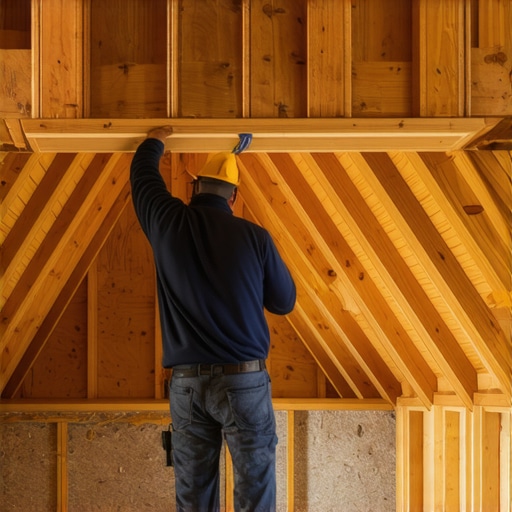
You can’t fix the outside until you stabilize the inside. This is where the forensic investigation turns into emergency surgery. If you see rafters bowing, you need to provide a secondary path for that load to reach the foundation. This usually involves building a temporary ‘strongback’ or a ‘purlin’ system in the attic. You take a 2×6 or 2×8 and run it perpendicular to the sagging rafters, then use vertical supports (struts) to transfer that weight down to a load-bearing wall below. Do not just kick a 2×4 onto the attic floor; you’ll just punch a hole through your ceiling. You have to find the structural points of the house. This is a critical move for emergency roof services because it prevents a total collapse while you wait for the weather to clear or the crew to arrive.
Step 3: Moisture Mapping and the Humidity Trap
Why did it sag? Wood doesn’t just give up because it’s tired. It gives up because it’s wet or it’s hot—or both. In the North, the ‘Thermal Bridge’ is your enemy. If your attic isn’t properly insulated (R-value 49 or higher in many zones), the heat from your living room is cooking the underside of your roof. This creates condensation. I’ve pulled apart roofs where the shiners (nails that missed the rafter) were dripping like a leaky faucet in the middle of January. That constant drip into the rafter tail causes the wood fibers to swell and lose their shear strength. If you find the wood is damp, you need to address the ventilation immediately. You might need to look into ridge vent sealing issues that are trapping that moist air. A roof that can’t breathe is a roof that is rotting from the inside out.
Step 4: The ‘Surgery’ vs. The ‘Band-Aid’
Once the house is stable, you have to decide how to fix it. The ‘trunk slammers’ will tell you they can just shim the shingles to make it look flat. Run away from those guys. A cosmetic fix on a structural failure is a death sentence for your home’s value. The real fix usually involves ‘sistering’ the rafters. This means taking a new, straight piece of lumber and bolting it alongside the sagging rafter to pull it back into alignment and add strength. However, if the rot has traveled into the top plate of your walls, you’re looking at a much larger project. You’ll need to check local reputation of contractors to find someone who actually understands load-bearing calculations, not just someone who is good at nailing down asphalt. If the damage is widespread, it might be time for a full tear-off to replace the hidden plywood delamination that always accompanies long-term structural sagging.
“Water is patient. It will wait for years for you to miss a single piece of flashing, and then it will use gravity to destroy your foundation.” – Old Roofer’s Adage
Final Forensic Thoughts: Don’t Wait for the Crack
A sagging roof is a warning shot. It’s the house telling you that the physics of gravity and the chemistry of rot are winning. If you ignore it, the repair costs grow exponentially. What starts as a $1,500 sistering job can quickly turn into a $30,000 whole-roof replacement including new rafters, decking, and interior ceiling repairs. If you’re seeing signs of trouble, such as hidden shingle lifting or interior drywall cracks, get an inspection. Use a local roofer who knows the snow load requirements of your specific county. Don’t let a ‘cheap’ bid turn your home into a forensic scene I have to investigate next year. Gravity doesn’t take days off, and neither does rot. Protect your deck, fix your vents, and for heaven’s sake, keep the water out of the wood.