
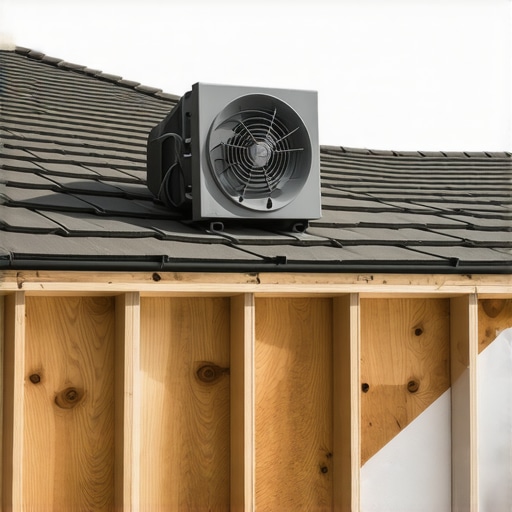
The Anatomy of a Slow Burn: When Your Attic Becomes a Pressure Cooker
Walking on a roof in the humid suburbs of Philadelphia last August, I felt it before I saw it. Every step across the north-facing slope felt like walking on a damp kitchen sponge. The shingles looked fine from the curb, but under my boots, the 7/16-inch OSB was giving way. I didn’t need to pull a single nail to know what was happening. I climbed down, stuck my head through the attic hatch, and was hit by a wall of air that smelled like a wet basement and felt like a sauna. The culprit? A dead power attic ventilator that had been silent for three years. The homeowner thought they had a leak. What they actually had was a slow-motion forensic disaster caused by stagnant air.
As a veteran in the roofing industry, I’ve seen thousands of homeowners spend money on roofing companies to fix ‘leaks’ that were actually internal condensation issues. Your attic fan isn’t just a luxury; it is the lungs of your home. When it stops breathing, the entire system begins to fail. We aren’t just talking about a hot upstairs bedroom; we are talking about the structural integrity of your roof deck and the lifespan of your asphalt shingles. If you ignore a failing fan, you’re essentially inviting local roofers to charge you for a full tear-off ten years earlier than necessary.
“Ventilation shall be provided for the under-floor space between the bottom of the floor joists and the earth under any building.” – International Residential Code (IRC) Section R408.1 (Applied logic for Attic Spaces R806.1)
1. The Attic ‘Bake-Off’: Sustained High Temperatures
Physics doesn’t care about your comfort. In a standard gable-roof home, solar radiation beats down on the shingles, which can reach temperatures of 160°F. That heat transfers through the underlayment into the wood decking. Without a functioning fan to pull that air out, the attic becomes a heat sink. If you walk into your attic and the air feels significantly hotter than the ambient outdoor temperature after sunset, your fan has likely given up the ghost. This isn’t just about heat; it’s about thermal energy loss and the destruction of your shingle adhesives. When the wood decking stays at 130°F for twelve hours a day, it cooks the shingles from the bottom up, leading to premature aging and shingle blistering.
2. The Ghost in the Attic: Humming, Grinding, and Rhythmic Thumping
Most roofing professionals will tell you that a fan’s motor often gives you a warning shot before it seizes. If you hear a low-frequency hum or a metallic grinding sound coming from the ceiling, the bearings in the fan motor are shot. This usually happens because of ‘shiners’—those missed nails that stick through the plywood and drip condensation directly onto the motor housing. Once the motor bearings lose their lubrication, the fan draws more amperage, gets hotter, and eventually trips a breaker or simply burns out. A fan that is vibrating also creates micro-fissures in the flashing. If the fan unit shakes, it breaks the seal of the roofing cement around the base, leading to a slow drip that eventually causes hidden rafter rot.
3. The ‘Shiner’ Syndrome: Indoor Rain and Rusty Nails
In colder climates, a failing attic fan is even more dangerous than in the summer. During winter, warm air from your living space escapes into the attic—this is called an attic bypass. If the fan isn’t pulling that moist air out, it hits the cold underside of the roof deck and turns into frost. When the sun hits the roof, that frost melts, creating what we call ‘indoor rain.’ If you see rust around the nails (the ‘shiners’) or water stains on the plywood that don’t align with a valley or a cricket, your fan’s humidistat is likely broken. This moisture is the primary driver of rotted roof decking. When the plywood delaminates, it loses its nail-holding power, and the next windstorm will have your shingles flapping like a loose tarp.
“A roof is only as good as its flashing, but it only lasts as long as its ventilation.” – Old Roofer’s Adage
4. The AC Unit’s Death March
If your air conditioning unit is running 24/7 but the second floor still feels like a swamp, your attic fan is the prime suspect. An attic that can’t vent acts like a radiator, pushing heat down through the ceiling insulation and into your bedrooms. This is a classic case of hydrostatic pressure in air movement; the hot air wants to expand and finds the path of least resistance through your recessed lighting and attic hatch. Check your electric bill. A $50 increase in monthly cooling costs is often the first sign that your 1/4-horsepower fan motor has quit. Before you call an HVAC tech, look at your roofline. If the fan isn’t spinning on a 90-degree day, you’re throwing money into the wind. You might need to look into sealing attic vents or improving intake to ensure the new fan doesn’t just pull air from the house.
5. The Visual Tell: Curled Edges and Premature Grain Loss
When I do a forensic inspection for roofing companies, I look at the granules in the gutters. If a fan fails, the excessive heat causes the asphalt in the shingles to become brittle. This is called ‘volatilization.’ The oils that keep the shingle flexible evaporate, and the protective granules begin to fall off in sheets. If you notice your shingles are curling at the edges or look ‘toasted’ compared to your neighbor’s roof, your attic is likely suffocating. This is often exacerbated by poor intake. Without proper attic baffles, even a working fan will starve for air, creating a vacuum that can actually pull conditioned air out of your home. A failed fan is a structural ticking clock.
The Band-Aid vs. The Surgery
You can’t just slap a new fan over a rotten hole and call it a day. If the fan has been dead long enough to cause mold or delamination, you need a pro who understands the physics of airflow. Don’t let a ‘trunk slammer’ tell you that more fans are better. If you have a ridge vent and a power fan, they often work against each other, short-circuiting the airflow and leaving the lower eaves stagnant. You need a balanced system: intake at the soffits, exhaust at the peak. If your current fan is failing, it’s the perfect time to evaluate the entire ventilation footprint of your home. Waiting until the plywood turns to ‘oatmeal’ will turn a $600 fan replacement into a $15,000 roof replacement. Inspect the motor, check the humidistat, and for heaven’s sake, make sure the intake isn’t blocked by insulation.