
The Anatomy of a Slow-Motion Disaster
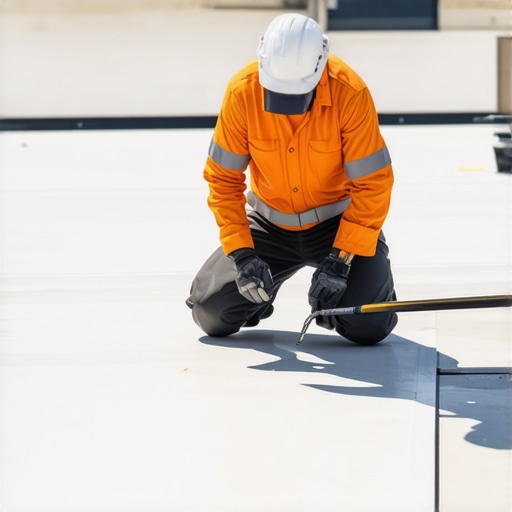
I was standing on a parapet wall in Henderson last July, the heat radiating off the white TPO membrane so hard my retinas felt scorched. The building owner was complaining about a ‘small drip’ in the server room. To a layman, the roof looked perfect—a vast, blindingly white sea of plastic. But I could smell it before I saw it: that cloying, earthy stench of saturated ISO board and moldy OSB. I walked over to a primary field seam, knelt down, and slid my probe along the edge. It didn’t even resist. The seam zipped open like a cheap sandwich bag. Water is patient, my old foreman used to say. It will wait for you to make a mistake, then it will move in and start charging rent. In the desert, we don’t worry about ice dams; we worry about the sun cooking the life out of your roof until the seams literally give up the ghost. When you’re hiring local roofers, you aren’t paying for someone to roll out a membrane; you’re paying for the integrity of those four-inch overlaps. If those fail, your entire investment is just a giant swimming pool over your expensive equipment.
“A roof is only as good as its flashing and the integrity of its joints.” – Old Roofer’s Axiom
1. Thermal Expansion and the ‘Tug-of-War’
In the Southwest, your roof is a living thing, and not in a good way. During a 115°F day, that membrane expands. At night, when the desert air drops to 60°F, it contracts. This constant mechanical stress puts an immense amount of ‘pull’ on the seams. If the roofing companies didn’t use the correct screw-and-plate density at the perimeter, the membrane starts ‘bridging’ or pulling away from the walls. You’ll see the seam start to stress-crack. It starts at the molecular level—the plasticizers migrate out of the material, leaving it brittle. Once the seam loses its elasticity, that thermal tug-of-war creates micro-fissures. Water doesn’t need a hole; it needs a path. Through capillary action, a microscopic crack can pull gallons of water underneath the membrane during one of our monsoon downpours. This is why commercial PVC seam welding is the gold standard; a heat-welded bond is physically stronger than the membrane itself, whereas glue is just a temporary handshake.
2. The Chemistry of Failed Adhesives
If you’re looking at an EPDM or an older TPO roof, you’re likely looking at glued seams. Here’s the truth the sales guys won’t tell you: glue is organic. Organic things rot in the sun. The UV radiation in places like Arizona or Nevada acts like a slow-burning oven. It breaks down the chemical bonds in the lap sealant and the adhesive. When I do a forensic inspection, I look for ‘fish-mouths’—small ripples where the top layer of the seam has lifted. This usually happens because the installer didn’t use a silicone roller with enough pressure, or they didn’t clean the factory film off the membrane before applying the primer. If you see fish-mouths, you have a ticking time bomb. The water gets in, travels ten feet sideways, and then finds a ‘shiner’—a missed nail in the deck—to drip through. You’ll spend thousands on roofing repairs trying to find the leak, when the culprit was a poorly rolled seam ten feet away. This is why many owners are switching to liquid membranes to create a truly monolithic barrier over high-stress areas.
3. Hydrostatic Pressure and Ponding Water
Flat roofs aren’t actually flat—or at least, they shouldn’t be. They should have a 1/4-inch per foot slope toward the drains. But buildings settle. Substrates warp. Suddenly, you have ‘ponding water.’ This is where the physics of failure gets aggressive. When water sits over a seam for more than 48 hours, it exerts hydrostatic pressure. It’s literally pushing against the seam. Most adhesives are water-resistant, not waterproof under submersion. If you have standing water, the silt and dirt that settle in the puddle act as an abrasive. As the water evaporates and the puddle shrinks, it concentrates the UV rays, further cooking the seam. If your local roofers didn’t address the slope, you’ll eventually see the deck start to sag. If you notice the water isn’t moving, you need to check for clogged roof drains immediately. If the drains are clear and the water remains, your seams are currently underwater and losing the fight. You can often see the evidence of this by looking for standing water on flats during your next walk-through.
“The NRCA recommends that roof systems be designed to provide positive drainage… standing water is the primary catalyst for premature membrane failure.” – National Roofing Contractors Association
4. The Perimeter and Penetration Fatigue
The most dangerous seams aren’t in the middle of the roof; they’re at the edges and the ‘penetrations’—the pipes, HVAC curbs, and drains. This is where the ‘trunk slammers’ fail. They’ll slap a bit of caulk around a pipe boot and call it a day. But a pipe boot is just another seam. In the heat, that metal pipe expands at a different rate than the rubber boot. If the roofer didn’t use a stainless steel clamping ring and the right grade of sealant, the seal breaks. I’ve seen ‘professionals’ use shingles on a 1:12 slope, which is a death sentence for the structure. Always look for decking rot behind gutters or at the base of parapet walls. That’s where the water collects when a seam fails. If you’re walking on the roof and it feels ‘crunchy’ or ‘spongy,’ the seam has already let water into the insulation. At that point, you aren’t just repairing a seam; you’re performing surgery on the whole system. To prevent this, I always recommend checking the valid insurance of any contractor you hire to ensure they are covered for the high-liability work of flat roof torching or welding. Don’t let a ‘cheap’ fix turn into a total loss.