
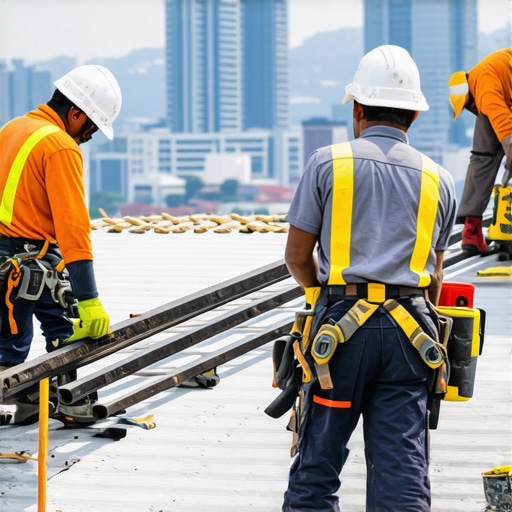
The Hard Reality of the 2026 Roofing Landscape
Listen, if you think finding a decent crew was hard a couple of years ago, 2026 is going to feel like trying to find a dry sheet of plywood in a hurricane. I’ve spent twenty-five years on the deck, and I’ve seen this industry shift from craftsmen with hammers to salesmen with iPads and sub-contracted crews that don’t know a shiner from a starter strip. We are staring down a labor shortage that isn’t just about ‘bodies’ on a roof; it’s about a total loss of technical knowledge. When you call roofing companies today, you aren’t just buying shingles—you’re gambling on whether the person actually swinging the hammer understands the physics of your home. It’s a cynical view, sure, but after pulling up enough rotted decking caused by ‘professional’ installs, you start to see the cracks in the system before the first shingle even lifts.
The Patient Enemy: A Lesson from the Old Guard
My old foreman used to say, ‘Water is patient. It will wait for you to make a mistake.’ He was a man who had knees that sounded like gravel and a heart of gold, but he was ruthless when it came to the details. He’d point at a valley and remind us that water doesn’t sleep, it doesn’t get tired, and it will find that one nail you high-pinned or that one piece of flashing you didn’t quite seat right. In 2026, with the labor crunch, that patience of water is your biggest threat. You have crews rushing to finish five squares an hour just to keep up with the backlog, and that’s when the mistakes happen. They miss the cricket behind the chimney or they skimp on the underlayment, and you won’t know it for three years until your ceiling starts looking like a topographical map of the Atlantic.
“A roof is only as good as its flashing.” – Old Roofer’s Adage
The Material Truth: Cold Climate Physics and 2026 Realities
If you’re living in a northern zone—think the biting winters of the Northeast or the Great Lakes—the 2026 labor shortage hits differently. Up here, a roof isn’t just a lid; it’s a complex thermal management system. The ‘trunk slammers’ will tell you that a standard shingle is enough, but they aren’t thinking about thermal bridging or attic bypasses. When warm air leaks from your living room into the attic through a poorly sealed light fixture, it hits the underside of that cold roof deck. That’s the start of the end. In this climate, you need to be obsessed with Ice & Water Shield and proper R-value. If your contractor isn’t talking about the 2026 guide to attic insulation, they aren’t fixing your roof; they’re just covering up a symptom. The physics of an ice dam is relentless: snow melts at the ridge because of escaped heat, runs down to the cold eaves, and freezes solid. That ice creates a dam, and the liquid water behind it gets pushed upward under the shingles via capillary action. If that crew didn’t install the underlayment at least 24 inches past the interior wall line, you’re done for.
The Warranty Trap: Why ‘Lifetime’ is Often Marketing Noise
I get tired of seeing local roofers sell ‘Lifetime Warranties’ like they’re some kind of magic shield. Let’s be real: a warranty is only as good as the paper it’s printed on and the company that stays in business to honor it. In 2026, many roofing companies are popping up and disappearing within eighteen months. They use high-turnover labor that doesn’t follow the manufacturer’s specific nailing patterns. Did you know that if a shingle requires six nails for a high-wind rating and the crew only uses four, your ‘lifetime’ warranty is effectively void the moment they pack up the truck? This is why you must check for valid insurance and verified track records before signing anything. You also need to look at the materials themselves. While asphalt is the king of the market, the quality of fiberglass mats has shifted. If you want longevity, you should be looking into the benefits of fiberglass underlays which provide a much more stable base than the old-school organic felt that dries out and curls in a decade.
Identifying the Red Flags in a Post-Shortage Market
When you’re vetting local roofers, you need to look past the shiny truck. Watch the crew. Are they using a starter strip, or are they just flipping a shingle upside down at the eave? Are they installing a drip edge that actually directs water into the gutter, or is it just tucked behind the fascia? These are the ‘micro-failures’ that define the 2026 market. Because of the labor shortage, many companies are hiring ‘pick-up’ labor that hasn’t been trained on the nuances of wind-uplift or snow loads. If you see shingles already showing signs of distress shortly after a storm, you might be dealing with shingle lifting which is often a direct result of improper fastening heights. A nail placed too high (a ‘high-pin’) acts like a hinge, allowing the wind to catch the shingle and snap the sealant bond. Once that bond is broken, the shingle is just a flapping piece of debris waiting for the next gust to send it into your neighbor’s yard.
“The building envelope must be viewed as a continuous system, where the roof acts as the primary defense against hydrostatic pressure.” – International Residential Code (IRC) Commentary
The Physics of Ventilation: More Than Just a Plastic Ridge
One of the biggest mistakes I see in 2026 is ‘over-venting’ or improper mixing of vent types. In the cold-zone climates, you need a balanced system. If a crew installs a ridge vent but leaves the old gable vents open, the ridge vent will pull air from the gable rather than the soffits. This creates ‘dead zones’ in your attic where moisture-laden air gets trapped, leading to mold and deck rot. I’ve walked on roofs that felt like a wet sponge because the ventilation was choked off. You need to ensure your local roofers understand roof snow load safety and how it relates to attic temperature. If the attic is too warm, you get ice dams; if it’s too cold and unventilated, you get condensation. It’s a delicate balance that an untrained 2026 labor crew will almost certainly ignore.
How to Pick a Contractor Who Won’t Disappear
To survive the 2026 roofing cycle, you have to be your own project manager. Ask about their safety compliance records. A company that takes safety seriously usually takes the install seriously. Ask who the actual on-site supervisor is. If the person who sold you the roof isn’t the person overseeing the shingles going down, you have a problem. You want a company that understands the regional specifics—the way the wind hits your particular valley or how the sun beats on your south-facing slopes. Don’t settle for the first bid that comes in low. In this labor market, a low bid is a flashing neon sign that says ‘we are cutting corners on the things you can’t see.’ Pay for the expertise, or you’ll pay twice for the repair.