
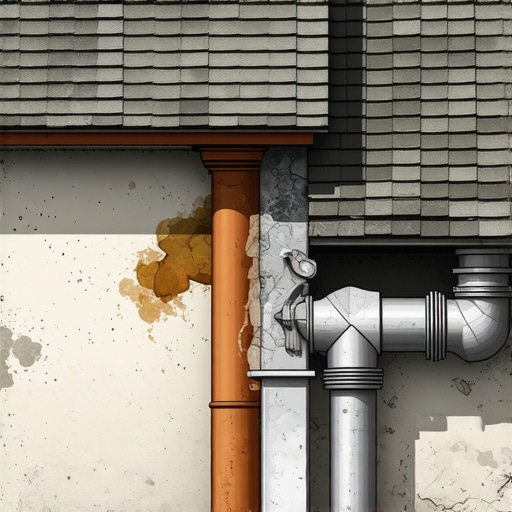
The Anatomy of a Slow Death: Why Pipe Boots Fail
You’re sitting in your living room in the middle of a Florida thunderstorm, and there it is—a rhythmic tink-tink-tink sound coming from the ceiling. You look up, and a yellowing ring is already forming around the drywall. Most homeowners think they have a massive hole in their roof, but as a forensic roofer with 25 years on the deck, I know better. It’s almost always the pipe boot. These small, unassuming pieces of flashing are responsible for more interior damage than almost any other component on a residential square.
My old foreman used to say, ‘Water is patient. It will wait for you to make a mistake, and once it finds a path, it never forgets how to get home.’ That ‘home’ is usually your attic insulation or your bedroom ceiling. In the Southeast, where the sun beats down with the intensity of a blowtorch and the humidity stays at a constant 90%, pipe boots have a life expectancy that rarely matches the 30-year shingle they are surrounded by. When local roofers slap on a standard plastic-and-rubber boot, they are setting a timer for a future leak.
“A roof is only as good as its flashing.” – Old Roofer’s Adage
The Physics of the Failure: Mechanism Zooming
To understand why your roof is leaking, you have to understand the physics of hydrostatic pressure and capillary action. A pipe boot isn’t just a cover; it’s an interface between a rigid plumbing stack and a semi-flexible roofing system. During the day, the heat on a dark asphalt roof can reach 160°F. The PVC pipe sticking through your roof expands at a different rate than the rubber collar of the boot. This is called differential thermal expansion. Over time, that constant ‘breathing’ stretches the rubber until it loses its elasticity. Then comes the UV radiation. The sun bakes the oils out of the EPDM rubber, making it brittle. Once the rubber cracks, water doesn’t just fall through; it is pulled through. Capillary action allows water to travel uphill into the tiny fissures of the rubber, eventually finding the gap between the pipe and the flashing. From there, gravity takes over, and the water follows the outside of the pipe straight down into your home.
Sign 1: The Cracked Rubber Collar (The Dry-Rot Trap)
The first thing I look for when I climb a ladder is the condition of the neoprene or EPDM collar. If you see tiny spider-web cracks or a total separation from the pipe, you’re already in trouble. In tropical climates, this happens in as little as seven years. Many roofing companies will try to fix this by smearing a glob of plastic cement or ‘muck’ around the base. This is a Band-Aid, not a cure. The muck dries out, shrinks, and pulls away, creating an even larger pocket for water to sit. If you see cracks, you need a full replacement, or at the very least, a high-quality silicone collar retrofit. Ignoring this leads to hidden pipe dampness that rots the plywood decking from the inside out.
Sign 2: The ‘Shiner’ and Improper Fastening
A ‘shiner’ is a trade term for a nail that missed the rafter or was driven in crookedly. When it comes to pipe boots, many installers use standard roofing nails that aren’t properly sealed. Over time, the thermal cycling of the roof causes these nails to back out. When a nail heads up, it lifts the edge of the metal or plastic flange. Now, you have a direct conduit for water. Wind-driven rain hits that raised edge and is forced underneath. This is why hiring a specialist matters; they know to use neoprene-gasketed screws instead of smooth-shank nails. If you see a nail head sticking up near your pipe, the seal is broken.
Sign 3: Rusted or Corroded Metal Flanges
In coastal areas, salt air is the enemy of cheap galvanized steel. If your roofing contractor used a budget galvanized boot, the salt air will eat through the zinc coating in a matter of years. Once the metal starts to pit and rust, it becomes porous. I’ve seen boots that looked solid from five feet away, but when I touched them, my finger went right through the rusted metal like it was wet cardboard. This is a major failure point because the rust spreads under the shingles, compromising the surrounding area. This is why we recommend lead boots or high-grade stainless steel in high-salt environments. To avoid this, you need to know the best ways to seal roof pipes using corrosion-resistant materials.
Sign 4: Interior Plywood Staining (The Forensic Evidence)
Sometimes the roof looks okay from the top, but the truth is in the attic. If you go into your attic with a flashlight during a rainstorm, look at the plywood directly around the plumbing stack. If you see dark rings or ‘tide marks,’ the boot has failed. Water often runs down the pipe, so the damage might be several feet away from where the pipe actually enters the ceiling. If the wood feels soft or looks like it has a white, fuzzy growth, you have a long-term leak that has already started a mold colony. At this point, you aren’t just looking at a simple repair; you might be looking at replacing a full sheet of plywood. If you notice the wood is beginning to buckle, you should check if your attic decking is sagging due to moisture saturation.
“The building code is a minimum standard, not a gold medal. If you only build to code, you’re building the worst house legally allowed.” – Architectural Axiom
The Surgery: How to Actually Fix the Leak
Replacing a pipe boot isn’t just about popping the old one off. You have to carefully remove the shingles around the pipe without tearing the underlayment. This is where many DIYers fail. If you rip the felt or synthetic underlayment, you’ve just created a secondary leak path. You need to integrate the new boot into the shingle course so that the top flange is tucked under the shingles above it, and the bottom flange sits on top of the shingles below it. This ensures that water always flows over the top of the material, not under it. Don’t let a ‘trunk slammer’ convince you that a bead of caulk is a permanent fix. Caulk is for aesthetics; flashing is for waterproofing. If your roof is older, you might also want to look for signs of shingle lifting in the area, as wind often gets under the boot and pulls up the neighboring tabs.
The cost of a pipe boot replacement is a few hundred dollars. The cost of replacing a mold-infested attic and a collapsed drywall ceiling is thousands. Don’t wait for the yellow ring to become a hole. Get a pro who knows how to spot a failure before it becomes a catastrophe. Your roof is a system, and like any system, it’s only as strong as its weakest link—which, more often than not, is that $20 piece of rubber and plastic sitting right above your head.