
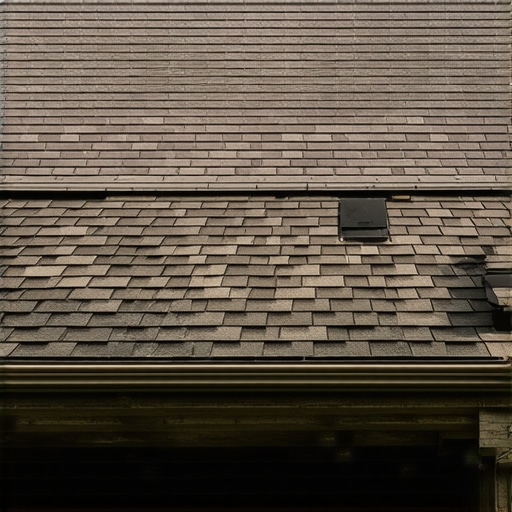
The Forensic Autopsy: Why Your Roof Peak is Bowing Under Pressure
Walking on that roof felt like walking on a giant, waterlogged sponge. I knew exactly what I would find underneath before I even pulled my hammer out of the loop. It was a cold Tuesday in a lakeside town where the humidity stays high and the winters are brutal. From the curb, the house looked fine, but once I got the ladder up, the ‘spine’ of the roof—the ridge—was dipping like an old horse. This wasn’t just a shingle problem; this was a structural failure in progress. Most roofing companies will just try to sell you a new layer of asphalt, but if you don’t understand the physics of why that ridge is sagging, you’re just putting a fresh coat of paint on a collapsing barn.
The Physics of the ‘Swayback’ Ridge
When we talk about the roof spine, we are talking about the ridge board or ridge beam where the rafters meet at the highest point of the structure. In a healthy system, this is a straight, proud line. But physics is a patient enemy. In northern climates, the primary killers of the roof spine are thermal bridging and attic bypasses. Warm air from your living room leaks into the attic, carrying moisture. That moisture hits the cold underside of the roof deck and the ridge board, turning into frost. When that frost melts, it doesn’t just evaporate; it soaks into the grain of the wood. Over twenty years, this constant cycle of wetting and drying causes the wood fibers to delaminate and lose their load-bearing capacity. If you have noticed a dip in the peak, you are likely looking at rafters that have begun to sag because the ridge support has compromised its integrity.
“A roof is only as good as its flashing and the structural integrity of the deck it rests upon.” – Old Roofer’s Adage
Sign 1: The ‘Shiner’ Epidemic and Internal Rot
The first real sign of a weakened spine isn’t found on the roof; it’s found in the attic. You need to look for ‘shiners.’ A shiner is a trade term for a nail that missed the rafter and is sticking through the plywood into the attic space. In cold climates, these metal nails act as conduits for cold. They become the coldest point in the attic, attracting condensation like a magnet. You’ll see them covered in white frost in January. When that frost melts, it drips onto the insulation, but more importantly, it rots the surrounding plywood. If you have enough shiners near the ridge, the entire ‘spine’ of the roof becomes structurally soft. I’ve seen cases where local roofers ignored these signs, only for the homeowner to find unforeseen wood rot during a simple shingle replacement. This isn’t just a cosmetic issue; it’s a structural liability that affects how the roof handles a snow load.
Sign 2: Ridge Vent Compression and Sealant Failure
The second sign is visible from the ground if you know what to look for: compressed ridge vents. The ridge vent is the lungs of your house. It sits right at the spine. When the structural timber begins to weaken, the ridge board can actually drop an inch or two, causing the plastic or metal ridge vent to compress or buckle. This creates gaps where wind-driven rain can penetrate via capillary action—where water literally climbs uphill under the shingle. Once water gets past that primary defense, it begins to rot the peak from the outside in. If you see your ridge vent looking ‘wavy,’ it’s a red flag that the spine is no longer supporting the weight of the roofing materials. You might also notice poor ridge vent sealing, which allows moisture to bypass the baffles and sit directly on the ridge board.
“The International Residential Code (IRC) requires that roofs be designed to support the dead load of the roofing materials and the live load of snow or maintenance traffic without exceeding allowable deflection.” – IRC Section R802
Sign 3: The ‘Cricket’ Failure and Valley Stress
The third sign involves the intersections where the spine meets other roof planes, specifically near chimneys or valleys. If your roof has a large chimney that lacks a ‘cricket’—a small peak-shaped structure behind the chimney to divert water—water will pool at the base. This weight and moisture eventually migrate toward the ridge. When the spine weakens, you will see the shingles in the ‘valley’ (the internal fold of two roof planes) start to buckle or lift. This is because the house is shifting as the ridge board loses its stiffness. If you see shingle lifting near the top of a valley, it’s not just wind; it’s the roof deck screaming for help. Most roofing companies will just throw some caulk at it, but that’s like putting a band-aid on a broken leg. You need to address the structural ‘surgery’ required to reinforce those rafters.
The Band-Aid vs. The Surgery
Many homeowners are tempted by the ‘trunk slammer’ contractor who offers a cheap over-lay. Don’t do it. Adding a second layer of shingles to a roof with a weakened spine is adding 200 to 400 pounds per ‘square’ (100 square feet) to a structure that is already failing. That is a recipe for a total structural collapse during the next heavy snow. The ‘surgery’ involves stripping the roof to the bare deck, replacing any delaminated plywood, and potentially ‘sistering’ the rafters—adding new lumber alongside the old, weakened rafters to restore structural rigidity. It’s also the time to ensure you are using a high-quality gable or ridge vent sealant to prevent the cycle of moisture from starting all over again. A forensic approach to roofing doesn’t just look at the shingles; it looks at the entire building envelope, from the R-value of your attic insulation to the intake at your soffits. Without proper ventilation, you are just waiting for the next spine failure.