
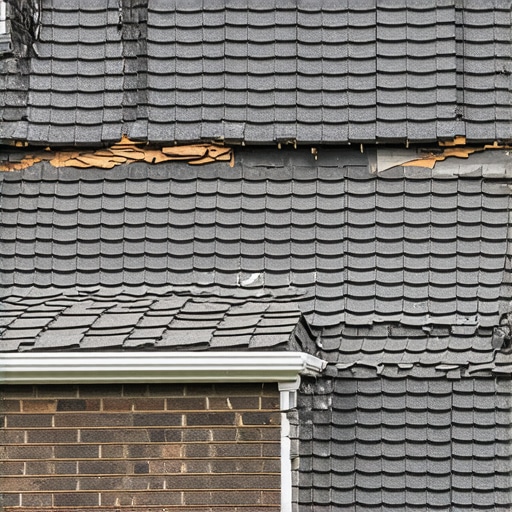
The Ghost in the Attic: Why Your Ceiling is Wet but the Roof Looks ‘Fine’
I was standing on a roof in coastal Florida last July, the kind of heat that makes the soles of your boots feel like they’re melting into the asphalt. From the driveway, the house looked pristine. The architectural shingles were only six years old, no missing tabs, no obvious storm damage. But the homeowner had a bucket in his master closet catching a steady rhythm of drip, drip, drip every time the wind kicked up from the east. Walking on that roof felt like walking on a sponge; I knew exactly what I’d find underneath before I even pulled my flat bar. It wasn’t a hole. It wasn’t a fallen branch. It was hidden shingle lifting—the silent killer of modern roofing systems. Most local roofers will give it a quick glance and tell you it’s a flashing issue because they don’t want to spend the time hunting the ‘ghost.’ But when shingles lift just enough to break the sealant bond without blowing away, you’re looking at a mechanical failure that turns your protective layer into a series of tiny ramps for wind-driven rain.
“A roof is only as good as its flashing, but it is only as durable as its bond.” – Old Roofer’s Adage
The Physics of Failure: How Capillary Action Invades Your Home
To understand hidden lifting, you have to understand the sealant strip. That little bead of asphalt is supposed to be the glue that holds the roofing together against 110-mph gusts. In the Southeast, we deal with massive thermal expansion. During the day, that roof hits 160°F. At night, it drops to 75°F. That constant stretching and shrinking puts immense stress on the sealant. If the original installers didn’t use enough pressure, or if they left a ‘shiner’—that’s a nail that missed the framing and hit the open air—the shingle starts to ‘flutter.’ This isn’t a dramatic flapping you can see from the street. We’re talking about a 1/16th-inch gap. Once that bond is broken, capillary action takes over. Water doesn’t just run down; it gets sucked upward and sideways under the shingle. If you don’t catch it, you’ll soon be looking for signs of hidden decking plywood decay because that moisture is trapped against the wood with nowhere to go.
Sign #1: The ‘Shadow Gap’ and the Debris Wedge
The first thing I look for isn’t the shingle itself, but what’s stuck under it. When a shingle lifts early, it creates a microscopic vacuum. Wind blows dust, pine needles, and those tiny granules from the shingles above into that gap. Over time, this debris builds up. It acts like a wedge, preventing the shingle from ever laying flat again, even if the sun heats the asphalt. If you see a line of dirt or silt sitting just at the edge of a shingle lap, that’s a dead giveaway. The sealant bond is gone. You can find local roofers who can spot shingle lifting by looking for these ‘shadow gaps’—tiny slivers of darkness under the shingle edge that shouldn’t be there. If you ignore this, you’re essentially leaving your front door cracked open during a hurricane.
Sign #2: Granule Migration and Thermal Shadows
Check your gutters. If you see an unusual amount of granules but the roof looks young, the shingles might be ‘chattering.’ When the wind gets under a lifted tab, it vibrates. This vibration knocks the protective granules off the asphalt mat. But there’s a more subtle sign: thermal shadows. On a morning with heavy dew, look at your roof as the sun comes up. Sections that are properly bonded will dry at a different rate than sections where air is trapped underneath a lifted shingle. If you see ‘patchy’ drying, you have air pockets. That air is a sign that the roofing companies you’re researching need to come out for a physical hand-test. I’ve seen this lead to catastrophic leaks because the water moves horizontally along the top of the underlayment until it finds a nail hole. If your underlayment isn’t top-tier, you’re in trouble. That’s why I always recommend looking into the 5 best underlayments for extreme weather to provide that secondary water barrier when the primary shingles fail.
Sign #3: The High-Nail ‘Shiner’ and Fastener Fatigue
This is the most common reason for hidden lifting, and it’s pure installer laziness. Every shingle has a ‘nail line.’ If a roofer ‘high-nails’—placing the nail above the double-layer common bond—the shingle has no structural integrity. It’s basically a sail. Over several seasons, the wind pulls at that shingle, and because the nail isn’t holding the thickest part of the material, the hole around the nail enlarges. This is what we call fastener fatigue. Eventually, the shingle ‘tents’ up. It might only be a few millimeters, but that’s enough to allow wind-driven rain to bypass the overlap. When I do a forensic roof inspection, I’m looking for shingles that feel ‘springy.’ If I press down and the shingle bounces back, the fastener has failed or the sealant has given up. This often happens near the valleys or ridges. You might notice loose roof valley seam flashing as a result of this movement, as the shingles pull away from the metal transitions.
“Buildings shall have a weather-resistant exterior wall envelope… including flashing as described in Section R703.4.” – International Residential Code (IRC) R703.1
The Band-Aid vs. The Surgery: What’s Next?
If you find three or four lifted shingles, a repair tech can usually hand-seal them with a high-grade roofing cement. We call this ‘tacking it down.’ But if you’re seeing widespread lifting across a whole ‘square’ (100 square feet) or on one specific slope, your roof was likely ‘cold-applied’ or the shingles were stored improperly before installation. At that point, you aren’t looking at a repair; you’re looking at a liability. In high-wind zones, once that initial factory seal is compromised by dirt and age, it’s nearly impossible to get it to stay down forever. You need to know how to spot structural damage early before the lifting leads to rot in your rafters. Don’t let a ‘trunk slammer’ tell you a bit of caulk will fix a systemic bonding failure. It won’t. Water is patient, and it will find that path of least resistance every single time the wind blows. If you’re unsure, get a professional roof inspection specifically for hidden lifting to ensure your home is actually as tight as it looks from the ground.