
The Forensic Autopsy: When Your Warehouse Roof Becomes a Rain Cloud
You walk into your facility on a Tuesday morning, and there it is—a puddle on the floor. You look up at the 40-foot ceiling, and you do not see a hole. You see a dry TPO membrane. But the inventory is soaked. As a veteran who has spent 25 years crawling across scorching 140°F rooftops and diagnosing failures that would make a structural engineer weep, I can tell you exactly what happened. You are not dealing with a leak; you are dealing with a physics failure. My old foreman used to say, ‘Water is patient. It will wait for you to make a mistake.’ In the cold climate of the North, that mistake is usually ignoring the thermodynamics of a flat roof seam.
“A roof is only as good as its flashing.” – Old Roofer’s Adage
When the temperature in Detroit or Chicago drops to zero, your warehouse is still a balmy 65°F. That warm, humid air rises. It hits the underside of your cold steel deck. If your local roofers didn’t account for vapor drive, that moisture travels right through the insulation joints and hits the bottom of your membrane. It condenses, turns back into liquid, and runs along the shiners—those missed fasteners that act as cold fingers—until it finds a gap in the deck. Suddenly, you have ‘indoor rain.’ If you do not address this, you will eventually find hidden decking plywood decay or rusted steel that loses its structural integrity before the warranty even expires.
The Physics of Seam Failure: Why Venting Matters
On a large warehouse, you are dealing with thousands of squares (a 100-square-foot measurement of roofing area). When air is trapped between the insulation and the membrane, and the sun hits that dark or even reflective surface, the air expands. This creates hydrostatic pressure from the inside out. Without proper venting, this pressure forces its way through the weakest points: the seams. This is one of the biggest myths about flat roof leaks; people think the water comes from the sky, but often the damage comes from the air trapped underneath. Here are the four ways we vent these systems to keep your facility dry.
1. One-Way Breathable Vapor Vents
These are the workhorses of the flat roof world. A one-way vent is designed to let air and moisture out but never let water in. We install these at a rate of one per 1,000 square feet, typically near the high points of the roof. They utilize a simple diaphragm. When the sun heats the roof, the vapor pressure pushes the valve open, releasing the ‘trapped’ humidity. If you omit these, you’ll see moisture trapped in insulation, which turns your expensive R-30 thermal barrier into a wet, heavy sponge that has the insulating value of a wet paper towel.
2. Perimeter Parapet Relief
The edges of your warehouse are more than just a place to hang a gutter. By creating a vented gap at the parapet wall—using a perforated starter strip or a vented coping cap—we create a cross-ventilation effect. This is essential for warehouses with high internal humidity, like food processing or manufacturing. It allows the roof system to ‘breathe’ from the edges. When we perform local project safety audits, we often find that ‘trunk slammers’ have caulked these gaps shut, thinking they were ‘sealing’ the roof, when they were actually suffocating it.
3. Mechanical Power Exhaust Integration
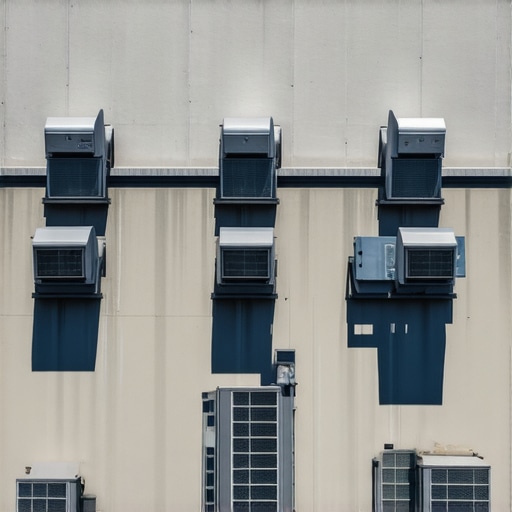
Sometimes, passive venting isn’t enough. In massive 200,000-square-foot facilities, the volume of air is too great. We install powered turbine vents that active-pull air from the plenum space between the ceiling and the deck. This reduces the thermal load on the membrane and prevents the ‘pumping’ action that stresses the seams. For high-performance roofs, we recommend PVC seam welding for these penetrations, as it creates a permanent molecular bond that won’t fail under the vibration of the exhaust fans.
4. Sub-Membrane Air Pressure Management
This is the ‘surgical’ approach. We install a network of ‘breather strips’ under the membrane that lead to the vents. This ensures that a pocket of air trapped in the middle of a massive 500-foot run has a clear path to an exit. Without this, the air gets trapped by the insulation fasteners and creates ‘blisters.’ Once a blister forms, it’s only a matter of time before a maintenance worker steps on it and pops the seam, leading to an emergency call-out.
“Thermal bridging is the silent killer of the commercial envelope.” – International Building Code Commentary
The Fix: The Band-Aid vs. The Surgery
If you see your seams lifting, don’t let a ‘cheap’ roofing company just slap some goop on it. That is a Band-Aid. True roofing surgery involves identifying the vapor source, installing the proper one-way vents, and ensuring the insulation isn’t already saturated. If the insulation is wet, no amount of venting will save it; it has to come out. Waiting only increases the cost. A warehouse roof replacement is expensive, but replacing the structural steel deck because you ignored a few ‘blisters’ is a business-ending event. Protect your square footage, respect the physics of vapor drive, and stop the ‘indoor rain’ before it starts.