
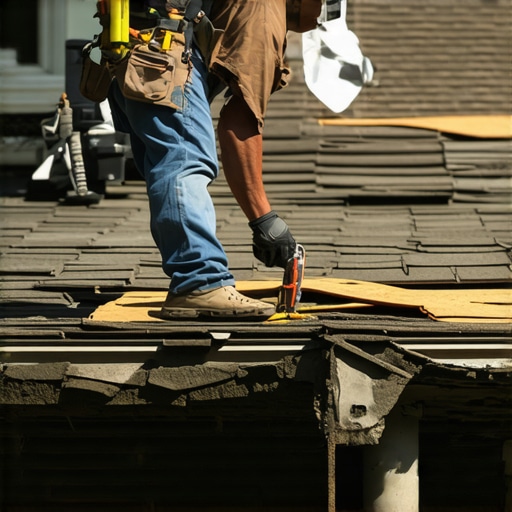
The Anatomy of a Gutter Failure: Why Your Eaves are Screaming
I’ve spent twenty-five years crawling over hot shingles and peering into the dark, damp recesses of rotted eaves. If there is one thing I have learned, it is that most homeowners ignore their gutters until the dining room ceiling starts to sag or the basement starts smelling like a locker room. By then, the damage isn’t just a ‘leak’—it’s a forensic crime scene. When you call for emergency roof services, you’re usually paying for years of neglect. My old foreman used to say, ‘Water is patient. It will wait for you to make a mistake, and then it will move in and start eating your house from the inside out.’ He was right. Water doesn’t just fall; it travels through capillary action, crawling uphill and sideways through the tiniest gaps in your defense. When your gutters fail, that water doesn’t just spill over the side; it finds its way behind the fascia board and starts the slow process of turning your structural timber into mulch.
The Physics of the Leak: It’s More Than Just Dirt
Most roofing companies will tell you to just scoop out the leaves. That’s amateur hour. To truly stop a leak, you have to understand the hydrostatic pressure involved. When a downspout clogs, the gutter becomes a heavy, water-logged trough hanging off your house. A single square (that’s 100 square feet for the laypeople) of roof can shed hundreds of gallons during a Northeast downpour. If that water has nowhere to go, it sits. This standing water creates a constant pressure against the seams and the spike-and-ferrule hangers. Eventually, the weight causes the gutter to pull away, creating a ‘shiner’—a missed nail or a pulled fastener that leaves a direct hole into your rafter tails. If you’re seeing water dripping from behind the gutter, you likely have loose rotted fascia that is no longer capable of holding the weight of the system.
“A roof is only as good as its flashing, and its drainage is only as good as its pitch.” – Old Roofer’s Adage
1. The Forensic Seal: Patching Gutter Corners the Right Way
The most common failure point is the corner miter. Most ‘trunk slammers’ will just smear a glob of cheap silicone over a wet leak and call it a day. That will last exactly one freeze-thaw cycle. To fix a corner leak during a roofing emergency, the surface must be bone dry and surgically clean. I’m talking wire brushes and acetone. You need to strip away the old, crusty sealant until you see bare aluminum. Only then do you apply a high-grade tripolymer sealant. This material is designed to expand and contract with the metal as the temperature swings from a 140°F afternoon to a 50°F night. If you don’t account for thermal expansion, your patch will pop off like a scab in a week. For a deep dive into the specifics, check out these fixes for leaky gutter corners.
2. Correcting the Pitch: The Gravity Problem
Water doesn’t run uphill, but many gutters try to make it do just that. Over time, ice dams or heavy snow loads in cold climates will bend the hangers. When the gutter loses its 1/16-inch-per-foot slope toward the downspout, you get ‘ponding.’ This standing water is a death sentence for your roofing system. It attracts mosquitoes, grows algae, and eventually rusts through even galvanized steel. When I’m performing emergency roof services, the first thing I do is check the line. We often have to re-hang the entire run using hidden hangers with heavy-duty screws rather than the old nails that just pull out of the soft pine fascia. This is a primary part of 2026 gutter maintenance protocols.
3. The Drip Edge Defense: Stopping the Back-Flow
If water is running behind your gutter, the problem isn’t the gutter—it’s the drip edge. This is a metal flashing that should be tucked under the first course of shingles and over the back of the gutter. Many builders omit this to save twenty bucks, or they install it incorrectly. Without it, surface tension pulls water back under the shingles and against the fascia board. This is where you find the ‘oatmeal’ plywood. If you see water stains on your soffit, you have a breach in the roofing perimeter. You might need immediate patching to prevent the rot from reaching the attic joists. This is where the physics of ‘surface tension’ betrays you; the water literally ‘sticks’ to the underside of the shingle and travels backward until it finds a gap.
“The International Residential Code (IRC) requires that roof assemblies shall be designed and installed in accordance with this code and the approved manufacturer’s installation instructions such that the roof assembly shall serve to protect the building.” – IRC Chapter 9
4. Clearing the Arteries: The Downspout Obstruction
A leak in the middle of a gutter run is often just a symptom of a ‘heart attack’ at the downspout. If the vertical pipe is clogged with shingle granules and leaf debris, the whole system backs up. I’ve seen downspouts so packed with debris that they froze solid and split wide open during a Chicago winter. Local roofing companies often overlook the underground drainage as well. If your downspout empties into a corrugated pipe that’s crushed three feet underground, the water has nowhere to go but back up into your gutter. You need to ensure the exit path is as clear as the entry point. If you’re dealing with a sudden overflow during a storm, you might need emergency leak storm patching to redirect flow away from the foundation until the blockage can be professionally cleared.
The Cost of ‘Cheap’ Repairs
I’ve walked on roofs that felt like walking on a sponge because a homeowner decided to save a few hundred dollars by hiring a guy with a ladder and a tube of caulk. Those cheap fixes are why I have a job. When the gutter fails, it’s not just the metal you’re replacing; it’s the fascia, the soffit, the rafter tails, and eventually, the foundation. Water pooling at the base of your home can crack a concrete slab or flood a crawlspace. This is why local roofers stress the importance of a integrated drainage system. Don’t fall for the ‘lifetime warranty’ marketing nonsense; a gutter is a mechanical system that requires physics-based maintenance. If your contractor doesn’t talk about ‘slope’ and ‘thermal expansion,’ show them the door. Your home is the biggest investment you’ll ever make—don’t let a $50 gutter leak turn it into a $50,000 structural nightmare.