
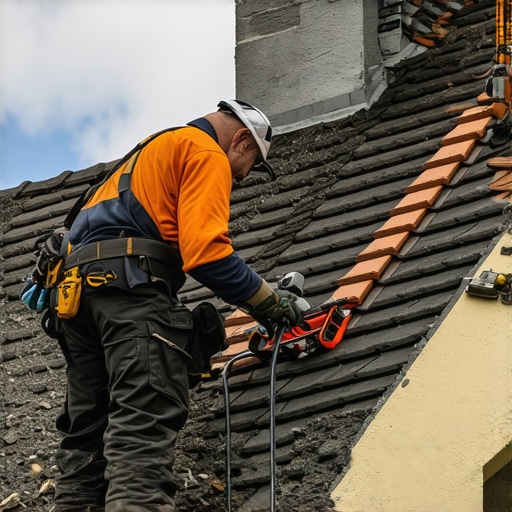
The 2:00 AM Wake-Up Call: A Forensic Autopsy of a Failure
It starts with a sound you can’t ignore—a rhythmic, heavy plink against the drywall or, worse, the hollow thud of water hitting your hardwood floors. You aren’t just looking at a leak; you’re looking at a systemic failure of the home’s primary defense. In my 25 years of tearing off shingles, I’ve seen homeowners try to fight gravity with Tupperware. It doesn’t work. Water is patient, and in the humid, wind-beaten pressure cooker of the Southeast, it’s also aggressive. Walking on that roof felt like walking on a sponge. I knew exactly what I’d find underneath: a graveyard of rusted fasteners and plywood that had the structural integrity of a wet saltine cracker.
The Physics of the Breach: Why Your Roof Quit
Before you climb a ladder, you need to understand the ‘Mechanism of Failure.’ In tropical climates, we deal with wind-driven rain that doesn’t just fall; it attacks horizontally. Through capillary action, water can actually travel upward under the laps of your shingles if the pitch is too shallow or if the starter strip was nailed high. When a storm hits, the atmospheric pressure outside drops, while the pressure inside your attic stays high. This pressure differential literally sucks water through every shiner (those nails that missed the rafter) and every gap in your chimney flashing failure points.
“A roof system’s ability to weather a storm is dictated not by the shingles, but by the continuity of the secondary water resistance layer.” – International Residential Code (IRC) Commentary
Step 1: The Internal Triage and Perimeter Sweep
Your first move isn’t on the roof; it’s in the attic. You need to find the entry point, which is rarely directly above the ceiling stain. Water loves to run down a rafter for twelve feet before it decides to drop. Look for the ‘dark trail.’ If you see decking rot spreading from a valley, you’ve found your culprit. Use a nail to poke through the wet drywall from below—this releases the hydrostatic pressure and prevents a massive ceiling collapse. This is the ‘Forensic Scene’ at its peak; you’re looking for the path of least resistance that gravity chose for you.
Step 2: The Tarping Geometry (Avoiding the ‘Bowl’ Effect)
Most roofing companies see ‘trunk slammers’ throw a blue tarp over a hole and call it a day. That’s a death sentence for your decking. If you don’t run the tarp over the ridge vent, you’ve created a giant funnel. You must secure the top edge of the tarp under the ridge shingles or over the peak to ensure water flows over the patch, not under it. Use 1×2 wood furring strips to batten down the edges. Never nail through the tarp directly into the field of the roof; you’re just creating a hundred new leak points. Follow the emergency tarping rules to ensure the wind doesn’t turn your patch into a sail. If that tarp catches air, it can rip the remaining shingles right off the square.
Step 3: Mastic and Membrane Surgery
For smaller breaches, like a backed-up valley or a cracked boot, you need temporary chemical bonds. Standard hardware store caulk is useless here; it won’t stick to wet surfaces. You need a high-solids roofing mastic—the stuff that smells like a tar pit and stays on your hands for a week. Spread it thick around the base of the leak, but remember: this is a Band-Aid, not a cure. If you’re dealing with underlayment failure, you’re fighting a losing battle against time. The UV rays in the South will bake that mastic into a brittle shell within weeks.
“Temporary repairs should never be considered a substitute for a permanent, code-compliant roof assembly.” – National Roofing Contractors Association (NRCA)
Step 4: The Structural Audit and Pro Call
Once the immediate bleeding is stopped, you have to assess the ‘Collateral Damage.’ Check your eaves. If the water has been sitting, you’ll see fascia wear and soft spots where the drip edge failed. This is where you call in the heavy hitters. Local roofers who know the local wind codes will look for more than just missing granules; they’ll check the ‘uplift rating’ of your remaining system. Don’t let a roofing company talk you into a ‘quick fix’ if the decking is compromised. If the plywood is delaminating, no amount of new shingles will stay nailed down in the next blow.
The Hard Truth About ‘Quick’ Repairs
I’ve spent half my life fixing ‘repairs’ made by guys who didn’t understand the physics of a cricket or the importance of a kick-out flashing. A patch is a stay of execution. It gives you 48 hours to get a real crew out there before the mold starts its feast in your insulation. If you ignore the signs of a failing deck, you’re not saving money; you’re just financing a much larger disaster down the road. Roofing isn’t about the shingles you see; it’s about the layers you don’t. Keep your ladder in the garage if the wind is still gusting, and for heaven’s sake, stop the water before it stops your mortgage.