
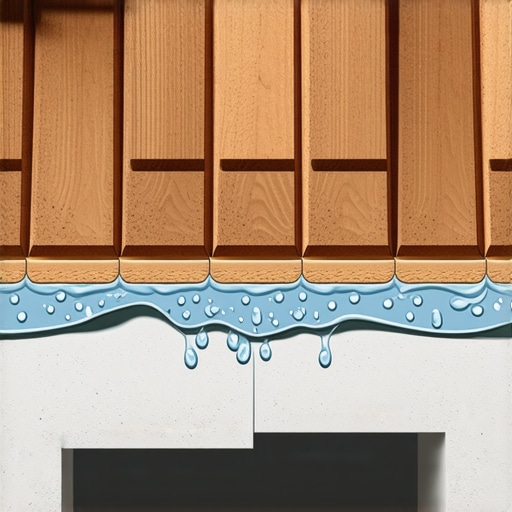
Stop the Rot: A Forensic Guide to Sealing Attic Joints Before Your Plywood Turns to Mush
You’re sitting in your living room, and there it is—a faint, tea-colored ring on the ceiling. Most homeowners call a few roofing companies, get a guy with a ladder to slap some mastic on a shingle, and think they’re safe. They aren’t. As a forensic investigator who has spent three decades tearing apart failed systems, I can tell you that water doesn’t just ‘fall’ into your house. It creeps. It crawls. It uses physics against you. In the freezing winters of the North, where ice dams turn gutters into anchors, the joint where your roof meets a vertical wall is the primary battlefield. If your attic joint seals aren’t tight, you aren’t just looking at a leak; you’re looking at a slow-motion demolition of your structural integrity.
“Water is patient. It will wait for you to make a mistake, and then it will use gravity and surface tension to dismantle your home piece by piece.” – My Old Foreman’s Hard-Earned Wisdom
The Forensic Autopsy: Why Attic Joints Fail
The attic joint—where the roof deck intersects a dormer, a chimney, or a second-story wall—is a high-stress environment. When I walk onto a roof that’s failing, I don’t look for the hole; I look for the mechanism. Usually, it’s capillary action. Imagine two surfaces pressed close together but not sealed. Water can actually travel uphill between them, sucked in by the same force that moves sap up a tree. In a cold climate, this is compounded by the stack effect. Warm air leaks from your living space into the attic, hits the cold underside of the roof deck, and turns into frost. This moisture often collects at the joints, leading to decking rot that remains hidden until your foot goes through the wood. If you’ve ever seen a ‘shiner’—a nail that missed the rafter and sticks out into the attic—you’ll see it covered in frost. That’s your first sign that the ‘seal’ is more of a suggestion than a barrier.
1. The Ice and Water Shield Wrap: More Than a Minimum Requirement
In the North, building codes are a baseline, not a goal. Most roofing companies will run a standard bit of underlayment up the wall and call it a day. A forensic-grade fix requires a self-adhering polymer-modified bitumen membrane—commonly known as Ice and Water Shield—to be lapped at least 6 inches up the vertical wall and 12 inches onto the deck. This creates a gasket. When the roofing nails pierce this membrane, the bitumen squeezes around the shank of the nail, sealing it. Without this, you’re essentially relying on standard underlayment to stop hydrostatic pressure, which it was never designed to do. When the snow piles up and the bottom layer melts, that water is pushed under the shingles. If the joint seal isn’t a gasket, you’re done.
“A roof is only as good as its flashing; the shingles are just the dress it wears to the party.” – Old Roofer’s Axiom
2. Correcting the Counter-Flashing Mechanics
If you have a brick chimney or a stone veneer wall, your attic joint seal is likely failing because of ‘surface-mounted’ flashing. I see this constantly. A local roofer will screw a piece of metal to the brick and run a bead of caulk along the top. That caulk will bake in the sun, freeze in the winter, and crack within three years. The forensic fix is a reglet-cut counter-flashing. We grind a one-inch deep groove into the mortar joint, tuck the metal into the masonry, and then seal it. This way, even if the sealant fails, gravity ensures the water sheds over the flashing, not behind it. If you suspect your chimney is the culprit, look for chimney flashing failure symptoms like white calcium deposits (efflorescence) on the interior brickwork.
3. The ‘Cricket’ Diverter: Redirecting the Flow
Physics dictates that any wall wider than 30 inches that sits perpendicular to the roof slope needs a ‘cricket.’ This is a small, peaked roof structure built behind the chimney or high-side wall. Its job is to split the water and send it around the obstacle. Without a cricket, water pools at the joint. In sub-zero temperatures, that pool freezes, expands, and rips the sealant right out of the joint. I once investigated a mansion where the owner had spent fifty grand on a new roof, but the crew ‘forgot’ the cricket. Two winters later, the entire back wall was a sponge. We had to tear off three squares of brand-new material just to build a five-dollar wooden diverter. Don’t let a roofing company tell you it isn’t necessary; if the wall is wide, the water needs a path.
4. Thermal Air Sealing (The Attic Bypass)
The most common attic joint leak doesn’t come from rain; it comes from inside the house. This is what we call an ‘attic bypass.’ The joint where the wall framing meets the roof deck often has gaps. Warm, moist air from your kitchen or bathroom escapes into these gaps, hits the cold flashing, and condenses. It looks exactly like a roof leak, but the water is moving from the inside out. Local roofers who don’t understand forensics will just keep adding more shingles, but the ‘leak’ persists. You need to pull back the insulation and use closed-cell spray foam to seal these bypasses. This prevents the ‘frost-melt-drip’ cycle that causes ice dams and phantom leaks during the spring thaw.
5. Integrating Ridge Vent End-Caps
Where the ridge vent meets a vertical gable wall is a notorious failure point. Many crews run the ridge vent right up to the wall but don’t properly integrate the end-cap. Wind-driven rain or fine snow can be blown straight into that horizontal opening. The fix is a ‘dead-end’ flashing detail that incorporates a soldered or heavy-duty membrane seal. If you see daylight from inside your attic at the peak where the wall meets the roof, you have a hole. You need to ensure that the gable ridge vent is sealed with more than just a bit of foam. It needs a hard mechanical block to stop the wind from turning your attic into a snow globe.
The Band-Aid vs. The Surgery
Most ‘repairs’ you’ll get for attic joints are Band-Aids. A tube of polyurethane sealant is great for temporary fixes, but it isn’t a seal. A real seal is mechanical. It involves layers of metal, membrane, and wood working together to shed water. If you’re seeing fascia wear or peeling paint near your roof joints, the water has already moved past the surface. You can pay for the surgery now—tearing back the shingles and doing the flashing right—or you can pay for the demolition later when the mold takes over. In this trade, ‘cheap’ is just a down payment on a future disaster. When you hire local roofers, ask them about the physics of the joint. If they don’t mention capillary action or thermal bridging, keep looking. Your house is a machine, and the roof is the most important part of its engine. Keep it dry, or it will stop running.