
The Autopsy of a Coastal Leak: When the Metal Gives Up
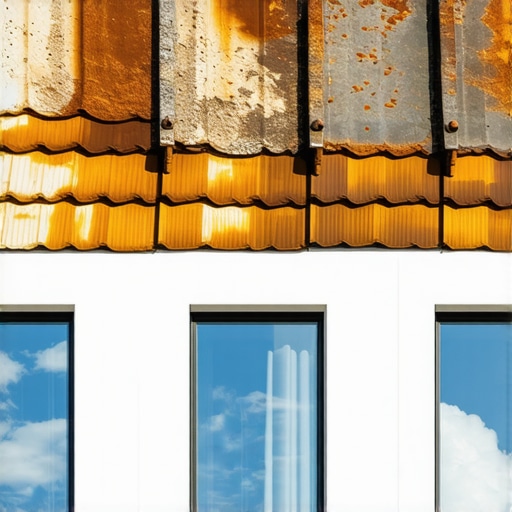
The first sign isn’t usually a puddle on the floor; it’s a faint, orange-brown streak bleeding down a white fascia board or a discolored patch on the ceiling that looks like tea. To the untrained eye, it’s a cosmetic nuisance. To a forensic roofer who has spent three decades on a hot deck, it’s the smell of trouble. In the humid, salt-saturated air of our coastal environment, metal doesn’t just age; it battles for its life. When local roofers tell you that a little rust is ‘normal’ for a five-year-old roof, they are either lying or incompetent. Rust is the visible signature of a chemical failure that is currently compromising your home’s structural integrity.
My old foreman used to say, ‘Water is patient. It will wait for you to make a mistake.’ He was right. Water doesn’t need a hole the size of a fist. It needs a microscopic gap in the zinc coating of your galvanized flashing. Once that coating is breached—perhaps by a shiner (a missed nail) or simply the abrasive movement of shingles during high winds—the steel underneath meets the oxygen and moisture. That’s when the oxidation process begins, turning your primary water defense into a brittle, porous mess. By the time you see the rust, the capillary action is already pulling water uphill, under your shingles, and onto your plywood deck.
“A roof is only as good as its flashing.” – Old Roofer’s Adage
The Physics of Failure: Why 2026 Flashing Rusts Faster
In our 2026 climate reality, we are dealing with higher thermal expansion cycles and more aggressive salt spray. When the sun hits a roof in the Southeast, surface temperatures can spike to 160°F, only to be hammered by a 70°F rain shower ten minutes later. This thermal shock causes the metal flashing to expand and contract violently. If the roofing companies you hired used cheap, thin-gauge galvanized steel, that metal is going to fatigue. The protective layers crack at the bends, exposing the raw steel to the elements. This is especially prevalent in the valley, where water volume is highest. If you’ve noticed these signs, you might be seeing local roofers 3 signs of 2026 chimney flashing failure, which is often the first point of entry for moisture.
Fix 1: The Surgical Replacement (Tear-Back and Re-Flash)
The only permanent fix for significant flashing rust is what I call ‘The Surgery.’ You cannot simply slap a coat of paint over rust and expect it to stop. Rust is like a cancer; it lives under the surface. A professional crew will need to remove at least two courses of shingles surrounding the rusted area. This is where we often find local roofers 5 signs of 2026 fascia board decay, as the water has likely been tracking back along the eave for months.
We replace the old, compromised metal with heavy-gauge G90 galvanized steel or, preferably, aluminum in coastal zones. The key here is the integration. We use a secondary water resistance layer—an ice and water shield—under the new metal. This ensures that even if the metal expands and creates a tiny gap, the wood underneath remains bone-dry. If your contractor isn’t talking about ‘hemmed edges’ and ‘mechanical fasteners,’ they are just doing a patch job that will fail by next hurricane season.
Fix 2: Encapsulation with High-Performance Coatings
If the rust is localized and the metal still has structural thickness (meaning I can’t poke a screwdriver through it), we move to encapsulation. This isn’t your hardware store spray paint. We use industrial-grade phosphoric acid washes to convert the iron oxide into a stable black phosphate layer. Once neutralized, we apply a high-solids primer and a topcoat of acrylic or silicone. Many why 2026 roofing companies prefer 2026 acrylic seals is because of their ability to remain flexible during the 90-degree temperature swings common in the South. This flexibility prevents the ‘cracking’ that doomed the original factory finish. It’s a viable solution for large commercial sections or complex crickets where a full tear-off is cost-prohibitive.
[IMAGE_PLACEHOLDER]
Fix 3: The Material Upgrade (Copper and Stainless Steel)
For homeowners tired of the ten-year rust cycle, the third fix is the nuclear option: material transition. If you are replacing a roof in 2026, you shouldn’t be looking at standard steel if you live within five miles of the ocean. We are seeing a massive shift toward local roofers 4 benefits of 2026 copper accents. Copper doesn’t rust; it patinas. That green layer you see on old cathedrals is actually a protective barrier that can last 100 years. If copper is too pricey for your square footage, we look at stainless steel or high-grade Kynar-finished aluminum. These materials are impervious to the salt ions that eat galvanized steel for breakfast.
“The building code is a minimum standard, not a goal for excellence.” – International Residential Code (IRC) Perspective
The Danger of the ‘Trunk Slammer’ Solution
I’ve walked onto countless jobs where a ‘trunk slammer’ (a guy with a ladder and a bucket of mastic) tried to fix flashing rust by smearing black ‘bull’ or roofing cement over it. This is a death sentence for your roof. Roofing cement dries out, cracks, and actually traps moisture against the metal, accelerating the rust underneath. It’s a classic ‘Band-Aid’ that leads to ‘Surgery.’ When you are vetting roofing companies, ask them how they handle high winds and uplift; a properly flashed roof is part of the aerodynamic system of the house. You can learn more about how 2026 roofing companies handle 2026 high winds to see why tight flashing matters for more than just leaks.
Don’t wait for the ceiling to fall. Rust is a clock ticking toward an expensive structural repair. If you see those orange streaks, it’s time to get a forensic evaluation from someone who knows that water doesn’t follow the rules—it follows the path of least resistance. Pick a pro who treats your flashing like the armor it is supposed to be.