
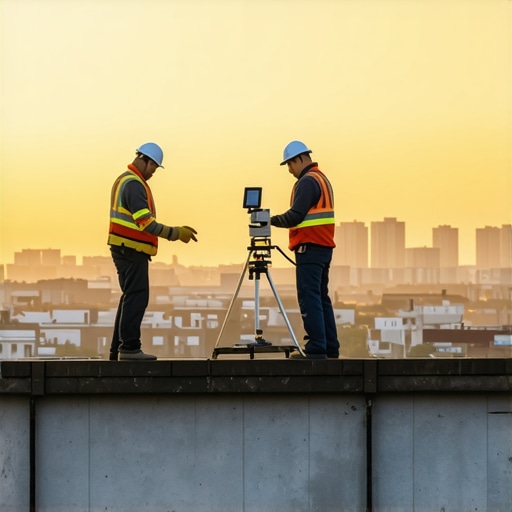
The Forensic Reality of the ‘Eyeball’ Estimate
Walking on that roof felt like walking on a wet sponge. I knew exactly what I would find underneath before I even pulled my pry bar. The homeowner was baffled; the shingles were only five years old. But from my perspective, the physics of the failure were obvious. A slight dip in the roofline, invisible to the naked eye from the ground, had turned a simple gable into a massive catchment for standing water. This is why the industry is shifting. The days of a guy leaning a ladder against your gutters and ‘guesstimating’ the pitch are dying. Modern roofing companies are now deploying LiDAR—Light Detection and Ranging—to stop the guesswork that leads to catastrophic structural rot.
The Physics of Precision: How LiDAR Sees What We Miss
In the biting cold of the northern climate zones, where I’ve spent the better part of three decades, precision isn’t a luxury; it’s a survival requirement. When we talk about roof decking decay, we are usually talking about moisture that found a path because of a 1/8-inch deviation in the plane. LiDAR gear works by firing thousands of laser pulses per second at the structure. It doesn’t just measure the length of a ridge; it creates a three-dimensional point cloud that identifies every sag, every bowed rafter, and every poorly pitched valley.
When local roofers use LiDAR quotes, they are performing a digital autopsy of the existing structure before a single nail is pulled. This tech identifies where ‘thermal bridging’ might be melting snow unevenly, leading to the dreaded ice dam. If your roof has a ‘cricket’—that small diverter behind a chimney—and it wasn’t built to the exact geometry of the slope, LiDAR will flag it. In the old days, we called that a ‘guess and a prayer.’ In 2026, it’s a data point.
“The design and installation of roof assemblies must provide for adequate drainage to prevent the accumulation of water on the roof surface.” – International Building Code (IBC) Section 1503.4
The Material Truth: Why ‘Lifetime’ is a Marketing Myth
Let’s be blunt about the shingles themselves. Whether you are looking at asphalt, metal, or synthetic slate, the warranty is often the first thing a ‘trunk slammer’ will use to distract you. They promise a ‘Lifetime Warranty,’ but read the fine print. Those warranties are almost always voided if the ventilation isn’t perfect or if the shingles were installed over an uneven deck. This is another area where LiDAR proves its worth. By ensuring the substrate is perfectly flat, roofing companies prevent the ‘shingle bridging’ that causes premature granule loss.
In northern regions, the enemy is often the ‘attic bypass’—warm air leaking into the attic and causing the underside of the roof to sweat. I’ve seen plywood turned to oatmeal because a contractor didn’t account for the thermal expansion of the materials. When you’re dealing with roof ice dams, the precision of your measurements determines whether your ‘Ice & Water Shield’ will actually hold or if capillary action will suck that moisture right into your insulation.
The ‘Shiner’ and the Structural Sag
In the trade, we talk about a ‘shiner’—a nail that missed the rafter and is now just a cold piece of metal sticking into your attic. During a freeze-thaw cycle, that nail frosts over, thaws, and drips. Over ten years, that single shiner can rot out a square foot of decking. LiDAR gear allows us to see the micro-deviations in the roof surface that suggest where rafters have shifted or where fastener failure is imminent. It’s about more than just getting the right number of squares for the job; it’s about structural forensics.
“A roof is only as good as its flashing, and its flashing is only as good as the deck it’s attached to.” – Old Roofer’s Adage
Consider the heat of a 140°F attic in the summer. The wood expands. If the roofing company didn’t leave the proper 1/8-inch gap between the OSB sheets, the boards will ‘H-clip’ or buckle. A LiDAR scan catches that buckling long before it becomes a leak. This level of detail is why 2026 roofing companies are moving away from tape measures. We are looking for the ‘mechanism of failure’ before we even offer a price.
The Cost of the ‘Cheap’ Alternative
I’ve walked too many jobs where the homeowner went with the lowest bid, only to find out the ‘local roofer’ didn’t account for the chimney’s counter-flashing or the valley’s specific drainage needs. They used cheap felt instead of high-quality underlayment, and now the shingles are flapping in the wind. When you see a company using high-end LiDAR gear, they aren’t just showing off toys. They are protecting themselves—and you—from the ‘hidden’ costs of a bad install. They are ensuring that every square of material is laid on a surface that won’t move, buckle, or rot.
If you’re looking at a replacement, ask the contractor how they measure. If they pull out a 25-foot Stanley and a notepad, keep looking. You want the person who treats your home like a forensic site. You want to see the point cloud. You want to know that the ‘cricket’ they are building is actually going to move water, not just trap it. Because in the end, water is patient. It will wait for the one mistake, the one ‘shiner’, or the one saggy board to ruin your investment.
The shift to LiDAR is the industry finally admitting that the old ways weren’t good enough. It’s about stopping the ‘sponge’ before you have to walk on it. It’s about recognizing that in a world of extreme weather and rising material costs, precision is the only way to ensure that a 30-year roof actually lasts 30 years.